Outdoor learning is moving from an occasional break to an intentional part of early childhood curriculum because children learn through movement, sensory exploration, relationships, and real-world inquiry. For practical ideas to design a nature-rich setting, explore Creating the Natural Outdoor Classroom  Buy Now $16.00; this course can strengthen classroom practices and support documented professional learning hours, subject to your local requirements.
Why does outdoor learning matter for young children?
Children’s development is embodied: they think, communicate, regulate emotions, and build relationships while moving through environments. Outdoors, children can run, balance, climb, dig, carry, observe, and experiment in ways that are often difficult to replicate indoors. Research and professional guidance connect outdoor play with physical development, social interaction, attention, creativity, language, and emotional well-being (references 5, 6, and 7).
Outdoor learning also makes curriculum concrete. A child sorting leaves is exploring classification; children constructing a shelter are negotiating, measuring, and testing ideas; a toddler noticing rain is developing vocabulary and scientific curiosity. The environment becomes an active teaching partner rather than simply a place for releasing energy.
It matters for providers, too. Intentional outdoor routines can create calmer transitions, richer observation opportunities, and more flexible small-group experiences. They may also improve equitable access to nature for children whose families have limited time, transportation, or nearby safe outdoor spaces. As research from early learning settings emphasizes, child care programs are important places to provide repeated, quality outdoor experiences (references 3 and 4).
What evidence explains the growth of outdoor learning?
Several forces are converging. First, research increasingly frames outdoor play as a developmental necessity rather than an optional enrichment activity. Studies describe benefits across motor, cognitive, social, emotional, and environmental learning. The PRO-ECO trial, for example, examined a multifaceted approach involving educator training, outdoor policy, space modifications, and family engagement (reference 3). This reflects a broader understanding that outdoor practice depends on systems, not enthusiasm alone.
Second, many children are experiencing less unstructured outdoor time because of screen use, dense traffic, changing neighborhoods, structured schedules, and adult concerns about risk. Early learning programs can provide consistent opportunities that may not be available elsewhere. Research on environmental features also shows that gardens, playhouses, climbing structures, tricycle paths, sand areas, and loose parts can support diverse forms of play (reference 4).
Finally, educators are recognizing that outdoor learning integrates curriculum efficiently. A single experience can support #movement, language, mathematics, science, cooperation, and creative expression. This whole-child approach aligns with developmentally appropriate practice and helps teams move beyond the false choice between “learning” and “play.”
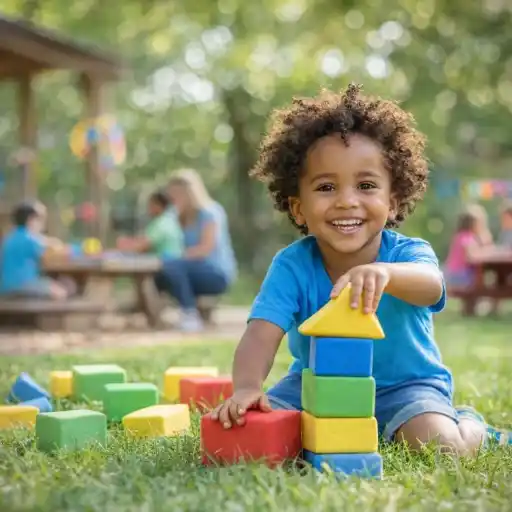
How does outdoor learning support curriculum and development?
Outdoor learning is most powerful when it combines child-led exploration with responsive adult interaction. Educators do not need to turn every discovery into a formal lesson. Instead, they can observe carefully, listen for theories, introduce vocabulary, ask open questions, and offer materials that extend thinking.
- 🍃 Science: Observe insects, compare textures, track weather, investigate shadows, or study plant growth.
- Mathematics: Count stones, compare lengths, measure water, identify patterns, and map pathways.
- Language and literacy: Read outdoors, dictate nature stories, create field journals, and describe sounds or changes.
- Social-emotional development: Practice turn-taking, cooperation, negotiation, persistence, and supervised risk-taking.
- Creative arts: Use sticks, leaves, mud, water, light, and natural sounds as invitations for art, music, movement, and dramatic play.
Natural materials are especially valuable because they are open-ended. A stick may become a spoon, wand, bridge, or measuring tool depending on the child’s purpose. This flexibility encourages #creativity, problem-solving, symbolic thinking, and collaboration. For educators seeking more support with inquiry, Building Early Science Foundations Buy Now $16.00 offers strategies for nurturing exploration and experimentation. Maryland families can also extend arts-based learning with the free educational videos offered through Wolf Trap Early Learning Programs.
What makes outdoor learning feasible for child care programs?
Outdoor learning grows when programs reduce practical barriers instead of simply telling educators that nature is valuable. Research identifies limited time, weather, transportation, safety concerns, inadequate supervision, and lack of access to natural settings as common obstacles (references 8 and 9). Directors can address these concerns through manageable systems.
- Schedule short, predictable outdoor blocks and gradually extend them.
- Use a portable kit with clipboards, magnifiers, buckets, chalk, fabric, and loose parts.
- Create small zones for movement, sensory exploration, construction, quiet observation, and dramatic play.
- Rotate materials rather than placing every item outside at once.
- Maintain spare clothing, shade, drinking water, and weather-appropriate gear.
- Document child quotes, photographs, questions, and emerging skills for families and staff reflection.
A small courtyard, garden bed, porch, or paved area can support meaningful learning. Programs do not need a forest or expensive redesign to begin. Start with one learning intention, one invitation, and one teacher question. State requirements vary - check your state licensing agency.
How can programs balance safety with healthy risk?
Safety concerns are legitimate, but eliminating every challenge can restrict children’s opportunities to develop judgment, confidence, coordination, and resilience. The goal is not to ignore hazards; it is to distinguish unacceptable hazards from developmentally appropriate risks. Educators can remove broken equipment, sharp debris, toxic plants, unsafe water access, and other serious threats while allowing children to attempt manageable challenges with active supervision.
Before outdoor play, conduct a brief hazard scan and confirm boundaries, staffing positions, weather, air quality, hydration, and first-aid access. During play, adults should watch, listen, interact, move through zones, and anticipate problems rather than supervise from a fixed location. Water play requires constant, attentive supervision because drowning can occur quickly and silently. The CDC also recommends planning for sun, heat, insects, playground injuries, protective surfacing, and hydration (reference 6).
For a focused professional development option, Active Supervision: A Strategy That Works Buy Now $35.00 addresses practical strategies for monitoring children across settings. Clear routines allow adults to protect children while still honoring their competence and independence.
What common mistakes should programs avoid?
Outdoor learning initiatives often struggle because implementation becomes too complicated or inconsistent. A strengths-based review helps teams adjust without blaming educators who are already managing demanding schedules.
- Using outdoor time only as recess: Add intentional materials and notice learning without over-directing play.
- Overplanning: Prepare a simple invitation, then follow children’s questions and interests.
- Presenting too many materials: Rotate a few open-ended resources to support deeper engagement.
- Overprotecting children: Use risk-benefit thinking and offer graduated challenges within safe boundaries.
- Ignoring access needs: Provide adaptive tools, varied surfaces, quiet spaces, visual cues, and multiple ways to participate.
- Communicating only about problems: Share discoveries, child quotes, and learning stories with families.
Directors can sustain change by setting one shared expectation: outdoor learning happens regularly and is supported by predictable safety routines. The course Creating Environments that Nurture Growth and Community Buy Now $55.00 can help teams connect environmental design, inclusion, family partnerships, and community-building to daily practice.
Conclusion: Why is outdoor learning growing in early childhood?
Outdoor learning is growing because evidence, professional practice, and children’s needs all point in the same direction: nature-rich environments support whole-child development and make learning tangible. Outdoor experiences promote physical competence, inquiry, language, cooperation, creativity, emotional regulation, and connection with the living world.
The strongest programs do not wait for perfect weather, a large budget, or a major renovation. They begin with consistent routines, thoughtful supervision, open-ended materials, inclusive adaptations, and educators who observe and extend children’s ideas. Start with one reliable outdoor block, earning can become a sustainable part of high-quality early childhood practice.
References
- Creating the Natural Outdoor Classroom
- CDA Home Visitor Subject Area 3 Part 3 Birth to 5
- Birth to Five CDA Credential with Portfolio Review
- Children at the Wheel: Emergent Curriculum
- 24 Hour Texas Pre-Service
- CDA: Creating the Outdoor Classroom
- Creating Safe & Healthy Child Care Environments
- Building a Healthier Tomorrow: Preventing Childhood Obesity
- Montessori Cultural Activities: Exploring the World Through Play and Learning
- Rooted in History: Early Childhood
- CDA Certification en Español: Recursos y Consejos para Educadores Bilingües
- Sunshine & Success: Growing Early Childhood Careers in Florida
- Growing Bright Futures: Early Childhood Education in Oklahoma🌟
- Consejos de Supervisión Activa para Salones de Preescolar y el Juego al Aire Libre
- Cómo Ser Maestra de Preescolar en Dakota del Norte
- North Dakota Early Childhood Workforce Registry: What Child Care Providers Need to Know
- Cómo simplificar la capacitación para sus empleados de daycare
- How can New York providers bridge the summer gap with year-round learning?
- How can Minnesota child care programs keep kids learning and engaged over the summer?
- How can we build a Minnesota summer program that keeps school-agers engaged?
- How can outdoor learning help young children grow and learn?
- How can we turn playtime into learning time in North Dakota child care?
- How Can Child Care Providers Encourage Preschoolers’ Growing Curiosity?
- How Can Early Childhood Programs Implement Practical Sustainability Practices?
- What Is the Difference Between Early Childhood Education and Child Development?
- How Can Child Care Providers Create a Preschool Schedule That Supports Learning and Well-Being?
- Why Is Outdoor Learning Growing in Early Childhood?
- How Can You Add Outdoor Learning Without Rebuilding the Playground?
- How Can One Plant Help Children Notice Gradual Change Outdoors?
