Food allergies in early childhood settings can be unpredictable and potentially life-threatening, making consistent prevention and emergency-response systems essential. Child care directors and providers can reduce risk by maintaining an individualized allergy action plan for each affected child, clearly identifying allergens, preventing cross-contact, checking food labels, storing emergency medication securely but accessibly, and ensuring all responsible staff know how to recognize and respond to a reaction. This practical guide translates health and safety guidance into repeatable daily routines, staff training and drills, family communication practices, and simple documentation systems that help programs protect children with confidence. State requirements vary, so always check with your state licensing agency.
To strengthen your team’s preparation, explore ChildCareEd’s self-paced online course Prevention of and Response to Allergic Reactions  Buy Now $8.00. The training focuses on safe practices for preventing food and other allergic reactions and responding appropriately during an emergency. Providers can also take Elijah’s Law: Allergy Awareness Training Buy Now $16.00, which covers allergy prevention, emergency response, and strategies for supporting children with allergies in child care environments.
Why does managing food allergies in child care matter?
1) Inclusion and trust: Reliable plans let children participate safely and give families confidence. Simple, visible routines reduce error and stress for staff, families, and children.
2) Compliance and risk management: Follow national standards like Caring for Our Children, and confirm your state rules for medication and emergency plans (for example, Texas licensing guidance on allergies: Texas: Child Food Allergies).
What must an individualized food allergy (A/EAP) plan include?
- 📝 Child ID: name, photo, classroom, emergency contacts.
- 📋 Allergens: exact foods to avoid and approved #safe substitutions.
- ⚠️ Typical signs: list the child’s usual early symptoms and severe signs (breathing, throat tightness, dizziness).
- 💉 Medications: name, dose, where stored, who is authorized to administer. Keep medication authorizations and prescription labels together.
- 📞 Emergency steps: 1) give epinephrine if anaphylaxis is suspected, 2) call 911, 3) notify family. (Refer to guidance like Texas: Food Allergy Emergency Plans and CDC toolkit.)
Why it works: a numbered, visible plan reduces hesitation and error in high‑stress moments. Keep original health‑care‑provider signatures on file and require yearly updates.
How can daily routines and classroom design prevent exposure and cross‑contact?
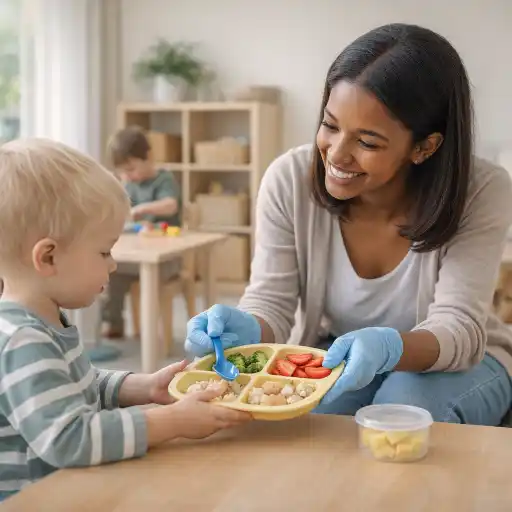
Embed prevention into every routine so it becomes automatic for staff and children. Use verification and simple role assignments.
- 🧼 Hand and surface hygiene: 1) wash hands before and after meals; 2) clean then sanitize tables and high‑touch surfaces per CDC cleaning guidance.
- 🍽️ Food handling: 1) read ingredient labels every time (brands change); 2) serve children with allergies first using clean utensils; 3) label and store allergy‑safe foods in a clearly marked area. See practical tips at ChildCareEd: Keep children safe from food allergies.
- 🚫 Behaviors and classroom choices: no food sharing, no communal dipping, and favor non‑food materials for sensory play when possible. ChildCareEd offers alternatives for sensory activities to avoid hidden allergens.
- 🔪 Separate tools and verification: dedicate scoops, cutting boards, and utensils for allergy‑safe items and require a staff sign‑off on label checks each snack.
Verification matters: assign, for each meal, who checks labels, who serves, and who cleans. These small accountability steps reduce mistakes and show due diligence during inspections.
How should staff be trained and prepared to recognize and respond to anaphylaxis?
Design layered, repetitive training that turns anxiety into timely action. Training should include hands‑on practice, scenario drills, and documentation of competency.
- 🎓 Core curriculum (numbered): 1) symptom recognition (mild vs severe), 2) reading and following the child’s A/EAP, 3) epinephrine auto‑injector technique with trainer devices, 4) post‑administration steps (call 911, monitor, document).
- 💉 Epinephrine is first‑line: train staff that delaying epinephrine can be fatal; after administration, EMS must be called. Refer to clinical guidance and caregiver resources such as Nemours KidsHealth: Prepare for Anaphylaxis.
- 🔁 Practice & coverage: run quarterly drills that include recognition, retrieval of medication, trainer‑pen use, calling 911, and family notification. Train multiple staff each shift (not just one person).
- 📜 Legal & stock epinephrine: check state laws about stock epinephrine/standing orders; examples include Minnesota law and Illinois guidance. State requirements vary - check your state licensing agency.
Document completion and refresh training at hire, annually, and after any incident. Keep trainer devices available so muscle memory improves response time.
How do programs partner with families and avoid common mistakes?
Family partnership and clear communication are essential. Use enrollment to collect everything you need and keep families involved without breaching privacy.
- 🧾 Enrollment checklist: 1) list of allergens, 2) physician‑signed A/EAP, 3) medication with permission, 4) emergency contacts and photo. ChildCareEd provides sample intake and one‑page plan templates (see ChildCareEd: Build effective allergy plans).
- 📣 Communication: share menus and event notices early, post staff‑only room allergy lists, and offer a safe snack list for family events.
- 🔐 Privacy: keep full medical files secure and limit view to authorized staff; post only necessary, non‑detailed reminders where substitutes can see them.
Common mistakes and fixes:
- 🚫 Not checking labels every time — Fix: designate a label‑checker for each meal and require initials.
- 🚫 Allowing food sharing — Fix: consistently teach and enforce a no‑sharing rule; provide visual cues for children.
- 🚫 Relying on one trained person — Fix: train several staff per shift and include substitutes in orientation. See training resources and courses at ChildCareEd.
Conclusion: What quick actions can directors take this week?
- 📝 Collect or update physician‑signed A/EAPs and photos for all children with allergies.
- 🧽 Implement or reinforce meal routines: handwash, clean/sanitize, no sharing, label checks.
- 🎓 Schedule staff practice with an epinephrine trainer pen and run a brief drill this month.
- 📂 Create visible one‑page plans for authorized staff and store originals in locked files.
- 📣 Communicate menus, events, and the program’s allergy procedures to families; invite collaboration.
Helpful resources to bookmark: ChildCareEd: How to handle food allergies in child care, CDC: Food Allergies Toolkit, and the national standards at Caring for Our Children. With clear roles, brief drills, and consistent daily habits your #staff can create a safer, calmer environment for #children — and improve #safety for everyone. #epinephrine
FAQ (quick)
- Q: Who may give epinephrine? A: That depends on state law and your program policy; train designated staff and keep authorization documentation. See state examples (MN, IL) and ChildCareEd.
- Q: Should we keep stock epinephrine? A: Laws vary; some states allow facility‑held epinephrine under standing orders — check local rules and your licensing agency.
- Q: How often to refresh training? A: At hire, annually, and short quarterly drills to keep skills sharp.
- Q: Can we be completely allergen‑free? A: True guarantees are impractical; focus on predictable routines, cross‑contact prevention, and family partnership.
Safety: Anaphylaxis can progress within minutes; prompt epinephrine saves lives. See national clinical and public health guidance like CDC: Food Allergies in Schools and practical ECE-focused advice at ChildCareEd: How to handle food allergies in child care. #allergy #childrenMake the child’s plan concise, actionable, and available to authorized staff. Use a one‑page format and number the steps for rapid scanning.
- Basic Health & Safety and Breastfeeding Awareness
- Medication Administration and the Prevention of and Response to Food and Other Allergies in the Child Care Environment
- Nutrition Essentials for Child Care Providers
- Healthy Starts: Safety, Nutrition, and Wellness in Child Care
- 24 Hour Texas Pre-Service
- Medication Administration and the Prevention of and Response to Food and Other Allergies in the Child Care Environment
- Texas Director Credential
- Building a Healthier Tomorrow: Preventing Childhood Obesity
- Balancing Active Play in Child Care
- CDA Certification en Español: Recursos y Consejos para Educadores Bilingües
- Recursos en Español sobre el Sueño Seguro del Bebé
- Proporciones de Cuidado Infantil y Tamaños de Grupo por Edad en Nueva Jersey (Guía Rápida para Centros y Hogares)
- Proporciones de Cuidado Infantil y Tamaños de Grupo por Edad en Virginia (Guía Rápida para Centros y Hogares)
- How can North Dakota childcare programs plan healthy meals and follow CACFP?
- How can Michigan daycares teach healthy eating habits to toddlers?
- Diversión fresca de verano: actividades del Día Nacional del Helado para niños
- Canciones, juegos y preguntas de círculo para niños
- La mejor manera de hacer seguimiento a la capacitación de su equipo de daycare How to Organize Staff Training for Your Child Care Center Cómo organizar la capacitación del personal para su centro de cuidado infantil
- How can food safety training protect children in my child care program?
- Cómo simplificar la capacitación para sus empleados de daycare
- How should Minnesota child care programs handle allergies and special diets?
- How Can Simple Cooking Activities Teach Skills in North Dakota Child Care Programs?
- How can child care programs effectively manage food allergies to keep children safe?
- How can child care programs ensure safe food preparation and mealtimes?
- How can gardening activities transform early childhood classrooms?
- Nursery Snack Ideas by Age: What Can Babies, Toddlers, and Preschoolers Safely Eat?
- How Do Fruits vs. Vegetables Sorting Mats Build Healthy Eating Habits?
- How Can Child Care Programs Manage Sick-Child Exclusion Policies Fairly and Effectively?
- How Can Child Care Providers Strengthen Food Safety Practices?
