Food allergies can be scary for families and for people who work with kids. This article helps directors and child care providers learn simple, clear steps to keep kids safe. You will find easy prevention tips, plans for emergencies, training ideas, and ways to work well with families. Remember: state requirements vary - check your state licensing agency. We use ideas from trusted guides like How to handle food allergies in child care and CDC school guidance Food Allergies in Schools. This is for programs that care for infants through school-age kids. Keep your #children and team #staff calm, ready, and safe. #allergy #epinephrine #safety
What simple steps stop allergic reactions during meals and snacks?
Every day routines matter. Use short, repeatable steps so everyone remembers what to do. Follow practical ideas from ChildCareEd like making one-page plans and checking labels every time How to handle food allergies in child care.
- 🧼 Wash hands before and after eating (staff and children).
- 🍽️ Clean and sanitize tables and high-touch surfaces after meals. Use CDC cleaning steps for ECE settings: How To Clean and Disinfect Early Care and Education Settings.
- 🚫 No food sharing and no tasting from common bowls.
- 🔖 Label allergy-safe foods and store them in a clearly marked place.
- 🔪 Use separate utensils and serving tools for allergy-safe foods.
Why these matter:
- They prevent cross-contact when a tiny crumb can harm a child.
- They make mistakes easier to catch (labels and storage).
- They build clear habits for #staff and children so rules feel normal.
For more classroom ideas and a checklist for intake forms, see ChildCareEd tips on making one-page allergy plans and routines How can early childhood programs prevent and respond to allergies?.
How do we prepare for and respond to an allergy emergency?
Being ready can save a life. Anaphylaxis is fast and can be deadly. ChildCareEd and CDC say epinephrine is the first treatment for a severe reaction. Train staff and practice the steps so everyone acts quickly and calmly How to handle food allergies in child care and see Red Cross training for technique Anaphylaxis and Epinephrine Auto-Injector.
- 📝 Keep a signed Allergy Emergency Action Plan from the child’s health care provider. Texas guidance shows what should be in the plan Food Allergy Emergency Plans.
- 📍 Store medications where staff can get them fast. Label location and who may give medicine.
- ⚠️ If you suspect anaphylaxis: give epinephrine, call 911, then call the family.
- 🧾 Document what happened and review the plan after the event.
Practice with trainer pens and run quick drills. Many states allow stock epinephrine in schools and care sites — check local rules like Minnesota or your state. Staff should know to call 911 after an epinephrine dose, because follow-up care is needed Managing Severe Allergies in School - MN Dept. of Health. Keep the language and steps simple so people can act fast in a stressful moment.
How do we train staff and work with families to keep plans strong?
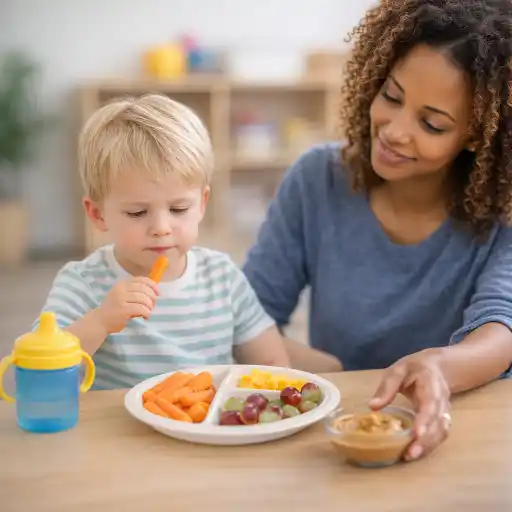
Good teamwork with families and strong staff training make allergy plans work. ChildCareEd shows how to collect info at enrollment and keep it visible to authorized staff How to handle food allergies in child care.
- 🧾 Collect these items at enrollment:
- Doctor-signed allergy action plan
- List of allergens and usual symptoms
- Medicine and permission forms
- Emergency contact numbers
- 👩🏫 Train staff on:
- How to read and follow action plans
- How and when to give epinephrine
- Daily prevention routines and cleaning
- 🔁 Refresh training regularly: at hire, yearly, and with short drills. Use courses and free resources like ChildCareEd trainings and the Elijah's Law resources Elijah's Law: Allergy Awareness Training resources.
Keep privacy in mind. Post room-level allergy lists where only staff can see them. Communicate menus and special events early so families can plan safe substitutes. For help managing themed treats and classroom celebrations, see practical tips on handling holiday food allergies in your classroom. Simple, calm communication helps families trust your program. For training on medication and allergy response, consider approved courses that match your state rules such as ChildCareEd medication courses Medication Administration and Prevention of Allergies Buy Now $7.00.
How can we prevent cross-contact and common mistakes?
Cross-contact is when a tiny bit of an allergen touches safe food or surfaces. This is a top cause of accidental reactions. Use smart, simple fixes used by many child care centers and public health guides Understanding and Managing Food Allergies (Virginia Tech).
- 🍽️ Clean well: wash surfaces, utensils, and hands. Follow CDC cleaning steps for ECE settings How To Clean and Disinfect.
- 🥣 Separate tools: use different cutting boards, scoops, and utensils for allergen-free foods.
- 🎨 Choose non-food materials for sensory play when possible to avoid hidden allergens (ChildCareEd tips on sensory and classroom safety).
- 📦 Read labels every time: brands and ingredients change. Teach a staff member to check labels for every snack.
Common mistakes and how to avoid them:
- 🚫 Mistake: Letting kids share food — Fix: Make a clear no-sharing rule and teach it to families and kids.
- 🚫 Mistake: Not checking labels each time — Fix: Assign label checking to a staff role for each snack.
- 🚫 Mistake: Storing meds where substitutes can't find them — Fix: Post location and train substitutes to find them quickly.
FAQ
- Q: Who can give epinephrine at my program?
A: It depends on your state and program policy. Train designated staff and follow your state rules. See state guides and ChildCareEd trainings. - Q: Can we be nut-free?
A: Some programs choose this. It helps, but true allergen-free buildings are hard. Be "allergy aware" and use clear routines and storage rules #allergy-aware. - Q: How often should staff refresh training?
A: At hire, yearly, and short drills quarterly if possible. - Q: Do we need a doctor’s note?
A: Yes. Get a health care provider’s action plan to include meds, doses, and symptoms — many states require this in writing Texas.
Summary
1. Collect clear allergy info and a doctor-signed action plan at enrollment. 2. Use simple daily steps: wash hands, clean surfaces, no food sharing, label safe food. 3. Train #staff to give #epinephrine and run drills. 4. Prevent cross-contact with separate tools and smart classroom choices. 5. Keep families informed and involved. Use trusted resources from ChildCareEd and public health like the CDC to build your plan. State requirements vary - check your state licensing agency. With steady routines, regular training, and calm teamwork, your program can keep kids safer and families more confident.
- Basic Health & Safety and Breastfeeding Awareness
- CDA Family Child Care Credential
- Medication Administration and the Prevention of and Response to Food and Other Allergies in the Child Care Environment
- Bienvenido! Welcoming All Families
- Nutrition Essentials for Child Care Providers
- 45 Hour School Age Methods and Materials
- Medication Administration and the Prevention of and Response to Food and Other Allergies in the Child Care Environment
- Texas Director Credential
- Wellness in Action: Teaching Healthy Habits to Children
- Recursos en Español sobre el Sueño Seguro del Bebé
- 10 Ejemplos de Cómo la Cultura Influye en el Desarrollo Infantil
- Proporciones de Cuidado Infantil y Tamaños de Grupo por Edad en Virginia (Guía Rápida para Centros y Hogares)
- Lista para Guardería en Casa en Texas: Cómo Iniciar una Guardería en el Hogar
- How can North Dakota childcare programs plan healthy meals and follow CACFP?
- Celebrando la amistad en el cuidado infantil durante el Día de los Mejores Amigos
- Diversión fresca de verano: actividades del Día Nacional del Helado para niños
- Canciones, juegos y preguntas de círculo para niños
- La mejor manera de hacer seguimiento a la capacitación de su equipo de daycare How to Organize Staff Training for Your Child Care Center Cómo organizar la capacitación del personal para su centro de cuidado infantil
- How can food safety training protect children in my child care program?
- How can food safety training protect children in my child care program?
- How can food safety training keep children safe in my child care program?
- How can food safety training protect children in my child care program?
- How should Minnesota child care programs handle allergies and special diets?
- How can my child care program keep children safe from food allergies?
- How can New York child care programs best support children with food allergies?
- How can child care programs build effective food allergy awareness and emergency response plans?
- How can child care programs prevent seasonal safety hazards like heat, cold, allergies, holiday risks, and outdoor play dangers?
- Classroom Celebrations: How Can Child Care Programs Review Allergy Plans and Medication Arrangements Safely?
- How Can Preschool Snack-Time Conversations Honor Food Preferences and Build Learning?
