Food allergies are a constant—and sometimes life-threatening—reality in child care settings. This article gives directors and providers an actionable roadmap for preventing allergic reactions, training staff, partnering with families, and responding quickly and confidently during an emergency. It explains how to create individualized allergy action plans, reduce exposure to known allergens, recognize the warning signs of anaphylaxis, store and access epinephrine safely, document incidents, and communicate clearly with emergency personnel. To strengthen your program’s preparedness, explore ChildCareEd’s Prevention of and Response to Allergic Reactions  Buy Now $8.00, which focuses specifically on preventing and responding to food and other allergy emergencies, and Allergies and Medication in Childcare Buy Now $16.00, which covers common allergens, allergic-reaction recognition, preventive measures, and safe medication practices. Remember that state requirements vary, so always consult your state licensing agency when developing or updating your program’s allergy policies.
Why this matters
1) Anaphylaxis can progress quickly — minutes matter. Epinephrine is the first‑line treatment, and timely staff action saves lives; see national guidance from the CDC and practical program steps from ChildCareEd like How to handle food allergies in child care.
2) Prevention reduces stress for families and staff, increases inclusion, and lowers liability. Use simple routines that scale: intake forms, one‑page action plans, labeled food storage, and regular drills as described in ChildCareEd resources: How can my child care program keep children safe from food allergies?.
1. What should a complete food allergy management plan include?
A comprehensive plan balances individualized care and system‑level routines. Include the following numbered elements so staff can scan and act quickly.
- 📝 Individual documentation: 1) physician‑signed Allergy/Emergency Action Plan (A/EAP), 2) list of allergens, 3) usual signs for that child, 4) medications (dose, location), and 5) emergency contacts with current photo. Use ChildCareEd templates for intake and one‑page plans (sample forms).
- 📍 Medication policy: Where meds are stored, who may administer them, logging procedures, and back‑up plans for substitutes. Follow medication administration guidance from ChildCareEd (Medication Administration).
- 🔁 Daily prevention routines: handwashing, table cleaning, no food sharing, label checks, and separate storage for allergy‑safe items. Cross‑reference CDC cleaning steps for ECE settings (How To Clean and Disinfect ECE).
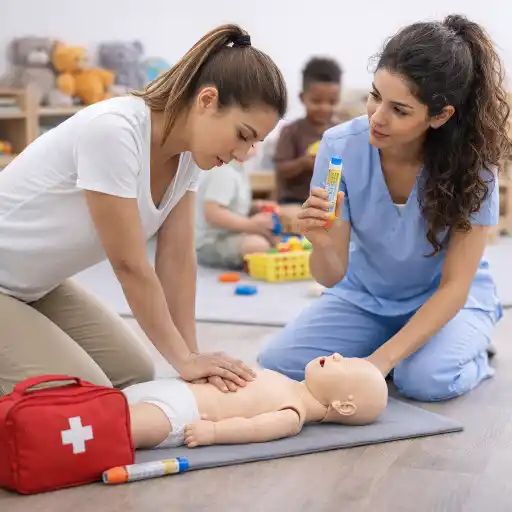
- 🎓 Training & drills: schedule onboarding, annual refreshers, and quarterly short drills. Keep EpiPen trainer devices for practice — training improves speed and confidence (see ChildCareEd courses and resources, Elijah's Law resources).
- 📣 Communication & privacy: post room‑level allergy lists where only staff can see them; share menus and special event notices early with families.
Citation: Adapt templates and checklists from ChildCareEd's practical guides: How can my child care program keep children safe from food allergies? And match them to licensing rules in your state.
2. How do we prevent exposure and cross‑contact during daily routines?
Preventing accidental exposure requires simple, repeatable actions embedded in daily rhythm. Make prevention visible, owned, and verifiable.
Top prevention steps (numbered and practical):
- 🧼 Hand and surface hygiene: 1) Wash hands before and after meals for staff and children; 2) Clean then sanitize eat
 ing and activity surfaces per CDC guidance (CDC ECE cleaning).
 - 🍽️ Food handling routines: 1) Serve children with allergies first using clean utensils; 2) Label allergy‑safe foods and store them in a clearly marked area; 3) Read ingredient labels every time (brands change).
- 🚫 No food sharing and no communal dipping: make this an explicit, taught rule for children and families.
- 🎨 Non‑food sensory play: choose non‑food materials when possible or get written family permission and strict cleanup protocols. ChildCareEd's classroom suggestions highlight alternatives (classroom tips).
- 🔪 Separate tools & cleaning: use dedicated utensils, cutting boards, and scoops for allergy‑free items; sanitize between uses. See practical cross‑contact prevention from Virginia Tech (Understanding and Managing Food Allergies).
Why verification matters: assign daily role checks (1 staff person verifies labels; 1 staff person signs off on cleaning). Small accountability steps reduce errors and demonstrate due diligence during inspections.
3. How should staff be trained and prepared to recognize and respond to anaphylaxis?
Training turns anxiety into action. Design a program with layered learning: short knowledge modules, hands‑on practice with trainer devices, and scenario drills. Align content with legal and clinical guidance.
- 🎓 Core topics (numbered): 1) recognition of mild vs severe symptoms, 2) reading and following the child's A/EAP, 3) epinephrine auto‑injector technique (use trainer devices), 4) post‑administration steps (call 911, document), 5) medication storage and checking expirations. Use ChildCareEd MAT and allergy courses as building blocks (Medication Administration).
- 💉 Epinephrine first: Teach that epinephrine is the first intervention for suspected anaphylaxis and that EMS must be called after administration. Reinforce that delaying because of uncertainty can be fatal; clinical guidance and public health pages (e.g., CDC) support this.
- 🔁 Practice & drills: run quick, quarterly drills that include: recognition, retrieval, administration with a trainer pen, calling 911, and family notification. After any real event, do a debrief and update plans.
- 📚 Legal & stock epinephrine: know your state rules on stock epinephrine and standing orders — some states permit facility‑held epinephrine; check Minnesota's approach (MN Stock Epinephrine) and local licensing guidance.
- 🧾 Documentation: requires immediate entry on the MAR, incident report, and parent notification. Good records protect children and programs.
Practical tip: keep a laminated emergency steps card with each child’s one‑page plan and post an anaphylaxis poster where staff does handoffs. ChildCareEd's free resources include placemats and posters you can adapt (Allergy resources).
4. How do we partner with families while protecting privacy and building trust?
Strong family partnerships reduce surprises and support inclusion. Build predictable communication systems and honor confidentiality.
- 📝 Enrollment checklist (collect at intake): 1) detailed list of allergens, 2) physician‑signed Allergy/Emergency Action Plan, 3) medication and permission forms, 4) emergency contacts and a current photo. Use ChildCareEd enrollment checklists (one‑page plan guidance).
- 📣 Early & transparent communication: notify families of menus, cooking projects, and celebrations well in advance; provide a safe snack list and ask families for approved substitutes. For practical communication templates and celebration‑specific strategies to keep festivities inclusive and safe, see The Grinch Who Stole Snacks: How to Handle Holiday Food Allergies in Your Classroom.
- 🔐 Privacy & access: post room‑level allergy lists where only staff can see them; keep full health details in locked files and limit access to authorized staff.
- 🤝 Collaborative problem solving: invite families to co‑design substitutions and classroom accommodations; document agreements and update them annually or when a child's needs change.
- 📆 Annual review: requires updated physician notes and action plans yearly and after any reaction. This aligns with best practices from public health agencies and ChildCareEd guidance (program prevention).
Note: Be aware of ADA protections for children with disabilities; reasonable accommodations may be required. When in doubt, consult your state licensing agency and legal counsel.
5. What common mistakes occur, and how can programs avoid them? (Plus FAQs)
Common mistakes often reflect process gaps. Address each with a clear, numbered fix.
- 🚫 Mistake: Not checking ingredient labels each time. Fix: assign a staff member to check and initial ingredient labels for every snack and incoming food box. Labels change — never assume a product is the same.
- 🚫 Mistake: Allowing food sharing. Fix: institute a no‑sharing rule, teach children, and communicate to families. Post a visual sign for meal times.
- 🚫 Mistake: Meds stored inaccessible to substitutes. Fix: post storage location, train substitutes, and include med checks in your substitute orientation checklist.
- 🚫 Mistake: Overreliance on a single trained person. Fix: train multiple staff each shift and rotate skills so coverage is consistent.
- 🚫 Mistake: Using food in sensory play without permission. Fix: use non‑food materials or require written permission plus strict cleanup procedures.
FAQ (short answers):
- Q: Who can give epinephrine? A: That depends on state law and program policy. Train designated staff and document authorization. Check local rules and resources like ChildCareEd's medication posts (Medication Administration).
- Q: Can we be nut‑free? A: Some centers choose this. It can reduce risk but does not guarantee safety. Focus on routines and cross‑contact prevention (Virginia Tech).
- Q: Should we keep stock epinephrine? A: Check state laws — some states allow stock epinephrine under standing orders (see Minnesota example: Stock Epinephrine).
- Q: How often should training be refreshed? A: At hire, annually, and brief quarterly drills to keep skills sharp.
Use these fixes to turn policy into consistent practice: short checklists, role assignments, and visible verification. State requirements vary - check your state licensing agency and align forms and training to local rules.
Conclusion — Quick checklist for directors
- 📝 Collect physician‑signed A/EAPs and photos at enrollment.
- 🧽 Implement daily prevention: handwashing, cleaning, no food sharing, label checks.
- 🎓 Train multiple staff on recognition and epinephrine use; practice with trainer devices and run drills.
- 📂 Keep one‑page plans visible to authorized staff and update yearly.
- 📣 Communicate early with families, protect privacy, and document everything.
For templates, posters, and short courses, start with ChildCareEd resources (free resources, How to handle food allergies) and public health anchors like the CDC. Small, consistent steps protect children, reduce staff stress, and increase family confidence.
- Basic Health & Safety and Breastfeeding Awareness
- Medication Administration and the Prevention of and Response to Food and Other Allergies in the Child Care Environment
- Health and Safety Orientation
- Nutrition Essentials for Child Care Providers
- 24 Hour Texas Pre-Service
- Texas Teacher 24 hours Annual Renewal 2nd Year
- Medication Administration and the Prevention of and Response to Food and Other Allergies in the Child Care Environment
- Texas Director Credential
- Prevention of and Response to Allergic Reactions
- CDA Certification en Español: Recursos y Consejos para Educadores Bilingües
- 🧼Band-Aids, Germs & Giggles: Why Basic Health & Safety Training Is a Big Deal in Child Care
- Cómo Abrir Una guardería Para Niños Con Necesidades Especiales?
- Cómo Abrir Una Quardería En Casa Sin Dinero?
- Curso de Comunicación de 9 Horas de Maryland
- Cómo Empezar una Guardería en Casa: Requisitos y Pasos
- Lista para Guardería en Casa en Texas: Cómo Iniciar una Guardería en el Hogar
- Cómo simplificar la capacitación para sus empleados de daycare
- How can food safety training protect children in my child care program?
- How can my child care program keep children safe from food allergies?
- How can New York child care programs best support children with food allergies?
- How can child care programs build effective food allergy awareness and emergency response plans?
- How can child care programs effectively manage food allergies to keep children safe?
- How can child care programs ensure safe food preparation and mealtimes?
- Emergency and Disaster Preparedness Training Online: What Will You Learn?
- Anaphylaxis Poster for Schools: Would Staff Know What to Do in the First 60 Seconds?
- How Can Preschool Classrooms Strengthen Food Safety and Allergy Management?
- How Can Child Care Programs Build Strong Allergy Awareness and Response Systems?
- What Should Every Child Care Allergy and Emergency Plan Include?
