One flashlight makes a familiar shadow—but what happens when a second beam joins the investigation? With a few safe materials, providers can turn this surprising question into a rich, hands-on lesson in observation and evidence. Explore Building Early Science Foundations  Buy Now $16.00 to strengthen your strategies for supporting young children’s curiosity, inquiry, and play-based science learning.
Why does this shadow question matter for young children?
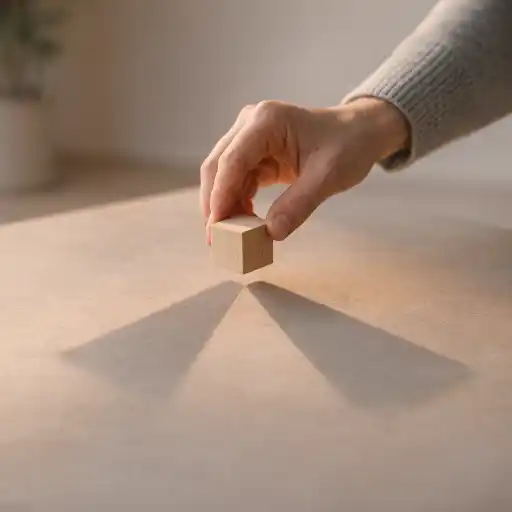
Children often assume that one object can make only one shadow. Testing that idea gives them a concrete way to discover that shadows depend not only on the object, but also on the number and position of light sources. When two lights shine on one opaque object from different directions, each beam can be blocked, producing a separate shadow on a nearby surface. The shadows may differ in position, length, or clarity.
This simple investigation makes scientific thinking visible. Children can make a prediction, try it, notice what changes, and revise their ideas based on what they see. The aim is not to rush toward a “right” answer; it is to help children connect their claim to evidence. This approach reflects the central idea in the multiple-shadows lesson: more than one light source can produce more than one shadow from a single object.
For providers, the activity is also a practical way to nurture #curiosity and #observation while building vocabulary such as light source, block, shadow, direction, and compare. Children may explain their findings with words, gestures, drawings, or home-language descriptions. Those varied forms of expression are all meaningful evidence of thinking.
How can one object produce two shadows?
Light travels in straight lines. When an opaque object blocks a beam, less light reaches the surface behind it, creating a shadow. Add another light source at a different angle, and it creates another path of light that the same object can block. The resulting shadows fall in different directions, generally away from their respective lights.
For a clear demonstration, use two flashlights, one small opaque object such as a block or toy, and a pale wall or sheet of paper. Place the object between the lights and the surface. Turn on one flashlight first and invite children to locate the shadow. Then switch on the second flashlight from another direction. Depending on the setup, children may see two distinct shadows, overlapping shadows, or a shadow that becomes less distinct where the beams interact.
- Use a simple, solid object at first; detailed or transparent objects can make the result harder to interpret.
- Position the lights on different sides of the object so each can cast a shadow onto the same surface.
- Move only one light at a time and invite children to notice how the shadow shifts.
Transparent materials allow much of the light to pass through, while translucent ones let some light through and scatter it. These material differences can change how visible a shadow appears. For a concise explanation of light interacting with objects, see Science World’s light and shadows resource.
How can you set up a safe, child-led investigation?
Keep the setup focused and manageable. Choose a space where you can control competing light—such as a shaded corner or a cardboard screen—and gather two battery-powered flashlights, one or two opaque objects, a white surface, and paper for recording. Before children begin, check the materials and make a plan for active supervision. Remind children not to shine lights into anyone’s eyes, and keep cords, hot lamps, and small parts out of reach as appropriate for the age group.
Start with a question, not a lecture: “Can one object make two shadows at once?” Ask children what they predict, then let them test their ideas. A short pause before the demonstration gives children time to observe and make their own discoveries. Providers can support inquiry without taking over by asking open-ended prompts:
- “What do you notice when we turn on the second light?”
- “Where is each light pointing?”
- “What could we change to make the shadows easier to see?”
- “How could we check whether the object or the light moved?”
Invite children to take turns with roles such as light holder, object mover, observer, and recorder. Adapt participation by stabilizing the object or flashlight, offering picture cues, or inviting a child to point rather than speak. State requirements vary - check your state licensing agency.
How can children gather evidence and extend the activity?
Evidence can be simple and age-appropriate. Children might draw the setup, place a mark where each shadow falls, describe what happened, or dictate a sentence for an adult to record. A quick before-and-after photo can help a group compare the one-light and two-light results. Encourage children to describe what they actually observe, including unexpected outcomes such as overlapping shadows or one beam washing out part of another shadow.
Once the basic pattern is clear, change one variable at a time. Move one flashlight closer or farther away, raise or lower it, or rotate the object. Ask children to predict first, then test. This makes it easier to connect a change in position with a change in shadow size, direction, or clarity. The Science in Pre-K focused exploration guidance similarly encourages educators to build from children’s interests, support repeated attempts, and use drawings or photographs in science conversations.
- Compare one flashlight with two, keeping the object and screen in the same positions.
- Try a second object and describe whether its shape produces a different shadow pattern.
- Invite children to tell a short shadow-puppet story using two lights and one figure.
- Record children’s words or sketches and revisit them later to see how their explanations develop.
These extensions bring #evidence and #language into play: children can explain what they changed and what happened, rather than simply reporting whether their prediction was “correct.”
What common pitfalls should providers avoid?
Two-light experiments can look confusing when the setup changes too quickly. If children cannot tell which light made which shadow, pause and return to one flashlight. Establish a clear baseline, then add the second beam. Keeping the object, wall, and first light still while adding only one new light makes the cause of the change easier to notice.
Another pitfall is treating every shadow as a crisp, separate shape. The beams may overlap, the room may have other light sources, or the screen may be too far away. Those results are not failures; they are opportunities to troubleshoot. Try dimming ambient light, adjusting the angle between the flashlights, moving the surface closer, or selecting a more opaque object. Children can help suggest and test these changes.
- 🧪 Change one feature at a time so children can connect a cause with an outcome.
- Do not shine flashlights into eyes; demonstrate how to point them toward the surface.
- Avoid giving the explanation before children have time to predict and observe.
- Do not dismiss unexpected results—ask what the setup may be showing.
Most importantly, value careful noticing over a polished final answer. A child who says, “I see two dark places, but they touch,” is making a useful observation that can guide the next test.
How can you turn the discovery into lasting science learning?
One object can indeed make two different shadows at the same time when two light sources shine on it from different directions. The strongest learning comes from letting children see the effect, test changes, and explain their observations in ways that suit their development. A short investigation can support spatial reasoning, communication, collaboration, and confidence in asking questions.
For a practical follow-through, display children’s drawings or photos beside their original predictions. Revisit the evidence in a later conversation: “What did we change? What happened? What makes you think the second light made another shadow?” These questions help children connect actions with outcomes and recognize that evidence can support or revise an idea.
Providers who want to deepen their planning can explore Basic Science in Early Childhood Buy Now $25.00, which focuses on incorporating meaningful science experiences and supporting children’s reasoning. The Tomorrow’s Einsteins: Infant and Toddler Science Buy Now $16.00 course offers strategies for fostering scientific curiosity with the youngest learners. For broader STEM integration, see Enhancing STEM Education for Infants and Toddlers Buy Now $16.00. To connect exploration with responsive environments and play, consider Environments That Inspire Independence and Exploration Buy Now $55.00.
Conclusion: Can one object make two different shadows at once?
Yes. When two lights approach one opaque object from different directions, each light can be blocked and create its own shadow. The shadows may be separate, overlapping, or vary in size and clarity depending on the position of the lights, object, and surface.
For child care providers, this question offers an accessible entry point into inquiry: invite a prediction, make a simple test, change one variable at a time, and document what children notice. Keep the experience safe, open-ended, and responsive to children’s ideas. By treating unexpected results as useful evidence, you help children build the habits of young scientists—and turn a pair of flashlights into a memorable classroom discovery.
- CDA Certification en Español: Recursos y Consejos para Educadores Bilingües
- 💛🧩 ¿Cómo puedo hacer que mi enseñanza sea inclusiva para los niños con autismo?
- Recursos en Español sobre el Sueño Seguro del Bebé
- 10 Ejemplos de Cómo la Cultura Influye en el Desarrollo Infantil
- Canciones, juegos y preguntas de círculo para niños
- Cómo simplificar la capacitación para sus empleados de daycare
- Teaching Math to Young Children: Why Counting to 20 Doesn’t Mean They Understand 20
- How Can Day vs. Night Sorting Help Children Understand Time and Routine?
- How Can Early Math Activities Build Young Children’s Mathematical Thinking?
- How Do Memory and Matching Games Support Visual Discrimination?
- How Can Child Care Programs Balance Indoor and Outdoor Learning Across the Week?
- How Can Providers Build Addition Understanding Before Written Problems?
- A Child Counts Correctly but Cannot Show the Quantity: What Comes Next?
- Why Does Measuring Start at Zero, and How Can We Teach Ruler Alignment Through Play?
- What Are Simple Ways to Build Early Math Skills During Daily Classroom Routines?
- How Can You Turn a Preschool Science Video into Hands-On Learning?
- How Can You Adapt a Sink-or-Float Investigation for a Mixed-Age Group?
- Where Did Our Shadows Go on a Cloudy Day—and How Can We Revisit Yesterday’s Prediction?
- Can One Object Make Two Different Shadows at the Same Time?
