When a storybook shows blazing red leaves but the trees outside stay green, children deserve more than an explanation that their surroundings are unusual. Help them investigate what seasons look like where they live—and strengthen your approach with Building Early Science Foundations  Buy Now $16.00, a focused course on nurturing young children’s curiosity through developmentally appropriate inquiry. For practical ideas on designing nature-rich learning spaces, explore Creating the Natural Outdoor Classroom Buy Now $16.00 as well; both courses can help you turn everyday observations into thoughtful classroom practice.
Why should educators question a one-size-fits-all picture of fall?
Seasonal books and displays often present a familiar northern-autumn image: red and gold leaves, chilly air, pumpkins, and children in jackets. Those images can be beautiful, but they do not represent every place. In many regions, trees remain green, seasonal transitions are subtle, or changes are marked more by rainfall, daylight, flowering, fruiting, or animal activity than by leaf color.
When classroom materials imply that one landscape is the “real” version of a season, children may feel that their own observations are wrong or that their community is missing something. Instead, treat the mismatch as a worthwhile question: “This picture shows red leaves. What do we notice on the trees near our school?” A place-based approach values children’s firsthand knowledge and makes science relevant to their daily lives.
This is not a reason to avoid books or images from other climates. It is an opportunity to compare settings and explain that the natural world varies. NAEYC’s nature resources and the Natural Start Alliance’s guidance on nature-based teaching emphasize authentic, local experiences and children’s inquiry. Research reviewed in a systematic review of early childhood environmental education also links play-based, nature-rich approaches with positive cognitive and social-emotional outcomes.
Educators do not need to manufacture a seasonal scene. They can support #curiosity by helping children notice the patterns and living things around them, while making room for different places and experiences in the curriculum.
What can children investigate when trees look unchanged?
Start with what children can see, hear, and revisit, rather than deciding in advance what autumn should look like. Some changes are visible in trees; others appear in weather, light, the ground, or nearby activity. Even a repeated observation that “it looks the same” is useful: children are comparing evidence over time.
Choose a safe, accessible tree or outdoor view and invite children to look closely. Ask open questions such as “What do you notice?” “What stayed the same?” and “What might we check again next week?” Leave time for children to respond through words, gestures, drawings, or their home languages.
- 🌤️ Compare light and shade at a consistent time, or notice where shadows fall during the day.
- Observe weather patterns—rain, wind, cloud cover, or dry periods—using simple symbols on a class chart.
- Look for buds, new leaves, flowers, fruit, seed pods, or changes in the ground beneath a tree.
- Listen for birds, insects, wind, and other sounds; notice whether the sounds or activity change.
- Notice puddles, damp or dry soil, fallen twigs, or how often a shaded area is used.
National Geographic Education suggests monitoring local trees, rainfall, and plants over time. These ideas can be scaled for young learners: one tree, one weekly question, and one brief record are enough to begin a meaningful investigation.
Use accurate, open language. If a child says, “The tree is sleeping,” acknowledge the idea and invite observation: “What do you see that makes it seem that way? Let’s see what we notice next time.” This keeps the discussion welcoming without presenting a metaphor as a scientific fact.
How can books and seasonal displays include different places?
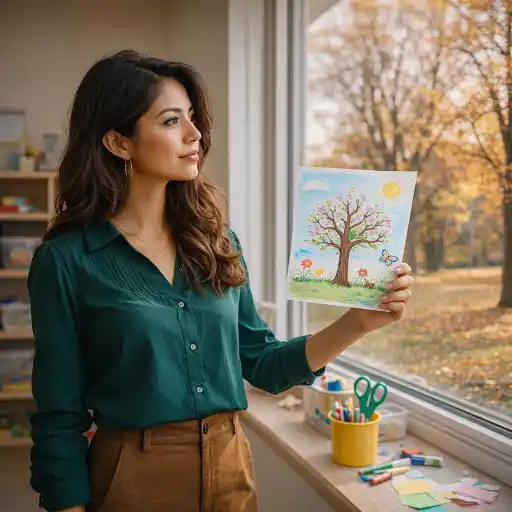
Children benefit from seeing a range of landscapes, climates, and seasonal experiences in books, photographs, and classroom materials. Review seasonal images before using them: Do they show only one region? Are the pictures presented as an example or as a universal rule? Pair familiar autumn imagery with photographs of local trees and landscapes, so children can compare rather than choose which one is “correct.”
Read aloud with questions that open up inquiry: “Where might this story take place?” “What clues do you see about the weather?” “Would our trees look like these?” Invite children and families to share observations from their neighborhoods, while avoiding assumptions that all families have the same traditions, outdoor access, or seasonal vocabulary.
Children’s books are not neutral windows onto the world: images influence what children understand as typical and whose experiences are represented. Thoughtful selection can affirm children’s local knowledge and expand their awareness of other environments. For guidance on evaluating classroom picture books and their representations, consult this discussion of possibilities and pitfalls in picture books.
Try a simple comparison display:
- Place a seasonal illustration beside a photograph of a nearby tree.
- Ask children to name similarities, differences, and questions.
- Add children’s words without correcting their observations into a predetermined answer.
- Invite families to contribute a photo or description if they wish.
National Geographic’s season activities, including drawing a familiar place at different times of year, can help educators frame seasons as patterns that children observe in specific locations—not a single picture every place must match.
How can repeated observation make subtle change visible?
A one-time walk offers a snapshot. Returning to the same spot helps children compare what they see now with what they remember or recorded earlier. This can reveal gradual changes—or confirm that a feature has remained consistent. Choose a spot that is accessible and easy to revisit, such as a tree by the playground, a garden bed, or a view through a classroom window.
Keep the routine short and predictable: pause, look and listen, invite observations, and record one or two details. Use a notebook, class chart, child drawing, or photograph with a date. If you take images, follow program policy and family permissions; often, focusing on the tree rather than children’s faces is sufficient.
Documentation should capture children’s thinking, not grade their drawing or writing. Record a quote as spoken, or make a note of a gesture or detail a child pointed to. Put entries in sequence so children can compare them. The project described in Looking at the Trees around Us illustrates how children’s questions, field observations, representations, and investigations can grow into a sustained project.
- Use “I notice” and “I wonder” prompts to distinguish what is visible from what children are trying to explain.
- Ask children to compare two records: “What is different? What stayed the same?”
- Use children’s interests to choose what to watch next—light, branches, leaves, weather, or animal activity.
- Share selected observations with families, following privacy and consent practices.
Professional learning in Observing & Assessing in Child Care Buy Now $16.00 can further support providers who want to document children’s growth and use observations to plan responsive experiences.
How can educators connect local observations to curriculum and inclusion?
Start with the detail children noticed, then connect it to a learning goal without taking over their investigation. If they are comparing shadows, they can draw or compare their positions. If they notice a flowering plant, they can count blooms, describe shape, or revisit a drawing later. A weather chart can support pattern recognition and counting while giving children useful words such as breezy, cloudy, damp, and dry.
Seasonal inquiry can cross learning areas naturally:
- Science: make a prediction, revisit the site, and describe evidence.
- Math: count rainy days, compare leaf sizes, sort photographs, or make a picture graph.
- Language and literacy: dictate journal entries, build a shared “Our Place Through the Seasons” book, and explain observations.
- Art and movement: draw patterns, make a sound map, or use movement to represent wind and shifting light.
Participation should not depend on a child’s ability to walk, touch, speak, or work in a group. Offer seated viewing, accessible paths, picture prompts, adaptive tools, indoor drawing from a photograph, and time to observe before joining. A child may contribute through a gesture, home-language word, or dictated comment.
Check the site and weather before each visit. Consider shade, hydration, sun protection consistent with program policy, allergies, insects, choking risks, and active supervision. Do not invite children to taste unknown plants or disturb wildlife. State requirements vary - check your state licensing agency. Nature-based guidance from the Children & Nature Network highlights inclusive design and safe access as important parts of meaningful nature connection.
Conclusion: What should educators do when seasonal pictures do not match local trees?
Use the mismatch as an invitation to investigate, not as a reason to tell children that their environment is wrong. Seasonal patterns vary by place, species, weather, and local conditions. When educators begin with children’s firsthand observations, they affirm community knowledge and help children build a more accurate understanding of the natural world.
Choose one accessible tree or outdoor view, return to it regularly, ask open questions, and keep brief records of what children notice. Include books and images from different places, connect discoveries to science, language, math, and art, and offer varied ways for all children to participate safely. The goal is not to make every landscape match a seasonal illustration; it is to help children become attentive observers of the place they call their own.
Explore related ChildCareEd courses
- Engaging Indoor Activities for Inclement Weather
- Our School Age Family Tree: Children, Staff, & Parents
- CDA Bridge Bundle: Family Child Care without Portfolio Review
- CDA Bridge Bundle: Infant/Toddler without Portfolio Review
- CDA Bridge Bundle: Preschool without Portfolio Review
- Texas Director Credential
- Bienvenido! Welcoming All Families
- Nature’s Classroom: Why Fall Is the Best Season for Sensory Learning Outdoors
- CDA Certification en Español: Recursos y Consejos para Educadores Bilingües
- Cuáles Son las Señales de Alerta en el Desarrollo Infantil que Todo Educador Debe Conocer?
- 😫🧸 ¿Qué hacer cuando un bebé no quiere dormir la siesta en el aula?
- Qué capacitación se requiere para ser director de cuidado infantil en Texas?
- Recursos en Español sobre el Sueño Seguro del Bebé
- Capacitación en Salud y Seguridad Preventiva en Línea para Proveedores de Cuidado Infantil
- Lista para Abrir una Guardería en Casa en Virginia: Cómo Empezar
- Lista para Guardería en Casa en Illinois: Cómo Iniciar una Guardería en el Hogar
- Lista para Guardería en Casa en Texas: Cómo Iniciar una Guardería en el Hogar
- Retraso del Habla en la Guardería: Cómo Pueden Ayudar los Proveedores
- Cómo Ser Maestra de Preescolar en Dakota del Norte
- Capacitación Previa al Servicio para Proveedores de Cuidado Infantil en Dakota del Norte
- How can we use prairie animals and nature activities with young children in Oklahoma?
- How can child care programs prevent seasonal safety hazards like heat, cold, allergies, holiday risks, and outdoor play dangers?
- How Can Fall Classroom Projects Build Stronger Family Partnerships?
- How Can November Classroom Activities Help Preschoolers Build School Readiness Skills?
- What Can Preschoolers Learn by Watching Trees Change Throughout the Fall?
- What Should Educators Do When Seasonal Pictures Do Not Match the Trees Outside?
