Young children spend hours learning, moving, and exploring outdoors, making it essential for early care professionals to create routines that protect them from excessive sun and heat exposure without limiting meaningful outdoor play. This article brings together evidence, policy guidance, and practical steps to help directors and providers establish consistent, defensible #sun #safety practices that support children’s health, development, and enjoyment. The guidance focuses on proper sunscreen use, protective hats and clothing, dependable shade, thoughtful scheduling, clear documentation, and strong partnerships with families. Educators can strengthen their outdoor planning through ChildCareEd’s CDA: Creating the Outdoor Classroom  Buy Now $16.00, which explores intentional outdoor-environment design and considerations for safe, developmentally supportive learning spaces, and Wellness in Action: Teaching Healthy Habits to Children Buy Now $55.00, which supports educators in building consistent health and wellness habits into children’s daily routines. Together, these strategies can help programs prioritize active play while reducing the risks of sunburn, overheating, and other preventable outdoor health concerns.
Why does sun safety matter in child care?
Why it matters for programs specifically: child care settings provide structured opportunities to make the healthy choice the easy choice for young children. Practical, documented routines protect children, reduce liability, and support staff confidence. National standards such as Caring for Our Children and state licensing rules guide expectations for medication (including topical sunscreens) and health policies—state requirements vary - check your state licensing agency.
What are the core routines: sunscreen, hats, clothing, and shade?
- ☀️ Shade: Provide accessible shade for whole-group activities and free play. Use trees, shade sails, umbrellas, or canopies; map shadow lines at different times of day and prioritize high-use areas (Heat & Sun guidance).
- 🧢 Hats and clothing: Encourage wide-brim or neck-flap hats and lightweight long sleeves when feasible. Consider UPF-rated garments for staff and frequent outdoors groups—UPF materials and darker, tightly woven fabrics block more UV (How to choose UPF clothing).
- 🧴 Sunscreen: Use broad-spectrum SPF 15+ (SPF 30 recommended for children in many programs). Apply 15–30 minutes before outdoor time and reapply every 2 hours or after water play; babies under 6 months should rely on shade and clothing rather than sunscreen (CDC ECE Sun Guidance).
How should programs manage sunscreen policies, permissions, and safe application?
- 📋 Written parental permission: Require signed consent specifying brand, SPF, and any allergies—store sunscreen in original containers labeled with the child's name. Many programs ask parents to supply sunscreen; others supply a community product with documented consent (ChildCareEd Sun Safety).
- 🧾 Medication protocol alignment: Treat sunscreen per your medication policy—document application times, staff initials, and tracking forms. Follow Caring for Our Children and local licensing expectations for topical medication handling (CFOC).
- 🧰 Sensitivities & product selection: Offer fragrance-free options; be aware that rare reactions occur and have a plan to discontinue and notify families. Health Canada testing and reviews underline that reactions are uncommon but possible—document and escalate if a child shows a reaction (Health Canada sunscreen testing).
- 👩⚕️ Staff training: Teach safe application (apply to hands first, avoid eyes/mouth, reapply after water), storage, and how to get family input for infants. Include sunscreen practice in orientation and revisit before sunny seasons (ChildCareEd Summer Safety Buy Now $0.00).
How can scheduling, heat monitoring, and supervision reduce UV and heat risk?
Good scheduling and monitoring make sun protection practical without eliminating outdoor learning. Use environmental tools and simple routines:
- ⏰ Schedule smartly: Favor outdoor play in early morning or late afternoon; avoid high UV hours when possible (CDC notes UV is strongest roughly 10 a.m.–4 p.m.) (CDC Sun Safety).
- 📱 Use apps & indices: Track the UV Index or heat index with tools such as UVIMate or UVLens for sun forecasts and the OSHA-NIOSH Heat Safety Tool to plan hydration, shade, and rest breaks (UVI Mate, OSHA-NIOSH Heat Safety Tool).
- 💧 Hydration & rest: Offer water on a schedule (arrival, before outdoor time, every 10–15 minutes when hot). Shorten outdoor blocks during heat and rotate children between shade and sun (California heat guidance).
- 👀 Active supervision: Avoid distractions when supervising near water or in extreme heat; train staff to recognize heat illness signs and first aid actions as per OSHA/NIOSH recommendations (Heat safety app). For more detailed, provider-facing guidance and ready-to-use training on recognizing and responding to heat-related emergencies in child care settings, see How Can You Stay Safe During Extreme Heat?.
What common mistakes do programs make, and how can we avoid them?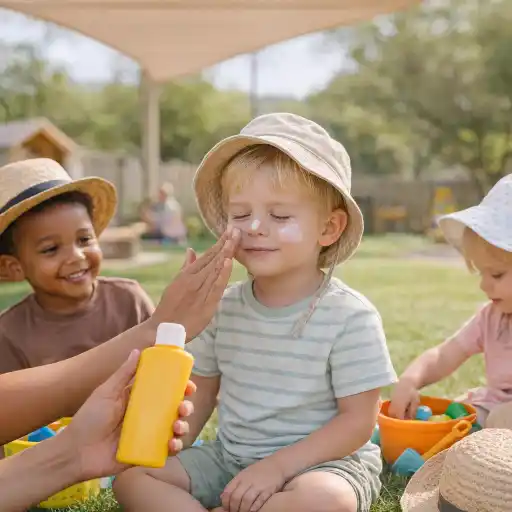
Common pitfalls are often simple to fix. Here are the top mistakes and practical avoidance strategies:
- ❌ Mistake: Relying on sunscreen alone. Solution: Layer protections—shade, clothing, hats, and sunscreen together (ChildCareEd).
- ❌ Mistake: No documentation or inconsistent consent. Solution: Use standardized permission forms and application logs; include sunscreen in your medication policy.
- ❌ Mistake: Late application. Solution: Apply sunscreen 15–30 minutes before outdoor time; set a staff reminder or include it in opening routines.
- ❌ Mistake: Poor shade planning. Solution: Map shade, add shade structures where children congregate, and do a daily shade check.
FAQ — quick answers for directors and providers
- Q: Can programs apply sunscreen without parental consent? A: No—most licensing rules require written permission; follow your medication policy and state rules (state requirements vary - check your state licensing agency).
- Q: Which SPF should we ask families to provide? A: Broad-spectrum SPF 30 is a practical program standard; CDC recommends SPF 15 or higher, but many programs choose SPF 30 for added margin (CDC).
- Q: What about infants under 6 months? A: Use shade and protective clothing—sunscreen is generally not recommended for infants under 6 months (CDC ECE).
- Q: Are spray sunscreens okay? A: Follow product label and program policy; avoid inhalation exposure—apply to hands first and rub in for young children.
- Q: How to handle allergies or reactions? A: Stop use, wash the area, notify family, and follow your incident reporting and medical response protocols; consider offering fragrance-free options.
Conclusion
Sun safety in child care is achievable with short, consistent routines that combine shade, clothing, hats, and sunscreen—backed by training, clear policies, and family partnership. Use environmental monitoring tools, document parental consent, and incorporate sun-safety checks into daily routines so outdoor time stays safe and joyful for children. For practical provider-facing resources and checklists, explore ChildCareEd's guides on sun and heat safety (#sunsafety resources) and link them with CDC and national standards to build a program policy that protects children and supports staff confidence.
- Safe and Sound: Creating Healthy Environments for Every Child
- 45 Hour Child Growth and Development
- Creating the Natural Outdoor Classroom
- Preventative Health and Safety
- CDA Bridge Bundle: Family Child Care without Portfolio Review
- CDA Bridge Bundle: Infant/Toddler without Portfolio Review
- CDA Bridge Bundle: Preschool without Portfolio Review
- Texas Director Credential
- Everyday Safety: Creating Healthy Environments
- CDA Certification en Español: Recursos y Consejos para Educadores Bilingües
- 👶 ¿Cuáles son las proporciones y grupos requeridos en Dakota del Norte? 🏫
- Recursos en Español sobre el Sueño Seguro del Bebé
- Cómo Empezar una Guardería en Casa: Requisitos y Pasos
- Proporciones de Cuidado Infantil y Tamaños de Grupo por Edad en Maryland (Guía Rápida para Centros y Hogares)
- Proporciones de Cuidado Infantil y Tamaños de Grupo por Edad en Nueva Jersey (Guía Rápida para Centros y Hogares)
- Proporciones de Cuidado Infantil y Tamaños de Grupo por Edad en Virginia (Guía Rápida para Centros y Hogares)
- How can New York childcare programs help children in the concrete jungle fall in love with nature?
- How can childcare programs teach young children about the Everglades safely while growing curiosity?
- How can Michigan home-based providers plan engaging and safe summer programming?
- Cómo simplificar la capacitación para sus empleados de daycare
- How can North Dakota child care programs protect young skin with simple sun-safety routines?
- How can child care programs prevent heat-related illness during outdoor play?
- How can child care programs keep playgrounds safe for infants through school-age children?
- How can child care programs build reliable sun safety routines with sunscreen, hats, and shade?
- Childcare Weather and Air Quality Chart: Keeping Outdoor Play Safe
- How Can Child Care Programs Build Effective Sun Safety Practices for Children?
- What Should Child Care Staff Check Before Outdoor Play?
- How Can Child Care Providers Teach Summer Safety Lessons Young Children Can Remember?
- How Can Child Care Providers Teach Children to Recognize Safe and Unsafe Summer Choices?
