Starting or running child care in #Michigan can feel big and exciting. This guide is for directors and providers. It gives clear steps you can use today. You will find short lists, links to helpful ChildCareEd pages, and practical tips. Why it matters: good child care keeps children safe, helps early learning, and builds trust with families. When you follow simple rules, you protect children, your license, and your #families.
Use these pages from ChildCareEd for help: Training Requirements, State-Approved Trainings, and the Great Start to Quality overview. Remember: state requirements vary - check your state licensing agency.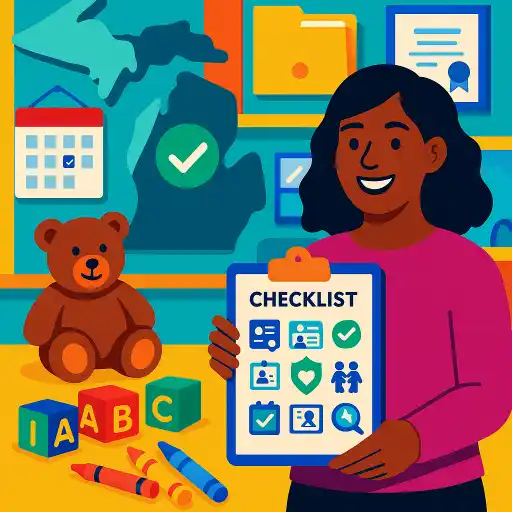
1) What are the first steps to becoming a licensed child care provider in Michigan?
1. Decide the type of program you want. Michigan has Family Child Care Homes, Group Child Care Homes, and Child Care Centers. See How to Start a Daycare in Michigan for details.
- 🔹 Apply for a license with LARA (Child Care Licensing). You will use the online system and submit forms.
- 🔹 Complete background checks and fingerprinting for adults who will be in the program.
- 🔹 Attend the required orientation and collect required documents (floor plans, policies, health records).
- 🔹 Schedule inspections (fire, health, playground) that the state needs to approve your space.
Why each step matters:
- It keeps children #safe and meets Michigan law.
- It shows families you are professional and reliable.
- It helps you avoid fines or closures.
For templates and forms, use ChildCareEd resources like the Daycare Business Plan Template Buy Now $0.00 and policy guides at What child care policies does every program need?.
2) What trainings and ongoing professional development do Michigan providers need?
Michigan asks providers to complete certain training before and after opening. These trainings protect children and help your program run well. See ChildCareEd’s Training Requirements for Michigan Childcare Providers for the full list.
- 📘 Initial trainings you must complete:
- Pre-service orientation (Great Start to Quality or state orientation).
- Health & safety topics such as infection control, safe sleep, medication, and emergency preparedness. See Health and Safety Orientation
 Buy Now $55.00.
 - Pediatric CPR and First Aid.
- Recognizing and reporting child abuse.
- 📚 Annual and ongoing training:
- Centers: usually at least 16 hours per year.
- Family child care: usually about 10 hours per year (plus required topics).
- 🔗 Use MiRegistry to track training. ChildCareEd explains the benefits of the MiRegistry.
Tips to stay on track:
- Plan trainings across the year so you don’t rush at the last minute.
- Keep certificates in a training binder and upload hours to MiRegistry.
- Choose state-approved courses — ChildCareEd lists Michigan-approved trainings at State-Approved Trainings in Michigan.
3) How do I set up a safe, legal space and run daily routines that support learning?
Good space design, clear routines, and health checks make days calm and safe. Follow these numbered steps when you set up your indoor and outdoor space.
- 🧭 Choose and check your location:
- Confirm local zoning allows child care.
- Plan indoor space for play, naps, meals, and storage.
- Plan fenced outdoor play and shade.
- 🛠️ Prepare for inspections:
- Schedule fire and health inspections early.
- Keep your safety items ready (first aid kit, fire extinguishers, safe cribs).
- 🔐 Health and safety systems:
- Follow safe sleep rules and illness policies from Basic Health & Safety. For a concise checklist of required health and safety trainings and the standards programs must meet, see Health and Safety requirements.
- Use the Medication Administration Template Buy Now $0.00 for safe medicine steps.
- 📅 Create daily routines:
- Include arrival, free play, group times, meals, outdoor play, and naps.
- Keep the schedule posted and consistent to help children feel secure.
Common mistakes and how to avoid them:
- ⚠️ Missing trainings — set calendar reminders.
- ⚠️ Skipping safety checks — do a weekly walk-through.
- ⚠️ Paperwork pile-up — file daily and scan important forms.
For checklists and free resources, see ChildCareEd’s Free Resources and the regulated child care guide at Regulated Child Care Guide Buy Now $0.00. Again, state requirements vary - check your state licensing agency.
4) How do I build trust with families, run the business side, and look for growth?
Strong programs are safe and professional. Use clear policies, smart budgeting, and family communication to grow. These steps help you run the business well.
- 📝 Create clear policies and a parent handbook:
- List hours, fees, drop-off rules, illness policy, and emergency plans. See what child care policies every program needs?.
- 💰 Plan your budget and rates:
- Use the Daycare Business Plan Template Buy Now $0.00 to list costs and fees.
- 🍎 Use food programs and funding:
- Apply for CACFP to help pay for meals. See Michigan CACFP.
- Look for grant help and local support; ChildCareEd posts grant ideas in the business articles.
- 📣 Market and keep families informed:
- Use simple social posts, flyers, and open houses.
- Share daily notes and photos (with permission) to build trust.
- ⭐ Track program quality:
- Use Great Start to Quality as your improvement plan. See Great Start to Quality.
Common mistakes to avoid here:
- 🔸 No clear contract — always use a written agreement.
- 🔸 Forgetting meal records — log meals for CACFP if you participate.
- 🔸 Not tracking training hours — use MiRegistry to save time.
Conclusion and FAQ
You can run a strong child care program in #Michigan by focusing on clear steps: get licensed, finish required #training, keep your space #safe, and build trust with #families. Use ChildCareEd pages for templates and courses: Michigan Courses and free resources at Resources. Remember: state requirements vary - check your state licensing agency.
FAQ
- Q: How do I track required hours? A: Use MiRegistry and keep certificates. See MiRegistry benefits.
- Q: Do all staff need CPR? A: Yes, staff who work with children should have pediatric CPR and first aid.
- Q: Can I get help with food costs? A: Yes, apply for CACFP in Michigan. See Michigan CACFP.
- Q: Where to find forms and templates? A: ChildCareEd has forms like the Medication Administration Template Buy Now $0.00 and the business plan template.
- Q: Who inspects my program? A: Michigan LARA coordinates fire, health, and licensing inspections.
Take one step at a time. Keep simple lists, train often, and ask for help when you need it. You are doing important work for children and families. #licensing #safety
- Why do I need a CDA Credential?
- ChildCareEd Bringing High-Quality Training to Providers Across the Globe
- A Complete Guide to ChildCareEd Courses for Providers in Michigan
- Capacitación en Salud y Seguridad Preventiva en Línea para Proveedores de Cuidado Infantil
- ¿Cómo solicito la licencia para una guardería en California?
- Regulaciones de Licenciamiento de Cuidado Infantil en California para Centros y Hogares de Cuidado Infantil Familiar
- Proporciones de Cuidado Infantil y Tamaños de Grupo por Edad en Maryland (Guía Rápida para Centros y Hogares)
- Lista para Guardería en Casa en California: Cómo Iniciar una Guardería en el Hogar
- Lista para Guardería en Casa en Texas: Cómo Iniciar una Guardería en el Hogar
- Cómo Trabajar en el Cuidado Infantil en California: Requisitos y Pasos
- Capacitación Previa al Servicio para Proveedores de Cuidado Infantil en Dakota del Norte
- What are training bundles in Michigan and which one fits your program?
- What are the basic steps for Michigan child care providers?
- What should Michigan child care providers know to get started and stay compliant?
- What's new in Michigan child care and how can your program prepare?
- How can small family childcare providers in Michigan create a simple budget?
- How can grants and vouchers in Michigan help child care providers?
- How can I earn a CDA in Michigan and use ChildCareEd to complete my coursework hours?
- Why Are Michigan Employers Investing in Child Care — And What Does That Mean for Providers?
- How can Michigan providers track staff credentials in MiRegistry step by step?
