Introduction
A clear family #handbook helps families and staff know what to expect each day. A good handbook saves time, lowers stress, and protects the children in your care. It should be short, easy to read, and kept up to date. Remember: state requirements vary - check your state licensing agency.
Why it matters:
1) Trust: Families feel safe when rules and routines are written down. 2) Safety: Written policies help staff act quickly in health or safety events. 3) Compliance: Licensing visits go more smoothly when forms and policies are ready.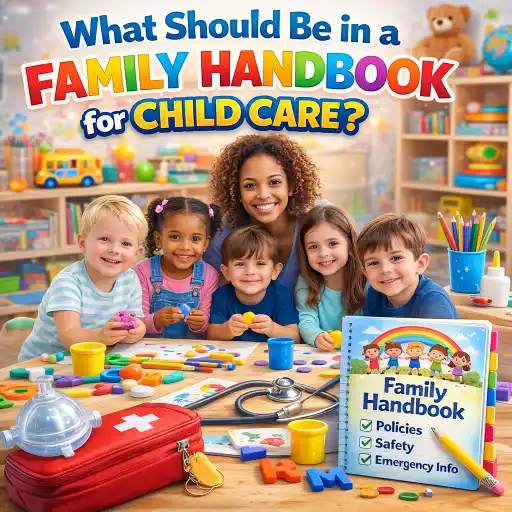
Use templates and tips from trusted sources like ChildCareEd's provider toolkit and sample forms at SimplyDaycare.
What key policies and forms should we include?
- Enrollment & emergency forms
- Include up-to-date emergency contacts, medical info, and signed permissions. Use a clear Family Communication Note Buy Now $0.00 and an emergency form like the ChildCareEd sample.
- Health & immunisation records
- Require current immunisations and note how you handle exemptions. See the HHS immunization standards.
- Permissions and acknowledgements
- Have families sign a handbook acknowledgement form. Templates are available from SampleForms.
- Policies summary (short and clear)
For examples and printable templates see SampleForms and the example handbooks at Building Blocks Home Daycare.
How should we cover health, #safety and emergencies in the handbook?
- Health rules (sickness, medication, safe sleep)
- List illnesses that need pickup and when a child can return. Follow national guidance like Caring for Our Children and safe sleep guidance like ChildCareEd's resource on safe sleep Buy Now $0.00.
- Cleaning and infection control
- Give short cleaning steps and when to sanitize or disinfect, based on the CDC cleaning guidance.
- Emergency plan essentials
- Include evacuation, shelter-in-place, lockdown, reunification steps, and a checklist for Go-Bags. Use the ChildCareEd emergency planning guides (see Emergency Preparedness and making a simple plan).
- Also reference the Red Cross on planning basics: Red Cross: Make a Plan.
- Training and drills
- List drill frequency and record keeping. CDC and ChildCareEd recommend regular practice and documentation.
How do we write clear rules about daily operations and family communications?
- Hours, tuition and fees
- Be direct: list hours, holiday closures, payment schedule, late pickup fees, and refund rules. Look at sample policies at Funshine Express.
- Behavior and guidance
- State your approach (redirection, quiet time) and steps for persistent behavior issues. Keep it short and positive.
- Daily communication
- Explain how you share news: sign-in notes, texting, apps, or daily sheets. Use a Family Communication Note like the one at ChildCareEd Buy Now $0.00 and the Parent Handout on home learning at ChildCareEd Buy Now $0.00.
- Records and privacy
- Say how you store records and who can see them. Be clear about photo and social media permissions.
How do we avoid common mistakes and keep the handbook useful?
Answer: Keep it short, update it, and put key pages where staff and families can find them fast.
- Common mistakes and fixes
- 🔸 Not updating contacts — fix: check contacts monthly and after enrollment changes.
- 🔹 Overlong handbook — fix: make a one-page quick guide and a longer full version.
- 🔸 Missing signatures — fix: include a handbook acknowledgement form; see SampleForms.
- Keep training linked to the handbook
- Use the handbook during staff orientation and drills. Track training and certificates as suggested in the ChildCareEd provider toolkit.
- FAQ (quick)
- Q: How often update? A: At least yearly and after big changes.
- Q: Who signs? A: Parents and staff should sign an acknowledgement.
- Q: Where keep it? A: Share online, keep a printed copy at the center, and place a short guide in each room.
Conclusion
Make your family #policies short, clear, and easy to find. Use numbered lists and short headings so staff can act fast. Pack emergency steps, health rules, and contact sheets in the front of the handbook and in every classroom Go-Bag. For sample templates, forms, and plans start with ChildCareEd, and review CDC and Red Cross guides for health and emergencies: CDC safety, CDC cleaning, and Red Cross planning.
Keep the handbook living: review it after drills, license checks, or staff changes. A clear handbook boosts your program's #communication and #emergency readiness — and helps everyone feel safer.
Answer: Put the must-haves in one place so staff and families can find them fast.Answer: Put step-by-step rules and a short plan that staff can follow when things happen.Answer: Use short headings, numbered lists, and examples so families read and understand quickly.- 45 Hour Child Growth and Development
- CDA Home Visitor Subject Area 3 Part 3 Birth to 5
- CDA Home Visitor Subject Area 2 Part 3 Birth to 5
- 45 Hour Preschool Methods and Materials
- CDA Family Child Care Credential
- Birth to Five CDA Credential with Portfolio Review
- 45 Hour Infant and Toddler Methods and Materials
- Pediatric RSV First Aid & CPR/AED
- 45 Hour School Age Methods and Materials
- Empowering Preschool Teachers with the CDA Portfolio Handbook
- Nurturing Excellence: The CDA Portfolio Handbook Empowering Infant/Toddler Teachers
- Cómo usar tu certificación de 90 horas en Maryland para completar tu CDA
- What should be in a family handbook for child care?
- How to Write a Parent Handbook for an Illinois Child Care Program
- ¿Cómo empiezo mi certificación CDA en Florida en línea?
- Regulaciones de Licenciamiento de Cuidado Infantil en California para Centros y Hogares de Cuidado Infantil Familiar
- Lista para Guardería en Casa en California: Cómo Iniciar una Guardería en el Hogar
- Lista para Guardería en Casa en Texas: Cómo Iniciar una Guardería en el Hogar
- Cómo Trabajar en el Cuidado Infantil en California: Requisitos y Pasos
- How to Open a Home Daycare in Maryland
- Starting an In-Home Daycare in Maryland: Requirements and Tips
- Celebrando la amistad en el cuidado infantil durante el Día de los Mejores Amigos
- How Do I Complete an Infant-Toddler CDA Training Guide?
- How Can Minnesota Providers Reduce No-Shows and Late Pickups?
- What Should I Include in My New York Day Care Parent Handbook?
- How do I write clear policies and a parent handbook for my child care program?
- How Can Childcare Programs Create Clear Policies That Families Understand and Trust?
- How Can Child Care Providers Build Stronger Connections With Families From the First Day?
- Who Should Parents Contact About Their Child’s Care?
