Introduction — Why this matters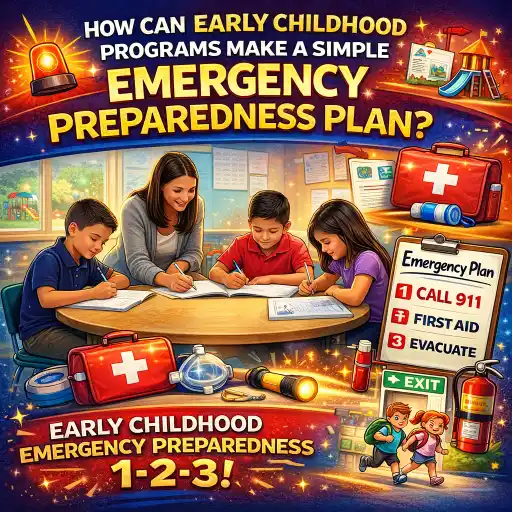
As a child care leader you keep kids safe every day. A short, clear emergency plan helps protect children, supports your #staff, and builds trust with families. Being ready makes a scary moment easier to manage. This is about the safety of your #children and the #safety of your program.
Why it matters: When a plan exists people know what to do. Planning reduces panic, speeds reunification, and helps everyone feel calmer after an event. For practical templates and training ideas, see the free Emergency Preparedness Plan from ChildCareEd and the online course at ChildCareEd Emergency and Disaster Preparedness  Buy Now
 $55.00$45.00.
Quick note: state requirements vary - check your state licensing agency.
1) What are the key parts of a simple plan?
A simple plan has a few clear pieces that everyone can follow. Use numbered steps so staff can remember them under stress.
- Risk check: List likely events (fire, storm, power loss, intruder). Use a local guide like the Red Cross to think through hazards.
- Roles: Name who does what (lead, attendance, communications). Keep roles short and practiced; post them where staff can see them.
- Actions: Define 3–4 actions with clear language: Evacuate, Shelter-in-Place, Lockdown, and Reunify. Consider adopting the Standard Response Protocol (SRP) language so everyone uses the same words.
- Routes & meeting spots: Mark primary and backup evacuation routes and off-site reunification locations. Share these with families.
- Supplies & records: Store current attendance, emergency contacts, medications, and a Go-Bag in an easy place. See ChildCareEd's go-bag ideas at Your Emergency Go-Bag.
- Practice & update: Set drill dates and a review schedule—at least yearly or after any change.
Cite, adapt, and keep your written plan short. For templates and a step-by-step form, use the ChildCareEd Emergency Plan PDF at Emergency Preparedness Plan Buy Now $0.00.
Every classroom should have an easy-to-grab Go-Bag. Keep one near the main exit so staff can take it during an evacuation. A well-packed bag supports both #children and #staff during the first hours after an event.
- 🔹 Information (keep in a waterproof folder):
- Current attendance sheet and emergency contact list.
- Health info: allergies, medications, and consent forms.
- Copy of your emergency plan and map of the building.
- 🔸 Medical & first aid:
- Complete first aid kit, gloves, CPR barrier, any needed prescription meds (policy permitting).
- 🔹 Basic needs:
- Water (small bottles), non-perishable snacks, diapers/wipes, formula if needed, blankets, comfort items like small books.
- 🔸 Tools & communication:
- Flashlight and spare batteries, whistle, battery-powered radio, charged power bank, pen and paper.
- 🔹 Sanitation & safety: trash bags, hand sanitizer, masks, duct tape, gloves.
Keep a larger center kit with extra water, a battery radio, and copies of licensing and insurance info. Check kits every 3–6 months and after drills. For a checklist you can use today, see ChildCareEd's Go-Bag guide and FEMA guidance at Ready.gov and Red Cross.
Training helps staff act calmly. Calm adults help children stay calm. Use short, regular training and age-appropriate practice so drills become routine, not frightening.
- 🔹 Train in steps:
- 1) Teach staff the written plan and roles during staff meetings.
- 2) Use table-top exercises (talk through what-if scenarios) before doing live drills.
- 3) Offer or require training such as ChildCareEd's courses: Emergency and Disaster Preparedness Buy Now
$55.00$45.00 and Creating an Emergency Plan Buy Now $16.00.
- 🔸 Practice with children:
- Use simple language and a calm tone. Explain drills as practice for safety.
- Start slow for toddlers—short, quiet moves to the safe spot. For preschoolers use games or songs to guide actions.
- 🔹 Use trauma-informed practices:
- Avoid dramatic simulations. See guidance from the Texas School Safety Center that discourages live-action simulations that can cause trauma (TxSSC training and drills).
- 🔸 Work with responders: Invite local fire or police to review your plan and observe drills. They can help improve procedures and calm staff worries.
Document every drill: date, time, who participated, what worked, and what to change. Use your notes to update the plan. ChildCareEd recommends practice and plan reviews after drills—see their step-by-step guide.
Clear communication and a reunification plan protect children and reduce family anxiety. Reunification should be quick but controlled. The faster children get back to trusted adults, the better they feel, so plan this carefully.
- 🔹 Make a reunification plan now:
- Choose primary and secondary reunion sites (on-site and off-site). Post them in your parent handbook and on your website.
- Decide the verification method (photo ID, sign-out log, colored cards). The SRP offers helpful tools like Red/Green cards for quick visual checks (SRP materials).
- 🔸 Use multiple communication channels:
- Phone tree, text alerts, email, social media, and a designated out-of-area contact. Post emergency phone numbers where staff can find them.
- Keep a printed contact list in your Go-Bag in case phones fail.
- 🔹 Follow CDC advice on reunification: Have procedures that prioritize quick, safe reunions and include local resources like the Red Cross or Missing Children hotlines when needed (CDC Reunification).
- 🔸 State and local partners: Share your plan with local emergency management and licensing officials so they can help. For example, see how Oklahoma coordinates child care after disasters at Oklahoma OCC plan.
After reunification, offer families brief written updates and resources for emotional support. The CDC notes children may show stress after disasters and suggests ways to help them cope (CDC Before, During, After).
Conclusion — A quick action checklist
Keep this short list where staff can see it:
- Write a 1–2 page plan with roles and actions. See ChildCareEd's template Buy Now $0.00.
- Pack classroom Go-Bags and a center kit. Use the ChildCareEd checklist at Your Emergency Go-Bag.
- Train staff, practice drills regularly, and document each drill. Use trauma-informed approaches and avoid harmful simulations (TxSSC).
- Write your reunification steps and communicate them to families. Refer to CDC reunification guidance.
- Remember: state requirements vary - check your state licensing agency.
Common mistakes and how to avoid them:
- Not updating contact lists — fix: review monthly.
- Skipping staff practice — fix: schedule short drills every quarter.
- Using scary drill simulations — fix: use calm, age-appropriate practice.
FAQ (quick)
- Q: How often should we drill? A: Monthly small drills for fire; quarterly for other scenarios is a good start. Check state rules.
- Q: Can staff carry meds in the Go-Bag? A: Follow your licensing and parental consent rules and document storage.
- Q: Who approves our plan? A: Your director and licensing agency should review it; invite local responders for feedback.
- Q: What if phones fail? A: Use printed lists, radios, and an out-of-area contact number in your Go-Bag.
For more step-by-step help and training, start with ChildCareEd resources: what every provider should know, the free plan at Emergency Preparedness Plan Buy Now $0.00, and course options at ChildCareEd courses Buy Now $55.00$45.00.
Stay calm, practice often, and protect what matters most: your #children, your #staff, and your #preparedness.
4) How should we communicate and reunify families after an event?2) What should be in a classroom go-bag and center supplies?3) How do we train staff and practice drills without scaring kids?- Ensure the Health and Safety of Young Children
- Emergency Preparedness training
- D.C. Emergency Preparedness Training
- First Aid & CPR ~ Empowerment Through Lifesaving Skills
- CDA Certification en Español: Recursos y Consejos para Educadores Bilingües
- 🌪️Fire Drills, Flashlights & Fast Thinking: Why Emergency Preparedness Is a Must
- Recursos en Español sobre el Sueño Seguro del Bebé
- Normas de Licenciamiento de Cuidado Infantil en Virginia para Centros Diurnos Infantiles y Hogares Diurnos Familiares
- Emergency Preparedness in North Carolina Child Care: What to Have, Practice, and Document
- How can my classroom be ready for an emergency?
- How do ChildCareEd's urban childcare courses help Michigan providers in high-density communities?
- How do we handle a child care emergency in New York: policies, drills, and preparedness?
- Cómo simplificar la capacitación para sus empleados de daycare
- How do I write an emergency preparedness plan that meets Michigan licensing rules?
- How can childcare centers create effective emergency preparedness plans?
- Emergency and Disaster Preparedness Training Online: What Will You Learn?
- Do You Have to Retake Emergency and Disaster Preparedness Training in Maryland?
- How Can Child Care Programs Build Effective Emergency Preparedness?
- Field Trip Emergencies: What Changes When You Are Away from the Center?
