Starting a new hire off right helps your team feel confident and keeps children safe. This checklist shows the training and steps Washington centers often use when a new staff member begins. Use the list to build a simple, written plan that your whole team can follow. Remember: state requirements vary - check your state licensing agency.
Why it matters: When new staff get clear #onboarding, good #training, and quick support, accidents drop, families trust you more, and staff stay longer. National guidance like Caring for Our Children and practical state-approved courses (see Washington Approved Trainings) show which topics matter first.
1) What should new staff learn during Washington orientation?
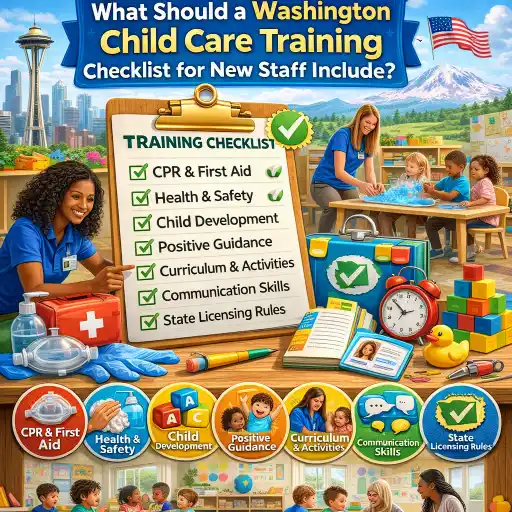
New hires need short, clear training on safety, routines, and paperwork first. Aim for a checklist that covers the items below so nothing is missed.
- 🩺 Health & Safety basics: handwashing, illness exclusion, safe sleep for infants, medication rules. See Health and Safety Training for topics to include.
- 🧯 Emergency plans: fire, earthquake, lockdown, and reunification steps. Practice drills and keep drill logs.
- 🚼 Supervision rules: active supervision, ratios, and position/zoning. Use resources like Active Supervision guides.
- 📋 Paperwork & reporting: sign-in/out, incident reports, medication logs, and mandated reporting steps. See policy examples.
- 🤝 Family communication & professionalism: drop-off routines, confidentiality, and how to share simple notes with families. Use ChildCareEd templates and the Medication Admin template Buy Now $0.00 when needed.
Tip: mark which courses are state-approved in Washington (see Childcare Courses in Washington) and note expiration dates for CPR/First Aid.
2) When should each training happen, and how long does orientation take?
- 0–7 days: 📋 Complete hiring forms, background checks, health forms, and a short safety tour. Start required online courses such as Health & Safety Orientation (ChildCareEd Health & Safety Orientation
 Buy Now
 $55.00$45.00). - 8–30 days: 👥 Shadowing and a buddy system. Short classroom practice and basic documentation routines. Assign one small daily task to build confidence.
- 31–60 days: 🔍 Observe, give feedback, and add topic trainings (behavior guidance, curriculum basics). Track progress with a simple checklist.
- 61–90 days: ✅ Final check-in, set next goals, and complete any remaining required courses. Keep a record of certificates.
Many Washington programs use a mix of online approved courses and short in-person skills checks. Use the Washington portal, Washington Approved Trainings, to confirm course acceptance in-state. Also track CPR/First Aid expiry—set calendar reminders.
3) How should centers track training and meet Washington licensing expectations?
- 📁 Create a staff file for each person: hire forms, background check, health forms, and scanned certificates. See Recordkeeping Tips for file ideas.
- 🗓️ Keep a one-page tracker showing: course name, date completed, hours, expiration date, and state approval (yes/no). Color-code for quick checks.
- 🔔 Set automatic reminders for renewals (CPR, background checks).
- 🧾 Keep a program training binder with drill logs, orientation checklists, and policy sign-offs for licensors to review.
- 📥 Ask staff to send certificates by email and save them in two places: a locked drive and a paper file.
Use trusted providers like ChildCareEd and Washington-approved lists to avoid taking courses the state won’t accept. For templates, try ChildCareEd resources like the Medication Administration Template Buy Now $0.00 and staff supervision tools at free resources. State requirements vary - check your state licensing agency.
4) How can directors make orientation welcoming and avoid common mistakes?
A friendly, step-by-step orientation keeps new staff calm and learning. Small supports make a big difference.
- 👋 Welcome plan: send a welcome email, a Week 1 schedule, and introduce a buddy mentor before Day 1 (see onboarding tips, like in general onboarding best practices).
- 🧭 Give clear daily tasks: one small job each day builds skill and confidence (set up a shelf, lead a short circle time with a mentor).
- 💬 Short check-ins: 10–15 minute chats after Day 1 and weekly check-ins for the first month.
- 📚 Offer flexible learning: choose short, Washington-approved online modules alongside hands-on practice. Check WA course listings.
- 🏆 Make a simple growth plan: set one 30-day goal and one 6-month goal. Celebrate small wins.
Common mistakes and fixes:
- ❌ Taking non-approved courses. ✅ Fix: confirm approval via the Washington portal or your licensor.
- ❌ Losing certificates. ✅ Fix: scan and save certificates immediately in two places.
- ❌ Overloading staff on Day 1. ✅ Fix: spread training across 30–90 days with a buddy for practice.
For easy checklists and training bundles, use ChildCareEd guides like Workforce Qualifications and health resources at Health & Safety. Keep it simple, kind, and practical.
Conclusion
Use this Washington checklist to build a short written plan for new staff. Key steps to finish first:
- 📋 Make a one-page #onboarding checklist with required forms and who the buddy is.
- 📥 Save certificates in two places and note expirations (#documentation).
- ⏰ Use a 30-60-90 plan for training and practice (#training).
- 🔎 Confirm course approval for Washington before staff pays (#safety).
- 🤝 Welcome new staff with a mentor and short daily tasks to build confidence (#orientation).
Need ready-made forms? See ChildCareEd free resources and Washington-approved course lists: Free Resources and Washington-Approved Trainings. state requirements vary - check your state licensing agency.
Break onboarding into small steps so new staff can learn without feeling overwhelmed. A 30-60-90 day plan works well in many centers. Good tracking keeps you ready for visits and keeps staff legal and confident. Use a simple system with paper and digital backups.- Adult/Child/Infant CPR AED and Adult First Aid Blended
- 45 Hour Child Growth and Development
- Adult Only CPR AED and Adult First Aid Blended
- Bienvenido! Welcoming All Families
- Business Planning: Family Child Care
- Pediatric RSV First Aid & CPR/AED
- 45 Hour School Age Methods and Materials
- 45-Hour Infant and Toddler Curriculum
- Childcare Management
- Lista para Guardería en Casa en California: Cómo Iniciar una Guardería en el Hogar
- What should a Washington child care training checklist for new staff include?
- What are Washington child care deadlines, hours, and next steps?
- What do Washington child care licensing requirements mean for early childhood educators?
- How can Washington child care programs stay compliant with staff training, records, and classroom safety?
- How do I start a daycare in Washington, D.C. as a new provider?
- How can Washington early childhood educators support outdoor play, safety, and learning in daycare?
- Can Washington early childhood educators grow with ChildCareEd’s self-paced courses?
- What new child care news in DC should providers know and how can training help?
- How can Washington child care professionals begin their career with confidence through ChildCareEd?
- How Can Early Educators Become a Child Care Director in Washington?
- How can Washington early childhood programs stay safe with CPR and AEDs?
- How do I open a day care in Washington with confidence?
- How Can Washington Child Care Providers Stay Stable When Early Learning Budgets Are Delayed?
- How can Washington providers use state training dollars to build a stronger early learning team?
- What do Washington’s 2026 child care licensing changes mean for providers?
- Washington Child Care Ratios and Group Sizes by Age: Daycare Center Guide
- Washington Child Care Ratios and Group Sizes by Age: Home Daycare Guide
- How to Become a Childcare Worker in Washington: Requirements and Steps
- Free Online Child Care Training in Washington: Earn a Certificate
