Snack time can be a daily opportunity to nourish children, teach healthy routines, and create a calm moment in a busy child care schedule. The most successful snacks are simple, appealing, easy to prepare, and balanced across food groups while also accounting for allergies, choking risks, cultural preferences, and individual feeding needs. This guide gives directors and providers practical, classroom-tested combinations that #preschoolers are more likely to enjoy, along with preparation systems, family communication ideas, and playful ways to connect #snacktime with counting, colors, vocabulary, and food exploration. By centering #nutrition, #allergies, and real-world classroom needs, programs can make snack time safer, healthier, and more enjoyable for the #children in their care.
To strengthen your program’s nutrition practices, explore ChildCareEd’s self-paced online course Healthy Starts: Safety, Nutrition, and Wellness in Child Care  Buy Now $55.00. The training covers nutritional planning, food allergies, obesity awareness, supervision, and strategies for creating safe and healthy early learning environments. Providers can also take Nutrition Essentials for Child Care Providers, a self-paced course focused specifically on foundational nutrition practices for child care settings.
Why it matters
1) Good snacks provide steady energy and attention, supporting learning and behavior (Snack Ideas for Daycare).
2) Thoughtful snack systems reduce staff stress, keep costs down, and protect children with food allergies — essential to safe, inclusive care (Healthy snacks for daycare (nut-free ideas)).
1) What healthy snacks do kids actually love?
- 🍎 Apple slices + sunflower-seed butter or cream cheese — nut-free swap recommended (nut-free ideas).
- 🥕 Cucumber coins or carrot sticks + hummus or yogurt dip (Snack Time in Daycare).
- 🧀 Cheese cubes + quartered grapes (grapes for toddlers must be quartered lengthwise).
- 🍌 Banana coins with cinnamon or plain yogurt dip.
- 🍞 Whole-grain crackers + tuna or egg salad (well-mixed, age-appropriate).
- 🥣 Yogurt parfait: yogurt + berries + nut-free granola (serve in cups to reduce cross-contact).
- 🍕 Mini whole-wheat pita pizzas with sauce + mozzarella (toast if allowed).
For more lists and classroom-friendly recipes, use ChildCareEd’s ready guides: Snack Ideas for Daycare and Healthy snacks for daycare (nut-free ideas). Also keep a backup snack bin (applesauce cups, whole-grain crackers, milk boxes) for late drops.
2) How do we plan snacks that fit the budget, CACFP, and families?
- 📅 Plan one week at a time with a repeated rotation (Monday–Friday themes). See ChildCareEd’s Preschool Weekly Menu templates.
- 🛒 Build a shopping list from that menu; buy seasonal fruit and frozen veggies to lower cost.
- 💲 If eligible, enroll in CACFP — it provides reimbursement and clear meal patterns. Learn how CACFP helps at state and program pages like your local CACFP office (Child and Adult Care Food Program).
- 🥣 Prep no-cook and shelf-stable options (yogurt cups, string cheese + pear slices, veggie dippers) for busy shifts.
- 📋 Post the weekly menu for families and staff; include substitutions and allergy notes to reduce surprises.
State requirements vary - check your state licensing agency. Use ChildCareEd’s menu and CACFP resources for sample menus and portion guidance (Menus & templates).
3) How can we keep snack time safe for allergies and choking?
- 📝 Collect allergy info at enrollment; keep one-page action plans accessible to staff (but not publicly posted). See ChildCareEd’s guidance on handling allergies (Allergy & safety tips).
- 🧼 Clean and sanitize tables, wash hands before/after snack, and prevent food sharing.
- 🚫 Prevent cross-contact: label allergy-safe foods, use separate utensils and cutting boards when needed.
- 🔍 Read ingredient labels every delivery—brands and formulations change (nut-free ideas).
- ⚠️ Reduce choking risk: cut grapes and cherry tomatoes lengthwise and quarter them, steam hard veggies for toddlers, avoid whole nuts for young children. Follow CDC choking and infant/toddler feeding guidance (CDC feeding).
Common mistakes and quick fixes:
- 🚫 Not reading labels — assign a staff member to each delivery to check.
- 🚫 Allowing food sharing — teach and post a simple no-sharing rule at snack time.
- 🚫 Using food in sensory play without permission — use non-food materials or get written family consent.
Remember: state requirements vary - check your state licensing agency and ensure staff training includes allergy recognition and emergency plans (training links).
4) How can snacks support behavior, brain health, and picky eaters?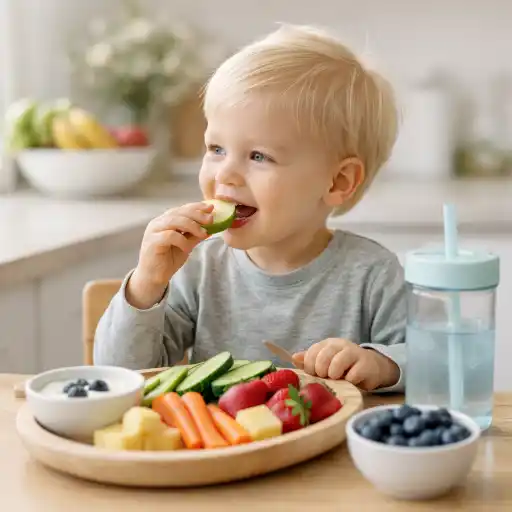
Snacks can steady blood sugar and support focus. Use balanced combos with protein, healthy fats, fiber, and whole grains. Practical choices and strategies:
- 🥑 Include protein and healthy fats: yogurt, cheese, eggs, beans, avocado — these help attention and calm (brain-food ideas).
- 🫐 Add fruit/veg for vitamins and fiber: berries, oranges, carrots, cucumbers.
- 🌾 Prefer whole grains: whole-wheat crackers, rice cakes, oatmeal.
- 🕒 Keep regular snack times so children develop hunger cues and avoid grazing.
- 👧 Use low-pressure exposure for picky eaters: repeated small tastes, staff modeling, and involving children in prep increase acceptance (see ChildCareEd and CDC tips on picky eating: Picky eating, CDC tips). For playful, classroom-tested, no‑bribe techniques that reduce mealtime power struggles and help children try new foods, see witty, non-bribery strategies to encourage healthy eating.
Classroom tactics that work:
- ✅ Family-style when safe: teaches self‑serving and motor skills (adapt for allergies).
- ✅ Taste-testing and “tiny bites” challenges to normalize trying new foods (Tiny Tastemakers).
- ✅ Make veggies playful: kebabs, faces, dips — research and ChildCareEd examples show playful presentation raises try-rates.
5) How can we involve children and families to make snacks educational and equitable?
Snack time becomes a learning moment when it’s predictable, inclusive, and culturally responsive. Steps you can use right away:
- 📣 Communicate a one-page snack policy to families: weekly menu, allergy rules, and packing tips. Use ChildCareEd handouts or adapt the Snacks to Send to Daycare checklist.
- 👩🍳 Invite family recipes: ask families to share safe, culturally meaningful snack ideas — post a rotating “family favorite” snack with substitutions for allergens.
- 🌱 Do short cooking activities (no-heat) and taste tests to build curiosity — link to Nutrition Month or themed weeks (Nutrition Month Activities).
- 🤝 Offer simple choices to kids (choose 1 of 2 veggies), so children practice decision-making without pressure.
- 🔁 Share quick how‑to photos or videos with families showing safe prep and packing tips (portion sizes, cold packs, labeling).
State requirements vary - check your state licensing agency before family food events. When families and staff use the same simple rules, snack time becomes safer and more nourishing for every child.
Conclusion
Three practical takeaways you can use tomorrow:
- 🍽️ Build weekly, repeatable menus combining two food groups per snack; keep a backup snack bin.
- 🛡️ Make allergy and choking-safety routines routine: labels, one-page plans, label checks, and proper cutting.
- 🎉 Turn snacks into low-pressure learning: involve kids in prep, use playful presentation, and lean on family-style or taste tests when safe.
For ready-made lists, sample menus, and training that match these steps, start at ChildCareEd (see Snack Ideas for Daycare, Nut-free snacks, and Snacks to Send to Daycare). You’re already doing the essential work—small, consistent systems make snack time safer, calmer, and more fun for children and staff.
- Balancing Physically Active Play in Child Care
- Nutrition Essentials for Child Care Providers
- Birth to Five CDA Credential with Portfolio Review
- Pediatric RSV First Aid & CPR/AED
- Positive Attention: Interactions & Supervision for Infants & Toddlers
- Wellness in Action: Teaching Healthy Habits to Children
- Balancing Active Play in Child Care
- Every Moment Matters: Schedules and Transitions
- Everyday Safety: Creating Healthy Environments
- Healthy Lunchbox Ideas for the New School Year: Keep Kids Energized & Excited about Their Meals
- Gut Gnomes and Fairy Food: How to Feed the Magical Creatures Living in Your Kid’s Tummy
- Tummy Time Travelers: How to Send Your Kid’s Gut on a Yummy Health Journey
- Eat, Play, Grow: Essential Nutritional Tips for Growing Minds
- Snack Attack! The Best Brain Foods for Growing Minds
- Kickstart a Healthy Routine for Kids That Actually Sticks Past January
- Pizza or Kale Chips? Kid-Friendly Nutrition Tips to Start the Year Right
- 👶😴¿Es Normal que los Niños Griten o Lloren al Despertarse?
- Pascua En El Aula: Actividades Sencillas Para Aprender y Celebrar Con Seguridad
- Menos Estrés a la Hora de Comer: Rutinas Simples Que Sí Funcionan
- ¿Cómo afecta la dopamina a los niños: señales, efectos e influencias diarias?
- ¿Cuál es la Diferencia Entre la Crianza Respetuosa y la Crianza Permisiva?
- Ejemplos de Crianza Respetuosa vs. Crianza Permisiva
- Mother’s Day Classroom Ideas Families Will Love
- How to Celebrate Cinco de Mayo in Your Center or Daycare
- How to Celebrate National Ice Cream Day in Your Center
- Celebrando la amistad en el cuidado infantil durante el Día de los Mejores Amigos
- How can we help young children stand tall like the Golden Driller and build real confidence?
- How can Florida child care providers celebrate National Ice Cream Day safely and with learning fun?
- What Healthy Snack Ideas Will Kids Actually Love?
