Introduction
Picky eating is something many teachers and directors see every day. In this article you will learn what is normal, what may need help, and ideas you can try in your #classroom. We use simple steps you can use tomorrow. This guide is for child care providers and directors. It is short, clear, and kind. For quick ideas from our site see How Can I Help Picky Eaters? and Healthy Cooking for Picky Kids. You will also find helpful tips from the CDC.
What is normal picky eating for young children?
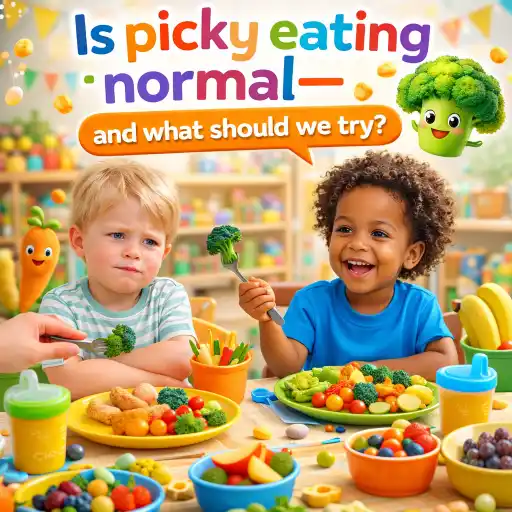
Picky eating often starts when children are toddlers. It can mean they like only a few foods, want the same plate each day, or dislike mixed foods touching. These behaviors are common and usually part of growing up. The CDC explains that children may need many tries — sometimes 10 or more — to accept a new food, and that pickiness often gets better by age 5. See the CDC tips at Tips to Help Your Picky Eater.
- 🍎 Children explore food with their senses. Smell and texture matter.
- 😊 Children assert independence. Saying “no” is a way to test control.
- 🥕 Food habits form slowly. Repeated low-pressure exposure helps.
In child care, staff can help by offering variety and letting kids touch or smell foods first. Research shows staff practices (like explaining food or letting kids help prepare it) increase healthy choices — see the study summary in ChildCareEd resources and academic work on staff food practices.
When is picky eating a problem and who should we call?
Most picky eating is normal. But sometimes a child eats so little they do not grow well, loses weight, or avoids almost all foods. These signs need more help. If you see any of the following, document what you see and talk with the child’s family and health provider:
- 🍏 Weight loss or slow growth for age.
- 🍽️ Very limited diet (fewer than about 10 foods) or refusal to eat major food groups.
- 😰 Strong fear about choking, vomiting, or trying new textures.
- 🚫 Mealtime behaviors that stop daily care (long meltdowns, refusal to attend).
These issues can be part of Avoidant Restrictive Food Intake Disorder (ARFID) or other feeding disorders. Learn more from clinical sources like Stanford Children’s Health on ARFID and specialty feeding centers such as the Munroe-Meyer Institute. If you suspect a serious feeding problem, refer the family to medical and feeding specialists. Many centers use a team: pediatrician, dietitian, psychologist, and occupational therapist.
Keep careful records and share them with families. If you are unsure about referral rules, remember: state requirements vary - check your state licensing agency.
What practical strategies can providers try now?
Try gentle, low-pressure steps in the #classroom. Below are easy actions that fit most schedules. ChildCareEd articles have ready-made lesson ideas and recipes: practical strategies, cooking projects, and nutrition guides.
- 🍽️ Offer family-style or small-choice service.
- Children pick from safe, age-appropriate bowls. This builds independence and choice.
- 🍎 Use repeated, no-pressure exposure.
- Put a tiny taste on the plate. Try the same food across days. Kids may need many tries.
- 🥕 Make food playful and sensory-based.
- Touch, smell, sort, or make a sample plate. Cooking projects (no-heat) get big buy-in — see Chef’s in the Classroom.
- 😊 Model, don’t pressure.
- Eat the food, describe it simply, and stay calm if a child refuses.
- 🧯 Respect sensory needs and offer texture options.
- Serve softer or firmer versions (e.g., mashed vs. crunchy) and let children choose utensils.
For menus and classroom plans, use ChildCareEd training like On My Plate  Buy Now $24.00 and Healthy Habits From the Start Buy Now $35.00. Also follow public health guidance on safe portions and choking risk from sources like CDC: Good Nutrition Starts Early. And remember: state requirements vary - check your state licensing agency.
What common mistakes should we avoid and how will we know we’re helping?
Avoid these mistakes. They can make picky eating worse.
- 🚫 Forcing children to eat or using food as punishment or reward. This raises mealtime stress.
- ⚠️ Offering giant portions or mixing too many new foods at once. Small steps work better.
- ❌ Labeling children as “picky” in front of them. This can hurt a child’s self-image.
- 🔁 Stopping exposure too soon. Children often need repeated tries across weeks.
Signs your efforts are working:
- 👍 Child touches or smells new foods without distress.
- 🙂 Child accepts tiny tastes and sometimes asks for seconds.
- 📈 Growth and weight stay on the child’s usual curve.
- 🕊️ Mealtimes become calmer and shorter.
If you don’t see improvement or the child is losing weight, seek a team evaluation. Clinical guides on ARFID and feeding disorders explain when specialized care is needed (see Stanford and BDA on ARFID).
Conclusion and FAQ
Quick takeaways:
- #picky eating is common and often normal in young children.
- #children usually need many low-pressure tries to accept new foods.
- #nutrition and calm mealtimes matter; watch growth and behavior.
- #classroom strategies like cooking, modeling, and choice help.
If the child shows signs of medical concern or very restricted intake, refer to specialists. For help in your program, explore ChildCareEd trainings and resources listed above.
FAQ
- Q: How many times should we offer a new food?
A: Offer it many times across days and weeks without pressure. The CDC notes children may need 10+ exposures before liking a food.
- Q: Can we involve parents?
A: Yes. Share simple tips and small home activities. ChildCareEd suggests sending easy recipes or a one-page handout.
- Q: Is it okay to let children refuse?
A: Yes. A no-pressure allow-say approach keeps mealtimes calm and safe.
- Q: When should we worry?
A: Worry if the child loses weight, stops growing, or eats very few foods. Then get a medical and feeding-team evaluation.
For more classroom tools, see ChildCareEd: Picky eater strategies, Cooking with kids, and the free resource library. And remember: state requirements vary - check your state licensing agency.
