When a new Pre-K group arrives with tears, hesitation, or wide-eyed uncertainty, thoughtful activities can turn an unfamiliar room into a place of belonging. This practical five-day plan combines relationships, play, routines, and emotional support; for deeper guidance on developmentally appropriate planning, explore Lesson Planning for Preschoolers  Buy Now $24.00 to strengthen classroom practice and support professional learning goals.
Why should comfort come before academic productivity?
The first week is an orientation to relationships, expectations, and the physical environment—not a race to complete academic objectives. Children are learning how to separate from familiar adults, communicate needs, locate materials, join peers, and trust new teachers. Until those needs are addressed, even an engaging activity may feel demanding.
Predictable routines provide an emotional framework. A picture schedule, repeated songs, familiar greetings, and consistent transition language help children anticipate what comes next. The ChildCareEd guide first-week preschool lesson plans similarly emphasizes belonging, names, feelings, self-help, friendship, observation, and flexibility.
Comfort does not mean avoiding challenge. It means introducing challenge gradually, with responsive adults and opportunities for recovery. Directors can support staff by protecting extended play, keeping group meetings brief, and agreeing on shared language for arrival, transitions, and reassurance.
- Prioritize connection over compliance.
- Teach one routine at a time through modeling and practice.
- Observe children’s strengths without treating the first week as a test.
- Offer verbal, visual, sensory, and movement-based ways to participate.
How can Day 1 create belonging and security?
Focus: “You are welcome, and this classroom is safe.”
Greet each child by name at the door. Offer choices such as a wave, fist bump, verbal greeting, or walking in beside a teacher. A child who is not ready to interact should be allowed to enter quietly. This communicates that connection is available without forcing performance.
Invite children to explore a small number of clearly arranged centers. Set out blocks, play dough, crayons, books, and dramatic-play materials rather than overwhelming the room with every available resource. During play, teachers can sit nearby, narrate actions, and model simple entry language: “I am building here. Would you like a block?”
Read a short book about school, families, or belonging. Ask observational questions—“What do you notice?”—instead of requiring children to share personal stories. Follow the book with a self-portrait invitation. Children may draw, make marks, use collage materials, or dictate words.
Teach one transition using a cleanup song and a two-step direction: “Put the blocks in the basket, then meet on the carpet.” Practice when the group is calm, and repeat without shame.
- 🧸 Create a cozy comfort space with books and soft materials, never as punishment.
- Use a consistent goodbye message with families.
- Record strengths-based observations, such as a child watching before joining play.
How can Day 2 make names and identity meaningful?
Focus: “Your name, language, and identity matter here.”
Repeat the arrival routine so children recognize its structure. Introduce a name song that lets every child hear their name. Learn and use each child’s preferred name and pronunciation; ask families about names, languages, family terms, and cultural practices. When adults correct themselves respectfully, children see that inclusion is an everyday practice.
Place name cards in meaningful play areas. Children might match a card to a cubby, identify a photograph, build a name with magnetic letters, clap syllables, or notice the first letter. Writing should remain optional. The goal is authentic participation, not a handwriting assessment.
Create a simple “Who is here?” chart with photos or name cards. Invite children to sort themselves by a low-pressure preference, such as favorite color or animal. Count together and discuss similarities without suggesting that one choice is better than another. The activity supports belonging, oral language, early mathematics, and turn-taking.
Add clipboards, envelopes, and pretend sign-in materials to dramatic play. Children can scribble, copy environmental print, dictate messages, or greet one another. Teachers should respond to meaning rather than correct spelling.
Use children’s interests to shape the following days. Observation-based planning honors each child as a contributor and may reveal who prefers parallel play, who seeks adult proximity, and who is ready for peer interaction.
How can Day 3 support emotions, boundaries, and friendship?
Focus: “We can ask, listen, and respect answers.”
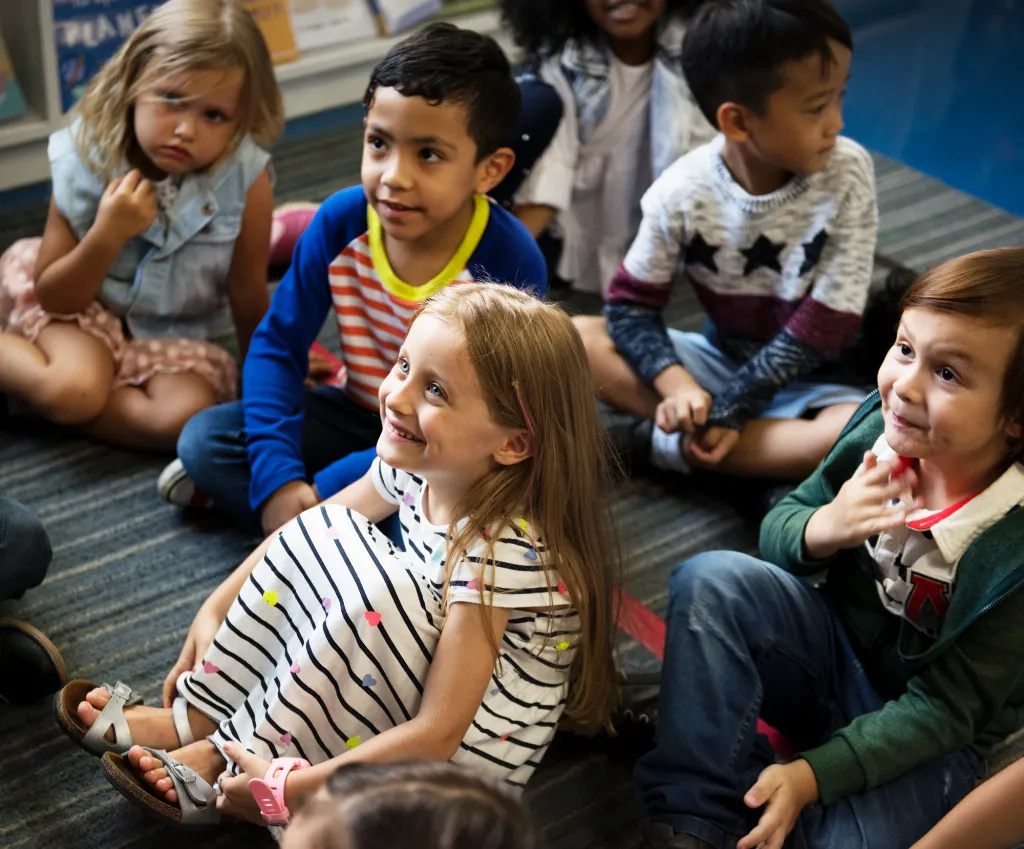
Use puppets or dolls to present brief scenarios: a child wants to join a game, touch a friend’s artwork, or offer a hug. Ask, “What could the character say?” Model phrases such as “Can I play?”, “Do you want a high-five?”, and “No, thank you.” Make clear that children may choose noncontact greetings and that a refusal is a complete answer.
Do not require children to demonstrate touch during role-play. They can point to a picture, use a hand signal, or watch. Respecting participation choices is itself a lesson in consent and safety.
Connect social boundaries to classroom materials. Children ask before changing another child’s block structure, look before touching artwork, and seek adult help when a conflict feels too difficult. Replace vague directions such as “Be nice” with teachable language: “Ask before touching,” “Keep hands safe,” and “Tell a teacher if you need help.”
Introduce a four-step problem-solving routine:
- Stop and notice what happened.
- Say what you need or want.
- Listen to the other person.
- Choose a safe solution or ask an adult for support.
Emotion cards, mirrors, puppets, and short movement songs can make feelings accessible. Practice during calm moments, not only during distress. For additional support with emotional development, consider Brighter Futures: Social Emotional Development Buy Now $16.00.
How can Day 4 build independence without pressure?
Focus: “I can help care for myself and our classroom.”
Choose one or two routines, such as handwashing, putting belongings away, selecting a center, or cleaning materials. Demonstrate slowly and narrate the steps. Then invite children to practice in small groups while others engage in familiar play. Independence develops through repeated opportunity, not adult urgency.
Use photographs or simple icons near the relevant area. A handwashing sequence might show turning on water, using soap, rubbing hands, rinsing, and drying. Labels with pictures and words can help children who are learning English or who process spoken language differently.
Offer meaningful helper jobs: carrying a basket, checking the picture schedule, placing books in a bin, or choosing the next song. Jobs create agency and reduce passive waiting. Praise specific effort: “You looked at the picture and found where the puzzle belongs.”
Include movement between quieter experiences. An animal-walk transition, a short outdoor obstacle path, or a “freeze and breathe” game can help children regulate energy. Balance active play, conversation, sensory exploration, and rest rather than scheduling several passive activities in succession.
When many children struggle with the same routine, examine the environment before blaming behavior. The shelf may be too high, labels unclear, or materials excessive. ChildCareEd’s Classroom Setup for Child Care Buy Now $24.00 course offers further professional learning about welcoming, inclusive environments.
How can Day 5 celebrate community and guide next steps?
Focus: “We are learning how to learn together.”
Revisit the week’s songs, schedule cards, greeting choices, and classroom agreements. Invite children to identify a favorite center, song, book, or helper job. They may respond verbally, point, draw, or demonstrate. A short class mural titled “Our Pre-K Community” can include children’s marks, dictated words, photographs, and symbols representing families and interests.
Offer a cooperative project, such as decorating a large cardboard structure, creating a shared collage, or building a pretend neighborhood. Collaborative work supports conversation and belonging without requiring children to solve every conflict independently. Teachers can scaffold turn-taking and name helpful actions.
End with a predictable reflection: “What helped your body feel comfortable this week?” Accept answers such as a teacher’s lap, a book, blocks, a friend, quiet space, or knowing what came next. These responses guide next week’s planning.
Directors and teachers should review observations together. Look for patterns in arrival, transitions, peer approaches, sensory preferences, communication, and self-help. Plan targeted supports while avoiding labels based on a few days of behavior. If anxiety persists, communicate with families, consider a gradual transition where feasible, and consult appropriate specialists when distress significantly affects participation or well-being.
- Send families one positive observation and one practical routine tip.
- Keep the visual schedule available and refer to it daily.
- Continue short group experiences and generous play periods.
- Remember that state requirements vary - check your state licensing agency.
What common first-week mistakes can providers avoid?
Even experienced educators can overplan the first week. A beautiful project may fail if children are still unsure where to sit, how to ask for help, or whether adults will return after departure. Comfort-focused teaching requires flexibility and a willingness to slow down.
- Too much whole-group time: Keep meetings brief, active, and optional in how children participate.
- Inconsistent adult responses: Agree on shared greetings, cues, scripts, and assistance levels.
- Forcing participation: Offer observation, pointing, movement, and quiet engagement as valid choices.
- Overpromising: Avoid saying, “You will not feel sad.” Say, “You may feel sad, and I will help you.”
- Ignoring quiet distress: Notice children who withdraw, watch silently, or avoid materials—not only those who cry.
Family partnership is especially important. Ask what comforts the child, how goodbyes work at home, which languages are used, and what interests might serve as bridges into play. Share concise updates that emphasize progress rather than demanding immediate adjustment. The National Center for Pyramid Model Innovations’ family engagement guidance underscores learning from families and partnering to promote children’s social-emotional development.
Summary: What first-week activities help children feel comfortable?
The most effective first-week Pre-K activities are not necessarily elaborate. They are predictable, relational, playful, and responsive: name songs, self-portraits, family and identity conversations, puppet-based friendship scenarios, emotion sorting, visual schedules, helper jobs, movement breaks, cooperative art, and repeated goodbye rituals.
Across five days, children gradually learn, “I belong here, adults understand me, I know what comes next, and I can participate in my own way.” Providers can support that process by observing carefully, adapting the environment, collaborating with families, and measuring success through growing comfort—not simply quiet compliance. When the first week is treated as a foundation for trust, children are better positioned to explore, connect, and learn.
For continued professional development, staff may also explore Moving About the Classroom: Effective Transitions for Everyday Buy Now $35.00 and Self-Regulation & Change: Helping Children Cope Buy Now $16.00.
- 45 Hour Child Growth and Development
- CDA Home Visitor Subject Area 3 Part 3 Birth to 5
- 45 Hour Preschool Methods and Materials
- Birth to Five CDA Credential with Portfolio Review
- 45 Hour Infant and Toddler Methods and Materials
- Pediatric RSV First Aid & CPR/AED
- 45 Hour School Age Methods and Materials
- Art from the Heart for Preschoolers: Open Ended Art Projects that Build Self-Esteem
- Play, Learn, Grow
- Guidelines for Establishing a Consistent Sleep Routine to Ensure Kids are Well-Rested and Ready for School
- CDA Certification en Español: Recursos y Consejos para Educadores Bilingües
- How does the ChildCareEd–BakerRipley contract make teacher training easier and more affordable for Texas childcare programs?
- Cómo Celebrar el Día Nacional del Kindergarten
- How can I plan peach-themed summer activities for preschoolers in Georgia?
- Group Training for Child Care Staff: What Directors Need to Know
- How can I build an attendance-tracking system that meets North Dakota’s 40-hour bonus rule?
- Summer Crafts and Activities for Preschool Classrooms
- How do I build an effective emergency preparedness plan for my Kansas child care program?
- How can child care programs prevent drowning and keep water play safe?
- How can we create classrooms where every child feels represented?
- How Can Intergenerational Learning Between Children and Older Adults Improve Early Childhood Practice and Community Well‑Being?
- First Week of Preschool Lesson Plans: 5 Days of Easy Activities and Routines
- After-School Activities for Kids: Calm, Creative, and Active Ideas for Every Energy Level
- First Week of Pre-K Activities That Help Children Feel Comfortable
- From Tummy Time to First Steps: Free Lesson Plans for Infants 0–12 Months
- How Can “All About Me” Activities Build a Stronger Classroom Community?
- How Can Child Care Providers Plan a Balanced Summer Learning Routine for Young Children?
- What Should You Ask Families Before a Classroom Winter Celebration?
- How Can Teachers Plan Indoor Activities Before Bad Weather Disrupts the Week?
