Are you searching for first-week plans that calm separation anxiety while helping children learn your classroom routines? This five-day sequence gives providers practical activities for belonging, names, feelings, self-help, and friendship; for deeper support with developmentally appropriate planning, explore Lesson Planning for Preschoolers  Buy Now $24.00, which can strengthen your planning skills and may support required professional-development goals depending on your program and state.
Why should the first week prioritize relationships and routines?
The first week is less about completing a long list of academic objectives and more about creating the conditions in which learning can occur. Children are entering a new social world: they must separate from familiar adults, interpret unfamiliar expectations, locate materials, communicate needs, and begin trusting teachers and peers. A predictable rhythm helps make those demands manageable.
Thoughtful plans balance adult guidance with extended opportunities for play. Sources on first-week planning consistently emphasize welcoming interactions, short group experiences, classroom exploration, observation, and flexibility. NAEYC likewise identifies routines and transitions as essential components of a supportive classroom; predictable sequences help children anticipate what comes next rather than relying on repeated verbal correction.
Use the week as an orientation process. Each day, intentionally teach one or two procedures, repeat familiar songs and language, and observe children’s interests and strengths. These observations are not formal tests. They are professional information that can guide subsequent #lessonplans.
- Keep circle time brief, interactive, and responsive.
- Pair every new routine with modeling and practice.
- Protect free-choice play so children can connect and recover.
- Offer visual, verbal, and hands-on ways to participate.
What should you prepare before children arrive?
Preparation should reduce decisions during the busiest parts of the day. Post a picture schedule at children’s eye level with a simple sequence such as arrival, meeting, centers, snack, outdoor play, rest, and departure. Review it at arrival and before major changes. Visual schedules can support language development, reduce uncertainty, and make transitions more accessible for children learning English or needing additional communication support.
Organize the room so children can see where belongings go and select a manageable number of materials. A welcoming entry might include name cards, family photographs if families choose to provide them, a cozy book area, and clearly labeled centers. Avoid filling every shelf. Too many choices can overwhelm children who are still learning the environment.
Create a short planning card for each day:
- One relationship or routine goal
- One read-aloud, song, or conversation prompt
- One open-ended invitation for play or exploration
- One procedure to model and practice
- One observation to collect
Prepare flexible materials rather than elaborate crafts. Crayons, paper, blocks, puppets, play dough, books, rhythm instruments, and photographs can support many domains. Check safety, allergies, accessibility, supervision needs, and your program’s policies. State requirements vary - check your state licensing agency.
How can Day 1 build belonging and security?
Focus: “We are safe, welcomed, and part of this classroom.”
Greet each child by name at the door and offer a choice of greeting: wave, fist bump, verbal hello, or simply entering beside a trusted adult. Respect a child who is not ready to interact. During a short meeting, introduce the visual schedule and explain that the class will practice where to put belongings, how to choose a center, and how to ask for help.
Read a brief picture book about school, belonging, or families. Invite children to notice, not perform: “What do you see?” “How might this character feel?” Follow the read-aloud with a family-photo conversation or a self-portrait invitation. Children may draw themselves, dictate words, or explore materials without producing a finished product.
Teach one transition: a cleanup song followed by a predictable two-step direction—“Put materials in the basket, then meet on the carpet.” Practice it when the room is calm. Repeat without shame when children need support.
During centers, observe separation responses, communication, peer approaches, motor interests, and comfort with materials. Record brief strengths-based notes. For example: “Maya watched the block area, then joined after an adult modeled entry language.”
- 🧸 Offer a comfort space with books or soft materials, not as punishment.
- Use a consistent goodbye message with families.
- End with a short reflection: “What helped you feel comfortable today?”
How can Day 2 make names and identity meaningful?
Focus: “Your name and identity matter here.”
Begin with the same greeting and meeting structure. Use a name song that allows every child to hear and say their name. Pronounce names carefully, ask families or children how they prefer their names spoken, and correct yourself openly when needed. This models respect and communicates that identity is not a minor classroom detail.
Offer name cards during play. Children can match a card to their cubby, trace or build the letters with magnetic pieces, clap the syllables, or simply identify the first letter. Avoid requiring every child to write. The goal is participation and meaningful exposure, not performance. A teacher can gather useful information by noticing whether a child recognizes a photograph, a name shape, individual letters, or spoken sounds.
Create a “Who is here?” graph using children’s names or photographs. Ask a low-pressure question such as favorite color or preferred animal. Children place their card under a response, then count together. This integrates belonging, language, early math, and classroom participation.
In dramatic play, add clipboards, envelopes, or pretend sign-in materials. Invite children to make marks, dictate messages, or greet one another. Respond to their communication rather than correcting spelling.
Document children’s preferred names, languages, family terms, and participation preferences for the teaching team. Inclusive planning means using this information respectfully and avoiding assumptions about family structure, culture, or ability.
How can Day 3 teach boundaries, consent, and friendship?
Focus: “We can ask, listen, and respect answers.”
Use a story or puppet scenario to explore greetings and personal space. Ask children what a character could say before giving a hug, touching a friend’s work, or joining a game. Model phrases such as “Can I play?” “Do you want a high-five?” and “No, thank you.” Make clear that a refusal is a complete answer and that children may choose noncontact greetings.
Practice with role-play, but never require a child to demonstrate touch. Children can respond with a thumbs-up, thumbs-down, or a neutral hand signal to hypothetical situations. Emphasize that different people can have different comfort levels and that each person’s boundary deserves respect.
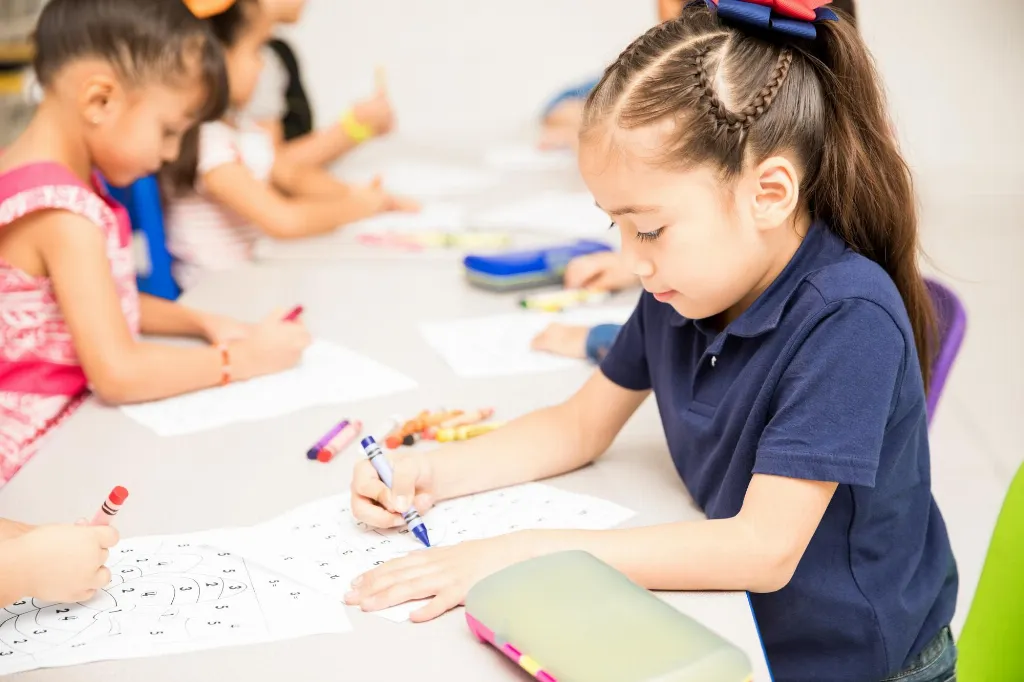
Connect boundaries to classroom materials. In the block area, teach children to ask before changing someone’s structure. In art, explain that looking is allowed while grabbing is not. In books, discuss how characters can solve conflicts with words, gestures, or adult assistance.
Introduce a simple problem-solving sequence:
- Stop and notice what happened.
- Say what you need or want.
- Listen to the other person.
- Choose a safe solution or ask an adult for help.
Keep expectations concrete. “Be nice” is vague; “Ask before touching” and “Use walking feet near friends” are teachable. Observe which children seek peers, avoid groups, imitate others, or need visual prompts. Adjust the environment rather than interpreting hesitation as defiance.
How can Day 4 connect routines with independence?
Focus: “I can participate in caring for myself and our classroom.”
Select one or two self-help routines, such as handwashing, putting materials away, carrying a lunch item, or locating a personal belonging. Demonstrate each step slowly, narrating what you do. Then invite children to practice in small groups while the rest of the class engages in familiar centers. Expect variation: independence grows through repeated opportunity, not pressure.
Use a visual sequence near the relevant area. For handwashing, photographs can show turning on water, using soap, rubbing hands, rinsing, and drying. For cleanup, use labels with both pictures and words. Children who are learning English or who process language differently may benefit from seeing the routine while hearing it.
Make movement part of the day. A short “move like an animal” transition, hallway scavenger hunt, or outdoor obstacle path can help children regulate energy before a quieter activity. Balance active and calm experiences rather than placing several passive activities consecutively.
Invite children to help revise routines: “What makes cleanup easier?” “Where should the paintbrushes live?” Their responses can reveal environmental barriers. If many children cannot return materials, the shelf may be too high, labels may be unclear, or there may be too many items.
Directors can use the day to coach staff toward consistent language. Agree on the same cue, sequence, and level of assistance. Consistency across adults builds security, while flexibility allows accommodations. Praise effort specifically: “You checked the picture and found where the puzzle belongs.”
How can Day 5 celebrate community and guide next steps?
Focus: “We have learned how to learn together.”
Revisit the week’s songs, books, and routines. Invite children to help sequence picture cards showing arrival, centers, snack, outdoor play, and departure. Ask what they remember, what felt easy, and what still needs practice. Children may respond through words, gestures, drawing, or selecting a picture.
Offer a cooperative invitation such as building a classroom structure together, creating a shared mural, or making a pretend community in dramatic play. Keep the experience open-ended. The value lies in negotiation, vocabulary, planning, and shared attention—not in producing identical artwork.
Use a brief “class problem-solvers” game. Present a familiar scenario: two children want the same truck, a tower falls, or the class needs to move outside. Ask children to generate solutions and act them out. Reinforce that adults remain available when a problem is too large to solve independently.
End with a predictable celebration: a goodbye song, individual acknowledgment, or a class book containing children’s drawings and dictated reflections. Share one specific strength with families when possible. “Jordan used the picture schedule to move from centers to snack” is more informative than “Jordan had a good week.”
After dismissal, review observations with the team. Identify:
- Routines that are becoming predictable
- Children who need additional connection or visual support
- Interests that could shape next week’s curriculum
- Environmental changes that may reduce waiting or conflict
- Family information that would improve continuity of care
What common first-week mistakes should you avoid?
Even experienced providers can overestimate what children can manage during the opening days. A strong plan is not the one with the most activities; it is the one that protects relationships, play, and responsiveness.
- Overloading the schedule: Choose fewer experiences and repeat them. Repetition helps children learn routines and vocabulary.
- Expecting immediate compliance: Teach, model, practice, and provide visual cues before interpreting difficulty as misbehavior.
- Using long group times: Keep meetings short and interactive. Move, sing, talk, and return to play.
- Relying on product art: Process-focused invitations reveal children’s ideas and reduce unnecessary stress.
- Ignoring transition time: Schedule cleanup, handwashing, toileting, clothing, and waiting. They are part of the curriculum.
- Collecting only deficits: Record competencies, interests, relationships, and emerging skills alongside concerns.
When a plan fails, treat it as information. Ask whether the activity was too long, the materials were inaccessible, the directions were unclear, or the group needed movement. Then make one change and observe the result.
What are the key takeaways for a successful first week?
So, how can you plan an easy, engaging first week of preschool? Build a predictable rhythm around relationships, play, routines, and observation. Use the same welcoming structure each day while changing one small focus: belonging, identity, boundaries, independence, and community. Keep activities brief, offer multiple ways to participate, and plan transitions as carefully as the activities themselves.
The first week is successful when children begin to trust the adults, recognize the flow of the day, communicate their needs, explore materials, and see themselves as valued members of the group. Your calm presence and thoughtful adjustments matter more than a perfect craft or a completed worksheet.
For additional professional learning, consider Moving About the Classroom: Effective Transitions for Everyday Buy Now $35.00, DAP for Preschool Buy Now $24.00, Observations and Goal Setting in Childcare Buy Now $24.00, and Inclusive Lessons for Preschoolers Buy Now $16.00. These courses can help translate the five-day outline into responsive practice for your specific group.
Most importantly, remember that a first week is a beginning, not a deadline. Continue observing, collaborating with families, refining routines, and following children’s interests as your classroom community grows.
- 45 Hour Child Growth and Development
- 45 Hour Preschool Methods and Materials
- CDA Infants/Toddlers: Lesson Planning Made Easy
- 45 Hour Infant and Toddler Methods and Materials
- Pediatric RSV First Aid & CPR/AED
- 45 Hour School Age Methods and Materials
- 45-Hour Preschool Curriculum
- Texas Director Credential
- Behind the Scenes: Baby Routines ONLINE
- ⏰ Cómo puedo facilitar las transiciones y las rutinas diarias en mi aula?
- Cómo Celebrar el Día Nacional del Kindergarten
- Cómo Ser Maestra de Preescolar en Maryland
- How to Write an Early Childhood Lesson Plan Step by Step
- Labor Day Activities for Kids at Home or in the Classroom
- How can rainy day indoor activities help preschoolers learn kindness and cooperation in Georgia?
- A Simple Guide to Toddler and Preschool Lesson Plans
- How can I design age-appropriate lesson plans that really work?
- Calabazas, hojas y manzanas: actividades de otoño para preescolares
- Toddler Lesson Plans for Play, Learning, and Development
- School-Age Lesson Plans for After-School Child Care
- What skills do preschoolers need to be ready for school?
- How can school-age daycare use outdoor activities to teach, play, and stay safe?
- How can I plan activities for school-age children in daycare?
- How can I start a small garden project with New York preschoolers?
- How can childcare providers support fine motor development with simple activities?
- How Can Child Care Providers Stay Organized Without Spending Hours Planning?
- Free Weekly Lesson Plan for Preschool Classrooms
- First Week of Preschool Lesson Plans: 5 Days of Easy Activities and Routines
- Preschool Classroom Routines: What Should You Teach During the First Week?
