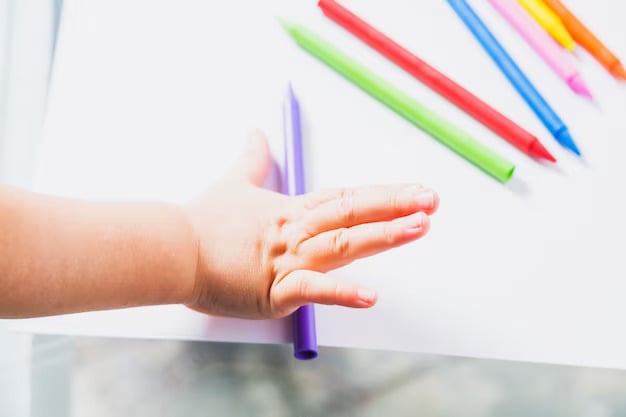
 Crayon time is simple, low-cost, and full of learning for toddlers. In this article you will find easy ideas child care providers and directors can use to build skills in your #preschool room. We focus on playful, safe ways to grow #finemotor control, #creativity, color knowledge, and everyday independence. For more classroom-ready tips see Crayon Activities for Preschoolers and related guides on ChildCareEd.
How do crayon activities help toddler development?
Answer: Crayons build hand skills and thinking in small, joyful steps. Use these numbered points when you explain learning to staff or families.
- 🖍️ Fine motor practice: Holding, pressing, and moving a crayon strengthens the thumb, index, and middle fingers. This supports the tripod grasp children will need later. See practical tips in Crayons, Chopsticks, and Cheerios.
- 🎨 Creative thinking: Open-ended crayon time lets toddlers choose colors and make marks. That choice builds voice and #creativity.
- 🔁 Cause-and-effect learning: Layering colors, pressing hard or soft, and mixing marks help children notice results and learn words like "lighter" and "darker." For color activities, try ideas from Crayon Activities for Preschoolers.
- 🧠 Early literacy links: Drawing, name tags, and simple labeling connect art to print. ChildCareEd articles on emergent writing explain how to value message over perfect letters: How Can We Support Early Writing Without Pressure?.
What easy crayon activities can I use tomorrow?
Answer: Try short invitations that fit toddler attention spans. Keep materials safe and visible so children pick them independently.
- 🖍️ DIY scratch art: Color heavy with crayons, paint over with black tempera, then let children scratch designs with toothpicks. This builds careful pressure control. See the step-by-step in DIY Scratch Art. An alternate step-by-step with simpler supplies and printable templates is available in Kids Scratch Art Activity.
- 🎯 Color-mix charts: Let toddlers layer two colors, look, and name the new shade. Use simple language and lots of praise.
- ✂️ Short crayon stubs in a tub for sorting by color — great for pincer practice and tidy clean-up.
- 🖼️ Open drawing invitations: Prompt with a simple idea like "Draw something that makes you happy." Offer two crayon sizes so children choose challenge level.
- 🍽️ Practical uses: Have toddlers color name tags for snack cups or decorate mail in dramatic play to connect marks to real tasks.
Tips: Break crayons in half to encourage a better grasp and try vertical drawing at an easel to help wrist alignment. For other fine motor ideas see 25 Easy Fine Motor Activities.
How do I set up safe, useful crayon centers and routines?
Answer: Plan simple zones and short routines that keep crayon time independent and low-stress. Always check safety rules — state requirements vary - check your state licensing agency.
- 📦 Set 3 tubs: 1) Open Drawing, 2) Scratch/Resist Art, 3) Fine Motor Sorting. Label with pictures for non-readers so toddlers choose themselves.
- 🎵 Keep routines short and predictable: 1) Invite (30–60 sec), 2) Work time (8–15 min), 3) Share or gallery (1–2 kids), 4) Tidy (song). Toddlers thrive on repetition.
- 🔒 Safety and materials: Use nontoxic, ASTM-labeled crayons and safe paint. For safety guidance see Choosing Safe Toys and general craft safety at Health Canada.
- 🧰 Storage: Keep extras in labeled jars. Lock sharp tools (toothpicks) until supervised use. Use trays to limit mess and a drying rack for painted work.
- 👩👧 Supervision: Model a 20–30 second demo, use descriptive praise ("I notice you chose the bright blue"), and circulate to offer one brief comment per child.
How do I measure progress, include every learner, and avoid common mistakes?
Answer: Use quick, kind observations and adapt tools so everyone participates. Avoid forcing identical results.
- 📋 Quick tracking (three steps): 1) Note grip (fist vs tripod), 2) Watch pressure control, 3) Photo one sample weekly with a one-line note. ChildCareEd suggests small checklists in Fine Motor Practice in Daily Activities.
- ♿ Adaptations: Offer thicker crayons, grip supports, vertical surfaces, or larger paper. Use parallel tasks so mixed-ability groups join the same invitation.
- ❗ Common mistakes and fixes:
- Forcing perfect artwork — instead, celebrate choices and effort.
- Using only worksheets — balance with open-ended process art.
- Giving tasks that are too hard — simplify (bigger crayons, larger holes) and grade up slowly.
- 📚 FAQs (quick):
- Q: How often do toddlers do crayon time? A: Short daily invites plus 1–2 longer open-ended sessions weekly.
- Q: What if a child eats crayons? A: Remove the material, supervise closely, and follow health guidance.
- Q: How to show families progress? A: Send a photo and a short note describing the skill you observed that day.
Final note: Crayon activities are playful practice. Keep invitations short, materials safe, and celebrate effort. For more lesson ideas and printable resources, explore ChildCareEd's collection like DIY Scratch Art and Crayon Activities for Preschoolers. These small moments of #play build big learning for toddlers.
- CDA Home Visitor Subject Area 3 Part 3 Birth to 5
- Positive Attention: Interactions and Supervision of Infants and Toddlers: For Workforce Solutions
- CDA Infant/Toddler Credential
- Birth to Five CDA Credential with Portfolio Review
- 45 Hour Infant and Toddler Methods and Materials
- CDA Infant/Toddler Credential with Portfolio Review
- 45-Hour Infant and Toddler Curriculum
- Positive Attention: Interactions & Supervision for Infants & Toddlers
- CDA Infants/Toddlers: Brain Development and Gene Expression
- CDA Infants/Toddlers: Stages of Development
- Terrible Two's Can Be Terribly Fun!
- The Secret Life of Crayons: What Children’s Coloring Choices Reveal About Their Developing Personality
- How Earning a CDA Might Just Make You a Child Whisperer (Or At Least a Crayon Removal Expert)
- Crayons, Chopsticks, and Cheerios: Surprising Ways to Boost Fine Motor Skills in Kids
- Montessori activities to integrate into toddler curriculum this New Year
- CDA Certification en Español: Recursos y Consejos para Educadores Bilingües
- Activities for Black History Month: Classroom Ideas for Kids (Ages 2–8)
- Groundhog Day Activities
- Shamrock Fun! St. Patrick’s Day Activities for Kids
- Developmental Disabilities Awareness Month Activities for Kids: Inclusion Ideas That Work
- How can I create developmentally appropriate lesson plans for my child care classroom?
- How can I make simple lesson plans for toddlers and preschoolers?
- Crayon Activities for Preschoolers: Color, Creativity, and Fine Motor Skills
- Crayon Activities That Support Toddler Development
- Fun Crayon Activities for Toddlers and Preschoolers
- Can doodling and drawing build fine motor skills and creativity?
- Crayon Colors Meaning: Favorite Color, Feeling, or Just the Crayon They Grabbed?
- How Do Mazes Strengthen Pencil Control and Problem-Solving in Preschool?
- How Do Dot-to-Dot Activities Support Number Order and Pencil Control?
- How Can Spring-Themed Pencil-Control Activities Support Preschoolers’ Pre-Writing Skills?
