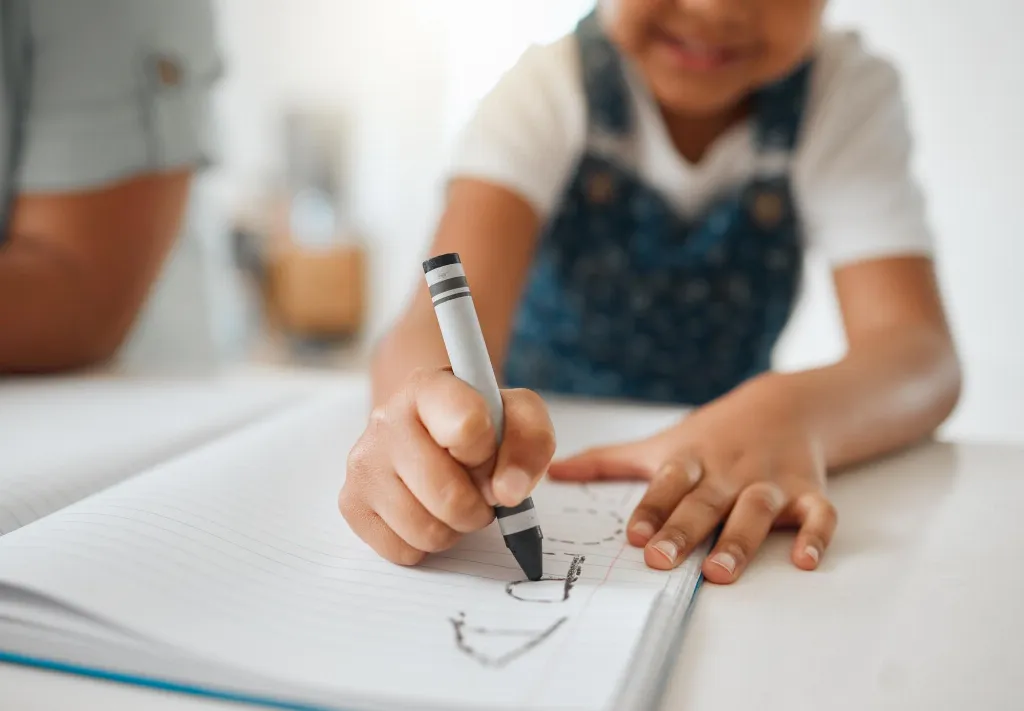
 Crayons are cheap, safe, and full of learning power. When you add simple invitations and clear routines, crayon time becomes a chance to build small hands, language, and confidence. In this article you will find quick activities, the reason they matter, setup tips, safety notes, and ways to avoid common pitfalls.
Use these ideas with your #crayons table to support #preschoolers practice joyful #finemotor work and grow #creativity through #play.
What simple crayon activities work for toddlers and preschoolers?
Try this short list of easy-to-run invitations. Each idea names the main learning goal so teachers know what to watch for.
- 🖍️ Scratch art (Goal: controlled pressure and wrist work). Have children color a sheet fully with crayons, coat with tempera paint, then scratch marks with a stick. For step-by-step ideas see Crayon Activities for Preschoolers.
- 🎨 Color-mixing charts (Goal: color language and observation). Use two crayon colors overlapped on paper or show results from open-ended art invitations.
- ✂️ Crayon-resist painting (Goal: planning and cause/effect). Draw with white crayon then paint over with watercolor to reveal marks.
- 🧵 Short crayon-stub sorting (Goal: pincer grasp & sorting). Put crayon pieces in a tray and ask children to sort by color or size. See tips in Crayons, Chopsticks, and Cheerios.
- 🖼️ Vertical drawing invitation (Goal: wrist extension and tripod readiness). Tape paper to an easel or wall and invite big marks with chunky crayons.
- 🌈 Melted crayon collage (Goal: sensory & color blending). Use crayon shavings between wax paper or supervise a hot-rock melt demo like the activity at Hot Rock Melted Crayon Art for older groups.
Keep each invitation short (12–20 minutes) and rotate so children see new choices. State requirements vary - check your state licensing agency.
How do crayon activities help development and learning?
Crayon work is more than making pictures. It grows hands, thinking, and talking. Below are the main benefits and what to watch for when children practice.
- 🧠 Cognitive & language growth: 1) choosing colors helps decision-making, 2) describing choices builds vocabulary. Use prompts like "Tell me about your blue marks." For ideas on open-ended talk during art, see Open-Ended Art Activities.
- 🖐️ Fine motor development: Holding, pressing, and turning a crayon strengthens thumb and finger muscles that lead to a tripod grasp. ChildCareEd explains many small-motor connections in Crayons, Chopsticks, and Cheerios and the list of targeted activities in 25 Easy Fine Motor Activities.
- 🔬 Early science & problem solving: Color-mixing and resist painting show cause and effect. Children test "What if I press hard?" and learn by doing.
- 💬 Social-emotional skills: Sharing materials, describing work, and showing art builds confidence and cooperative play. Frame prompts to name emotions and choices during art. For guidance on using creative activities to support children's emotional development and when to involve a specialist, see art therapy.
For age benchmarks, use resources such as the CDC milestone ideas to match activities to typical skills and to spot children who may need extra support: CDC Milestones.
How can I set up safe, organized, and inclusive crayon centers?
Design a crayon center that is inviting, low-mess, and accessible. Here are practical steps to set up routines and storage so staff and children know what to do.
- 📦 Prepare labeled tubs: 1) Scratch Art, 2) Open Drawing, 3) Color-Mixing, 4) Fine Motor Jobs. Use picture labels so non-readers can choose independently. See center ideas at Crayon Activities for Preschoolers.
- 🧰 Tools & adaptations: Offer short crayon stubs, chunky crayons, or grip helpers for children who need them. Provide vertical surfaces, larger paper, and weighted crayons as options.
- 🧯 Safety rules: Use non-toxic, ASTM-labeled crayons; supervise small-piece or melt projects closely; remove choking hazards for under-3s. State requirements vary - check your state licensing agency.
- 🔁 Routine & timing: Use a 4-step routine: 1) invite, 2) work time (12–20 min), 3) share (gallery), 4) tidy. Teach cleanup as part of the lesson so materials stay ready.
- ♿ Inclusion tips: Offer parallel tasks at three difficulty levels in each tub so children of mixed abilities can join. Use one-to-one demos and picture choices for children who need extra support. Occupational therapy resources offer useful craft adaptations for fine motor goals; see OT-inspired craft lists like the ones at OT craft ideas.
Keep extra supplies in sealed containers and have a short demo script and a sample piece posted at each tub. This helps staff model quickly and children work more independently.
What are common mistakes, how do I avoid pitfalls, and how can we measure success? (FAQ included)
Common mistakes can make crayon time less helpful. Here are frequent problems plus fixes and a short FAQ to support staff.
- ❗ Mistake: Over-directing art so all work looks the same. Fix: Use open-ended invitations—process art builds confidence. See process vs product guidance in Open-Ended Art Activities.
- ❗ Mistake: Tasks are too hard. Fix: Offer easier tools (chunky crayons, bigger paper) and step up difficulty slowly.
- ❗ Mistake: Mixing ages without separating small pieces. Fix: Create age bins and supervise small-piece activities closely.
- ✅ Measurement: Use a simple weekly checklist that tracks: 1) grip (fist, palmar, tripod), 2) pressure control (light/steady/heavy), 3) attention to task, and 4) language used about colors and choices. Spot progress in short notes or photos.
FAQ (quick answers for staff)
- Q: How often should we offer crayon invitations? A: Daily short invitations (5–15 min) plus 1–2 longer open-ended sessions per week work well.
- Q: How do I explain crayon work to families? A: Send a photo and a sentence: the skill practiced and a child quote. ChildCareEd suggests documenting process to show families the learning behind the art.
- Q: What about messy melted crayon projects? A: Only with close adult supervision and clear rules; consider taking them outdoors or to a small-group art table.
- Q: When should I refer to OT? A: If a child shows little change after repeated supports, struggles with basic pincer tasks, or you have strong concerns, share notes with the child’s family and suggest an evaluation.
Conclusion
Crayon activities are small, low-cost tools with big returns. With clear invitations, simple centers, and short observation notes, your team can turn everyday #crayons time into steady #finemotor practice and joyful #creativity for #preschoolers through play. Start with 2–3 tubs, rotate weekly, use picture labels, and track one small skill change per child each week.
- CDA Preschool Credential
- CDA Preschool Credential with Portfolio Review
- CDA Infant/Toddler Credential
- CDA Infants/Toddlers: Abuse and Neglect Reporting Requisites
- 45 Hour Infant and Toddler Methods and Materials
- CDA Infant/Toddler Credential with Portfolio Review
- Potty Training Made Simple
- CDA Infants/Toddlers: Stages of Development
- CDA Infants/Toddlers: Classroom Setup
- CDA Infants/Toddlers: Smart Nutrition & Feeding
- Creativity & Logic Activities
- Apoyo en Español para Capacitaciones Grupales Presenciales y por Zoom en Cursos Selectos
- ¿Cuáles son las mejores actividades del Día de la Tierra para niños en casa o en el aula?
- Actividades de Motricidad Gruesa que Desarrollan el Equilibrio, la Coordinación y la Fuerza
- Actividades de Fiesta para Niños de Preescolar y Primaria
- Actividades de Otoño Fáciles para Preescolares esta Temporada
- Ejemplos de Crianza Respetuosa vs. Crianza Permisiva
- How to Write an Early Childhood Lesson Plan Step by Step
- How can I teach colors, shapes & numbers through play in Michigan classrooms?
- Autumn Activities for Toddlers and Preschoolers
- Calabazas, hojas y manzanas: actividades de otoño para preescolares
- Crayon Activities for Preschoolers: Color, Creativity, and Fine Motor Skills
- Canciones, juegos y preguntas de círculo para niños
- Cultural Activities for Toddlers: Music, Food, Art, and Stories
- How Can I Use Fun Math Activities for Preschoolers Every Day?
- Crayon Activities That Support Toddler Development
- Fun Crayon Activities for Toddlers and Preschoolers
- Can doodling and drawing build fine motor skills and creativity?
- How Do Mazes Strengthen Pencil Control and Problem-Solving in Preschool?
- How Can Spring-Themed Pencil-Control Activities Support Preschoolers’ Pre-Writing Skills?
