When a preschooler can stop, wait, and try again, everyday routines become safer, kinder, and more productive. These playful activities give providers practical ways to build impulse control while strengthening children’s confidence; for deeper guidance and professional learning, explore From Tantrums to Triumphs: Equipping Preschoolers with Self-Regulation Skills Buy Now $25.00, which focuses on self-regulation, self-control, and responsive strategies for challenging moments.
Self-control is not a fixed personality trait or a demand that children simply “behave.” It is a developing executive-function skill supported by relationships, repetition, predictable expectations, and opportunities to practice. The goal is not perfection. The goal is helping children notice an impulse, pause safely, choose a response, and repair or retry when a first attempt does not work.
Why does self-control practice matter in preschool?
Preschoolers are building the mental systems that help them hold a rule in mind, inhibit an immediate action, shift attention, and persist through frustration. These skills support learning, peer relationships, transitions, and participation in group experiences. ChildCareEd’s overview of executive function in preschool describes this connection among attention, working memory, flexibility, and self-control.
Playful practice is especially valuable because children can rehearse difficult behaviors in a low-stakes setting. A game turns “wait for your turn” into a concrete experience: the child sees the signal, feels the urge to move, pauses, and experiences success. Adults then connect the game to authentic routines such as lining up, sharing materials, or waiting for assistance.
- Begin with brief turns and clear signals.
- Model the expected action before asking children to perform it.
- Offer visual supports, movement, and repetition.
- Praise the process: “You stopped your body and tried again.”
How can Red Light, Green Light teach children to stop and go?
Red Light, Green Light is a classic movement game that targets listening, inhibition, body awareness, and following directions. It is also easy to adapt for different developmental levels and physical spaces.
- Explain that “green light” means move, “red light” means freeze, and “yellow light” means slow down.
- Demonstrate each cue while children watch.
- Start with walking over a short distance.
- Pause frequently so children have many opportunities to practice stopping.
Use a stop sign, colored cards, or a flashlight as visual cues. For children who need more support, stand beside them or invite them to copy you. For children ready for a challenge, add “purple light” for tiptoeing or “blue light” for a slow dance. Change only one rule at a time so flexibility remains achievable rather than confusing.
After a round, ask one brief reflection question: “What helped your body stop?” Accept answers such as listening, watching, holding still, or taking a breath. Keep the tone playful rather than competitive. The goal is skill-building, not eliminating children from the game.
Which waiting games help preschoolers practice patience?
Waiting is easier when time is concrete and the child has a meaningful action to perform. Waiting games should begin with very short intervals—perhaps five to fifteen seconds—and gradually increase as children experience success. Patience develops through supported repetition, not through sudden, lengthy delays.
Try “Ready, Set, Go—But Not Yet.” Say a sequence such as “Ready, set, green!” Children move only when they hear the agreed-upon word. Occasionally use playful non-cues such as “Ready, set, grow!” so children must listen rather than anticipate. This activity builds auditory attention and response inhibition.
Other practical options include:
- Timer turns: One child uses a coveted material for 20 seconds while peers practice hands in laps or gentle clapping.
- Wait Five: Ask a simple question and invite children to silently count to five before responding.
- Passing pause: Children pass a soft object around a circle only when a drum sounds.
- Waiting helper: Give a child a job, such as holding the visual card or counting friends, during a transition.
Use language such as “Waiting is hard, and you have a plan: hands calm, breathe, then turn.” This validates the challenge while teaching an actionable strategy.
How do Freeze Dance and Simon Says strengthen impulse control?
Freeze Dance and Simon Says combine enjoyment with precise demands on attention and inhibition. In Freeze Dance, children move while music plays and freeze when it stops. Add a calming element by inviting children to take one slow breath while frozen. This teaches that stopping can be followed by recovery, not simply by correction.
For Simon Says, begin with one-step instructions: “Simon says touch your knees.” Pause between commands and keep the pace manageable. Once children understand the rule, include occasional instructions without the phrase “Simon says.” Praise children who listen and stop themselves, even if they make an error.
Helpful adaptations include:
- Use picture cards for children who benefit from visual directions.
- Keep commands familiar and physically accessible.
- Let children take leadership roles after practicing with an adult.
- Invite children to restart rather than eliminating them from play.
🛑 A valuable teaching phrase is: “You moved before the cue. Let’s reset and try again.” This turns an error into a learning opportunity. Avoid teasing, public comparisons, or requiring children to sit out for long periods. Inhibitory control is strengthened when children remain engaged and can rehearse a successful response.
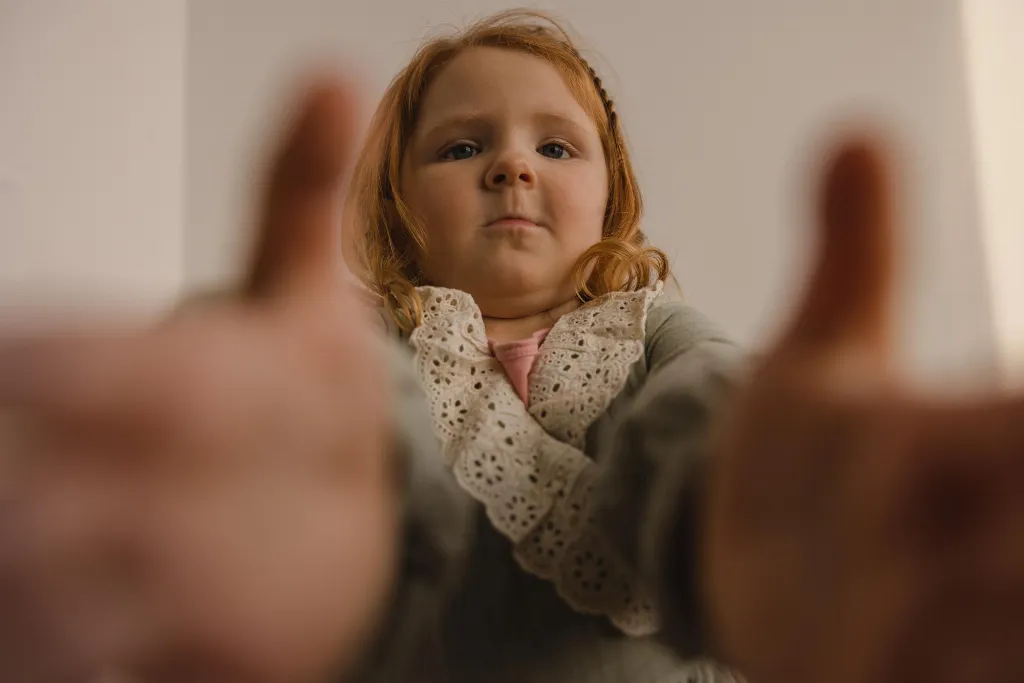
How can Opposite Day and Copy My Pattern build flexible thinking?
Self-control includes more than stopping. Children also need to shift their thinking when rules change, a plan fails, or another child has a different idea. Opposite Day offers a playful way to practice this cognitive flexibility.
Begin with two paired commands: when you say “up,” children touch down; when you say “fast,” they move slowly. Model the response first, then invite children to respond. Keep the number of rules small. Once children demonstrate success, allow a child to become the caller or change one rule for a single round.
Copy My Pattern develops working memory and attention. Clap once and stomp once; children repeat. Then create a three-part sequence, such as tap knees, clap, and turn. Invite children to explain or demonstrate the pattern before increasing its length.
To extend either game:
- Switch the leader after several rounds.
- Ask children what changed.
- Invite multiple solutions when a pattern is interrupted.
- Use movement, rhythm, and objects so children with different communication styles can participate.
Respond to mistakes with curiosity: “The rule changed. What could we try now?” This protects children’s willingness to experiment. Flexible thinking grows when the classroom communicates that changing course is normal and that trying another strategy is a strength.
What games teach children to repair mistakes and try again?
“Try again” is most meaningful when children have a clear repair process. A provider can teach a simple sequence: stop, notice, choose, try again. Puppets, dramatic play, and cooperative games allow children to rehearse this sequence before conflict occurs.
Use two puppets to act out a familiar problem. One puppet grabs a toy; the other reaches, yells, or pushes. Pause and ask, “What could the puppet do next?” Offer choices such as asking for a turn, getting an adult, taking a breath, or choosing another material. Then replay the scene with the new response.
Additional games include:
- Remote-control redo: Say “pause,” then invite children to rewind a scenario and choose a safer action.
- Cooperative tower: Children build together, then solve what to do when the tower falls.
- Bubble self-control: Children first pop bubbles freely, then practice keeping hands still during a second round.
- Quiet detective: A child observes while peers remain still briefly; keep the activity humorous and supportive.
After the retry, narrate the effort: “You were frustrated, you stopped, and you used words.” ChildCareEd’s guidance on promoting self-regulation emphasizes that children need adults to coach these skills repeatedly and compassionately.
How can providers embed these activities into daily routines?
Games are most effective when they connect to real classroom needs. Directors can support consistency by selecting two or three shared cues and using them across rooms. A “stop” card, a visual timer, and the phrase “First calm, then choose” can become familiar program-wide language.
- Arrival: Practice one breath and a short freeze before greeting the group.
- Cleanup: Give a two-step direction, use a countdown, and pause for a check.
- Transitions: Play a 60-second stop-and-go game before lining up.
- Meals: Practice waiting for names, passing materials, and remembering the snack sequence.
- Conflict: Use “stop, words, solution” and offer two safe choices.
Common mistakes include expecting immediate mastery, using games as punishment, giving too many instructions, and practicing only during meltdowns. Correct these by shortening the activity, teaching when children are calm, and celebrating incremental progress. Observe patterns rather than labeling children: hunger, fatigue, sensory overload, language differences, and transitions may affect performance.
Adaptations should be strengths-based. Some children may need a smaller group, a visual cue, shorter waits, or an adult partner. If behavior is persistent, dangerous, or significantly different from peers, document triggers and supports, partner with families, and consult appropriate professionals. State requirements vary - check your state licensing agency.
Conclusion: What makes self-control activities effective?
The best self-control activities are brief, playful, predictable, and repeated. Red Light, Green Light and Freeze Dance build stopping; waiting games develop patience; Simon Says strengthens listening; Opposite Day supports flexibility; and puppet redos teach repair and persistence. Each activity becomes more powerful when adults model calm behavior, validate effort, and connect play to daily routines.
Start with two games this week. Define one observable goal—such as waiting ten seconds, freezing on a cue, or using “help, please”—and record small successes. When children hear “You stopped, waited, and tried again,” they learn that self-control is not about being perfect. It is a skill they can practice, strengthen, and use in the #classroom, with peers, and throughout life. #preschoolers #selfcontrol #selfregulation #play #persistence
Which ChildCareEd courses can support this work?
- From Tantrums to Triumphs: Equipping Preschoolers with Self-Regulation Skills Buy Now $25.00
- CDA Subject Area 3: Supporting Children’s Social and Emotional Development
 Buy Now $80.00
 - Supporting Social Learning: Creating Classrooms that Care Buy Now $35.00
- Mysteries of Challenging Behavior Solved Buy Now
$24.00$18.00 - The Best Promotion is Play Buy Now $35.00
Frequently asked questions
How long should each game last?
Start with 30 seconds to five minutes. Frequent, successful practice is more useful than one long activity.
What if a child cannot stop quickly?
Move closer, slow the pace, use a visual signal, and celebrate improvement rather than comparing the child with peers.
Should children be removed when they make a mistake?
Usually, no. Keep children engaged and use the moment to model a reset and retry.
When should a program seek additional support?
Partner with families and qualified professionals when behavior creates safety concerns, is unusually frequent or prolonged, or does not improve after consistent, documented supports.
- Moving About the Classroom: Effective Transitions for Everyday
- CDA Home Visitor Subject Area 3 Part 3 Birth to 5
- Building Equity: Inclusionary Practices in Preschool
- From Tantrums to Triumphs: Equipping Preschoolers with Self-Regulation Skills
- Working Together: Teachers & Preschoolers
- Art from the Heart for Preschoolers: Open Ended Art Projects that Build Self-Esteem
- Prevention and Control of Infectious Diseases
- CDA Infants/Toddlers: Smart Nutrition & Feeding
- Shoo, Germs! Don't Bother Me!
- Teaching children to listen: simple phrases that work
- CDA Certification en Español: Recursos y Consejos para Educadores Bilingües
- Executive function in preschool: games that build focus and self-control
- 10 screen-free indoor activities for toddlers
- Apoyo en Español para Capacitaciones Grupales Presenciales y por Zoom en Cursos Selectos
- Actividades de Motricidad Gruesa que Desarrollan el Equilibrio, la Coordinación y la Fuerza
- Can simple indoor movement games teach listening and cooperation to preschoolers in Oklahoma?
- How can child care teams help children manage big emotions?
- Canciones, juegos y preguntas de círculo para niños
- Can a World Cup theme on the DC circle time rug teach teamwork, turn-taking, and big feelings?
- Superhero Activities for Preschoolers: Play, Create, and Learn
- How Can We Teach Self-Regulation Skills to Preschoolers?
- One, Two, Eyes on You: A Fun Way to Build Listening Skills
- How can Michigan preschool programs build strong fine and gross motor skills?
- How can child care providers teach children to name and manage emotions?
- Big Feelings, Busy Bodies: Self-Control Activities for Toddlers
- Self-Control Activities for Preschoolers: 10 Games That Teach Stop, Wait, and Try Again
- How Can Child Care Providers Help Children with Attention and Impulse-Control Challenges?
- How Can Child Care Providers Help Children Develop Self-Control?
- How Can Child Care Providers Help Children Develop Self-Control?
