Do you ever wonder whether reading the same story yet again really helps a child learn — or just tests your patience? Repeating a beloved book is one of the highest‑return instructional moves in early childhood: it builds vocabulary, narrative skills, and social confidence while making learning enjoyable. If you want a practical next step, the ChildCareEd course Reading Aloud and Storytelling  Buy Now $16.00 shows classroom strategies to turn repetition into targeted teaching. For quick tools you can use tomorrow, also consider Classroom Tools for Emergent Literacy Buy Now $16.00 to plan repeated, multimodal practice that boosts #books knowledge and early #literacy.
1) What makes repeated readings so powerful — and why does it matter?
Short answer: repetition reduces cognitive load and increases opportunity for practice. When children hear the same text multiple times they move from surface familiarity to active use of words and story structure. That shift frees working memory for deeper skills, like inference and prediction. Repetition supports emergent #language by giving predictable frames where new vocabulary and grammar repeatedly appear, which helps children encode those forms into long‑term memory. This is explained in depth as part of Why do repeated books, songs, and activities help children master new concepts? and is echoed by resources such as Nemours and Scholastic on rereading benefits. Why it matters: programs that use short, frequent repeats see better participation, stronger retell, and greater willingness for children to join in during centers and play — practical outcomes directors can measure in weekly observations. Remember: state requirements vary - check your state licensing agency.
2) How does repetition change the brain and support #language growth?
Repeated exposure strengthens neural pathways by providing retrieval practice and distributed (spaced) encounters with the same words and ideas. From a practical standpoint, each re‑reading creates multiple retrieval events: children anticipate phrases, fill in missing words, and practice prosody. Multisensory repetition — reading while acting, singing, touching props, or drawing — multiplies retention because it engages visual, auditory, and motor systems simultaneously. That makes vocabulary and narrative patterns more accessible during spontaneous conversation and play. In classrooms, plan for targeted spacing (read today, use the book in centers tomorrow, reteach mid‑week) rather than back‑to‑back massed repetition. These steps convert a favorite story into a scaffolded learning sequence that moves a child from recognition to expressive use.
3) How can teachers design repetition so it is purposeful — not boring?
Purposeful repetition mixes stability (the same text) with variation (different modalities and challenges). Practical classroom designs you can try right away:
- 📚 Micro‑routines: short (1–3 minute) book hooks at transitions that spotlight one target word or phrase.
- Act It Out: use puppets, props, or simple seat choreography the second time you read so children practice verbs and sequence.
- Center Connection: place the book in a dramatic play or sensory center with 2–3 related materials (toys, art prompts, word cards). Consider rotating seasonal collections — for example, fall children's books that build vocabulary and engagement — to refresh interest.
- Teacher Moves: model (I Do), guide (We Do), fade (You Do) across exposures so children progress through the Zone of Proximal Development.
Keep targets small — 1–3 words or one narrative skill per week — and rotate the modality so repeats feel fresh. For concrete tools like vocabulary boxes and interactive read‑aloud prompts, see the course Classroom Tools for Emergent Literacy Buy Now $16.00 which lists ready‑to‑use materials and strategies. As always, state requirements vary - check your state licensing agency when you change schedules or add materials.
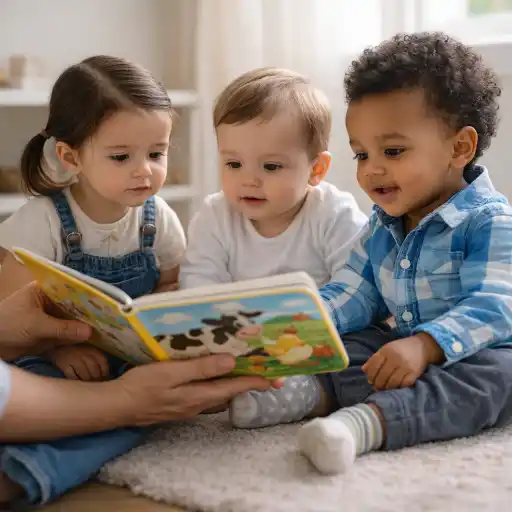
4) How can repetition support Dual Language Learners and family partnerships?
Repetition is especially effective for Dual Language Learners (DLLs) because it supplies repeated, meaningful examples in low‑pressure contexts. Use these inclusive practices:
- Introduce the book in the child’s home language when possible, then repeat in English — strong first‑language skills support transfer.
- Label props and pictures in both languages and use gestures to anchor meaning.
- Invite families to send a short audio of a favorite read‑aloud in the child’s home language or share a family book list.
- Offer the classroom book in a center with bilingual word cards so children revisit at their own pace.
For staff training on culturally responsive repetition and DLL strategies, consider Building Bridges for Dual Language Learners Buy Now $25.00 and Supporting Families and Caregivers in Language and Literacy Buy Now $16.00. These courses help programs partner with families and adapt repeated activities to each child’s language profile. State requirements vary - check your state licensing agency when sharing materials with families.
5) Frequently asked questions: what do providers want to know?
Q: How often should I read a favorite book? A: Short daily reads over several days, then dispersed revisits across weeks (distributed practice) yield the best retention. Q: Won’t children get bored? A: Not if modality changes — puppet one day, sensory center the next. Q: How many new words should I teach per book? A: 1–3 targeted words with gestures and repeated use. Q: When should I be concerned about repetitive behavior? A: If repetition doesn’t lead to growth over months, or is accompanied by loss of other skills, consult families and consider screening. Q: How do I document progress? A: Use quick snapshots (can name the target word, use it in play) and brief notes that you can share at conferences. For assessment guidance, Language Development in Early Childhood Buy Now $16.00 and courses on assessment provide structured tools for tracking gains.
Conclusion
Repeating favorite #books is not passive repetition but a high‑impact teaching strategy when it’s planned, varied, and scaffolded. Main takeaways: choose 1–3 targets per book, change modality across repeats, connect the book to centers and family practice, and track small, measurable gains. If your team wants to deepen practice, five ChildCareEd courses that pair directly with these ideas are:
- Reading Aloud and Storytelling Buy Now $16.00
- Classroom Tools for Emergent Literacy Buy Now $16.00
- Language Development in Early Childhood Buy Now $16.00
- Building Bridges for Dual Language Learners Buy Now $25.00
- Supporting Families and Caregivers in Language and Literacy Buy Now $16.00
Use repetition intentionally and you’ll watch children move from recognition to real use — confident readers, speakers, and playful learners. Small, repeated steps make big gains for #children and strengthen classroom practice. #repetition #language
- Setting the Stage: Story Time
- CDA Bridge Bundle: Family Child Care without Portfolio Review
- CDA Bridge Bundle: Infant/Toddler without Portfolio Review
- CDA Bridge Bundle: Preschool without Portfolio Review
- Emergent Learning & Development
- 45-Hour Infant and Toddler Curriculum
- Texas Director Credential
- Classroom Tools for Emergent Literacy
- CDA Certification en Español: Recursos y Consejos para Educadores Bilingües
- How Can Teachers Support Language and Literacy Every Day?
- Canciones, juegos y preguntas de círculo para niños
- How can songs and stories encourage toddler language development?
- Why do repeated books, songs, and activities help children master new concepts?
- Why Is Repeating Favorite Books So Valuable for Young Children?
- Dr. Seuss Book List for Teachers: Easy Ways to Use It for Story Time and Learning
- When Is Repetitive Speech Typical—and When Should Teachers Pay Closer Attention?
- National Massachusetts Day for Kids: Explore the Bay State Through Play
- Why Do Bilingual Classroom Activities Matter for Dual Language Learners?
- Getting to Know You Activities for Preschoolers When a New Child Joins the Class
- What Toddler Activities Encourage Language and Communication?
- Why Is Wild vs. Farm Animal Sorting a Favorite Preschool Activity?
- Why Do Predictable Books Help Preschoolers Feel Like Readers?
- How Can Emergent Readers Support Vocabulary Growth?
- Why Are Repetitive Books Perfect for Building Reading Confidence?
- How Can Families and Educators Connect Early Literacy With STEM, Art, Music, and Creativity at Home?
- Why Do Simple Books Build Early Reading Confidence?
- How Can Printable Books Help Preschoolers Fall in Love With Reading?
- How Can Transportation Interests Motivate Beginning Readers?
