Responsive caregiving in an infant room is not a policy document—it’s a pattern of small, timely responses adults make every hour. For Arizona directors and providers, this means building routines, staffing, and policies so each baby’s signal gets noticed and answered with warmth and safety. You will find here practical, evidence-informed steps you can use at staff meetings, in orientation, and in daily huddles. This article centers on observable practice, program systems, and simple tools you can adopt now. Remember: state requirements vary - check your state licensing agency.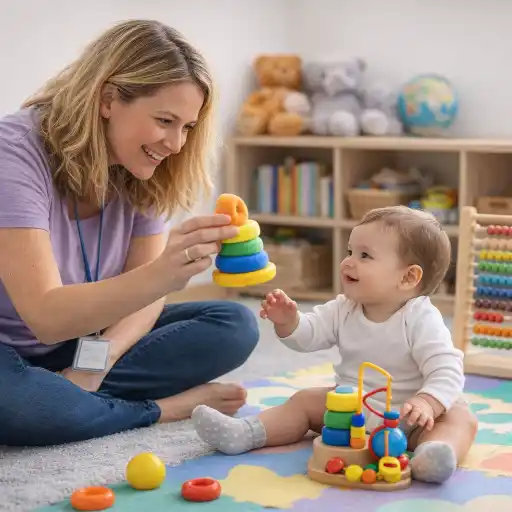
What is responsive caregiving and why does it matter in Arizona infant rooms?
Why it matters (short):
- 😊 Babies’ brains form rapidly; consistent responses strengthen neural circuits for emotion, language, and self-regulation (see related ChildCareEd resources on brain development: How Can Child Care Providers Support Infant Brain Development?).
- 🔒 Strong relationships reduce stress and support exploration—linked to better long-term outcomes.
- 🔁 In group care, predictable responsive patterns make the room calmer for staff and families.
Program leaders should name the key elements of responsive care for staff: attention to cues, timely comforting, narrative talk during care routines, and consistent caregivers. Embed the principle into orientation, supervision, and shift handoffs so that responsive practice is not left to chance. Use a posted cue chart and short role-plays at staff meetings to keep skills fresh. And don’t forget: state requirements vary - check your state licensing agency.
How does responsive caregiving show up across feeding, sleep, diapering, and play?
- 🍽️ Feeding: hold at eye level, narrate the meal, watch early hunger cues (rooting, hands to mouth). Track intake on shared logs so the next caregiver knows the plan (Infant schedules in group care).
- 🛏️ Sleep: protect safe sleep—back to sleep on a firm mattress, crib bare—and begin the nap wind-down at the first sleepy cue (yawning, rubbing). See ChildCareEd safe-sleep guidance for classroom checks (Safe sleep, routines, and checks).
- 🧴 Diapering: use warm narration, small rituals (song or greeting), and a brief opportunity for face-to-face interaction—turn care tasks into learning moments.
- 🧸 Play/Tummy Time: short, sensory-rich intervals (1–10 minutes) repeated many times. Narrate, label, and extend infants’ gestures and vocalizations to build language (Infant lesson plans for play and development).
Use an easy observation form: cue, response, time, and outcome. That record both supports continuity and creates coaching opportunities. Remember to communicate with families about what you observed and tried that day.
How do staffing, ratios, and primary caregiving affect daily responsive practice in Arizona?
- 👥 Assigning primary caregivers: where possible, give each infant one or two lead adults who handle most feedings, naps, and communications. This promotes #attachment and consistent responses.
- 🔢 Scheduling float coverage: plan short float shifts for breaks so ratios never drop and caregivers can respond without rushing.
- 📋 Using color-coded or digital logs: make bottle, diaper, and nap data instantly visible at shift change to avoid missed cues.
Arizona directors should keep a staffing grid and a quick headcount routine for transitions. If your program is a home group home, follow the approved capacity on your certificate and adapt room rhythms to those limits. State guidance changes—state requirements vary - check your state licensing agency.
What policies, training, and supports keep responsive caregiving consistent across staff and shifts?
Responsive caregiving becomes reliable when systems back it up. Use the following numbered checklist to audit and strengthen your supports.
- 📚 Training: requires brief, practical modules on cue reading, safe sleep, and serve-and-return. ChildCareEd offers targeted courses like Supporting infant and toddler mental health Buy Now $0.00 and short modules on safe sleep and positive attention. Staff who want formal credentials or a clear career pathway in Arizona can follow our step-by-step guide on how to become a preschool teacher in Arizona, including information on CDA pathways and state requirements.
- 📝 Written policies: post clear safe-sleep, feeding, and primary-caregiver policies. Share them at enrollment and in staff files.
- 🔁 Shift handoffs: require a 2-minute verbal transfer plus a quick log update for feeding, sleep, and concerns.
- 🌿 Staff wellbeing: schedule brief debriefs, peer coaching, and include reflective supervision so caregivers can stay emotionally available.
- 👪 Family partnership: invite families to share home routines, use shared milestone tools (CDC), and document any medical exceptions in writing.
Program leaders should monitor uptake via spot checks and short observation cycles. Offer micro-coaching: 510-minute feedback sessions after a nap or feeding block can change practice quickly. And always keep training records organized for licensing reviews—state requirements vary - check your state licensing agency.
How can teams measure progress, avoid common pitfalls, and use quick tools to improve practice?
Quality improves when teams use small, regular measures and correct predictable errors. Below are concrete steps and common mistakes with fixes.
- 📏 Quick measures (enumerated):
- Weekly cue audit: pick 3 infants and rate caregiver responses (noticed? responded? timing?).
- Daily log spot-check: accuracy of bottles/diapers/naps at shift change.
- Monthly family feedback: one short question about consistency and communication.
- ⚠️ Common mistakes and fixes:
- ❌ Following the clock instead of cues. ✅ Fix: use flexible time blocks and cue charts.
- ❌ Weak handoffs. ✅ Fix: a two-minute verbal handoff plus a written log update every shift.
- ❌ Letting unsafe sleep items persist. ✅ Fix: nap spot-check checklist and immediate correction protocol.
- 🔧 Tools to use: short observation forms, the Infant and Toddler Weekly Lesson Plan Template (ChildCareEd lesson plans), and brief role-play scenarios for staff meetings.
FAQ (brief):
- Q: Can several caregivers share an infant? A: Yes, but use a primary-caregiver model, so one or two adults provide the majority of care.
- Q: How long should coaching take? A: Micro-coaching sessions of 5–10 minutes, weekly practice drills for 15–30 minutes, and a quarterly focused workshop work well.
- Q: Where to find more tools? A: Explore ChildCareEd course pages and free articles (links above) and the CDC milestone resources (CDC Positive Parenting Tips: Infants).
Conclusion
Responsive caregiving in Arizona infant rooms is a team achievement: it requires clear staffing plans, simple routines that flex to each baby, regular coaching, and family partnership. Start small: teach staff one cue, pilot a primary-caregiver plan for a week, and run one 5-minute coaching cycle after a nap. Your consistent warmth and timely responses are the most powerful curriculum in the room. State requirements vary - check your state licensing agency.
Staffing and structure determine whether responsive caregiving is feasible. Arizona programs must work within state rules for group sizes and capacity—see the Arizona home daycare guide (Arizona Child Care Ratios and Group Sizes by Age). Practical implications include: Responsive caregiving is visible in routine moments. Below are numbered, practical behaviors you can expect to see and coach in your infant room. Responsive caregiving is the repeated cycle of noticing infant cues, answering promptly, and tuning your response to the child’s signal. It’s often described as “serve-and-return” and is a core driver of secure #attachment and early brain growth. For a clear, practice-focused definition, see What responsive caregiving for infants is and how do we do it well?.
- CDA Infant/Toddler Credential
- Birth to Five CDA Credential with Portfolio Review
- 45 Hour Infant and Toddler Methods and Materials
- Pediatric RSV First Aid & CPR/AED
- CDA Infant/Toddler Credential with Portfolio Review
- CDA Bridge Bundle: Infant/Toddler without Portfolio Review
- CDA Bridge Bundle: Infant/Toddler
- Texas Director Credential Renewal
- Texas Director Credential
- CDA Infants/Toddlers: Stages of Development
- 🌙 ¿Cómo afecta el tiempo frente a las pantallas el sueño y el comportamiento infantil? 😴
- ¿Cuáles son las mejores actividades del Día de la Tierra para niños en casa o en el aula?
- ¿Cómo solicito la licencia para una guardería en California?
- Normas de Licenciamiento de Cuidado Infantil en Virginia para Centros Diurnos Infantiles y Hogares Diurnos Familiares
- Lista para Guardería en Casa en Illinois: Cómo Iniciar una Guardería en el Hogar
- Lista para Guardería en Casa en California: Cómo Iniciar una Guardería en el Hogar
- Cómo Trabajar en el Cuidado Infantil en California: Requisitos y Pasos
- Cómo Trabajar en el Cuidado Infantil en Virginia: Requisitos y Pasos
- Capacitación Previa al Servicio para Proveedores de Cuidado Infantil en Dakota del Norte
- What are the best infant care practices for New York child care providers?
- Celebrando la amistad en el cuidado infantil durante el Día de los Mejores Amigos
- Diversión fresca de verano: actividades del Día Nacional del Helado para niños
- How Can Child Care Providers Support Infant Brain Development?
- What Is Responsive Caregiving for Infants and Toddlers and How Do We Do It Well?
- Arizona Child Care Ratios and Group Sizes by Age: Daycare Center Guide
- What Does Responsive Caregiving Look Like Day to Day in Arizona Infant Rooms?
- How Do Infants Learn Through Everyday Caregiving Routines?
- How Can Child Care Providers Build Secure Attachments with Infants?
- How Can Infant and Toddler Rooms Use Daily Communication Logs Effectively?
- More Than a Daily Update: What Families Need to Know About Their Infant’s Day
