Every day you care for tiny people who need warm, steady adults. Responsive caregiving means noticing what a baby needs and answering quickly with kindness. In group care, responsive work helps build strong #attachment, keeps babies #safe, and makes the day calmer for #caregivers and families. This article gives easy steps you can use today in your infant room.
Why this matters
1) Babies’ brains grow fast. The way adults respond helps shape how they learn and feel. 2) When babies get warm, prompt responses, they feel secure and explore more. For more about how relationships drive learning, see The Role of Attachment in Early Childhood Development.
What is responsive caregiving and how does it help infants?
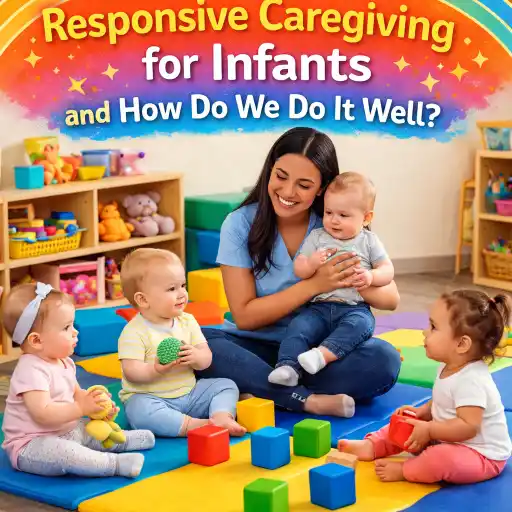
Responsive caregiving is simple: notice, respond, repeat. When a baby cries, coos, or looks at you, you answer with touch, talk, or help. This back-and-forth is often called "serve and return." It builds strong brain connections and trust.
- 👀 Notice signals: look for eye contact, hand-to-mouth, quieting, fussing.
- 🙂 Respond warmly: pick up, hold, smile, name feelings, or meet the need.
- 🔁 Repeat often: consistent responses teach babies they are seen.
Why this matters at work: 1) Responsive care lowers stress levels (for infants and staff). 2) It makes transitions easier, because babies learn who will help them. ChildCareEd offers practical guides on secure attachments and relationship-based care: Building secure attachments in group care and resources on program-focused caregiving: The Role of Attachment.
How do we read infant cues and respond quickly?
- 👶 Hunger: rooting, sucking hands → Offer feeding, calm talk, and comfort.
- 😴 Tired: yawning, eye rubbing, glassy stare → Begin nap routine early.
- 😣 Overstimulation: turning away, freezing → Move to a quiet spot and lower lights/sounds.
Quick practice plan (use in 5 minutes at staff meeting):
- Observe a short video or real cue for 1 minute.
- Describe the cue in one sentence.
- Say the response you would use (example scripts help).
Tools to help: cue charts, the Infant and Toddler Weekly Lesson Plan Template, and the Learn the Signs guidance. ChildCareEd has cue and routine tools in articles like Infant schedules in group care and practical cue tips in their safe-sleep and feeding posts. Also use public tools like the CDC's milestones guidance to talk with families about development: Watch Me! Module. Remember: state requirements vary - check your state licensing agency.
How do we build flexible routines that support responsive care in group settings?
Try this 4-step room rhythm plan:
- 🛏️ Care loop: diaper/feeding → comfort → play → rest.
- 🔢 Use time blocks (e.g., morning care block) rather than fixed times for each baby.
- 🙂 Assign primary caregivers when possible so babies see the same faces for key care.
- 📋 Track feeds, naps, and diapers on an easy log to share at shift change.
Benefits: 1) Staff coordinate better. 2) Babies get dependable steps even when times vary. ChildCareEd explains these ideas in Infant schedules in group care. For sleep safety, tie routines to safe-sleep policies from ChildCareEd: Safe Sleep Practices. Always post and share your room rhythm with staff and families.
What policies, training, and supports keep responsive caregiving strong?
Good policies make good practice stick. Train staff, use written plans, and support staff wellness. Numbered checklist to start:
- 📚 Training: require courses on responsive care, safe sleep, and feeding. ChildCareEd offers many relevant courses and Texas bundles if you need state-focused options: Texas infant & toddler guidance.
- 📝 Written policies: safe-sleep plans, feeding plans, and a primary caregiving policy.
- 🔍 Daily checks: crib safety, logs, and a quick handoff at shift change.
- 🌿 Staff support: short debriefs, peer coaching, and mental health resources. See ChildCareEd resources on supporting infant mental health: Supporting infant and toddler mental health Buy Now $0.00.
- 👪 Family partnership: share plans, ask what works at home, and use the CDC milestone checklists when you talk about development.
Note: state requirements vary - check your state licensing agency. Keep records of trainings and show families your policies at enrollment.
Conclusion: What are the quick takeaways, common mistakes, and FAQs?
Quick takeaways (numbered):
- ✅ Be present: notice small cues and respond warmly.
- ✅ Use a room rhythm that allows flexibility for each baby.
- ✅ Train staff and keep clear written policies (safe sleep, feeding).
Common mistakes and fixes:
- ❌ Mistake: Following the clock, not the baby. ✅ Fix: Use flexible blocks and cue charts.
- ❌ Mistake: Letting sleep items stay in cribs. ✅ Fix: Use a checklist and spot checks every nap.
- ❌ Mistake: Poor handoffs at shift change. ✅ Fix: Do a 2-minute verbal handoff and update logs.
FAQ (short):
- Q: How long to train staff on cues? A: Short sessions (15–30 minutes) weekly plus role play work well.
- Q: Can babies have multiple caregivers? A: Yes. Use primary caregiving to give each baby a main trusted adult.
- Q: What if a parent asks for different sleep practices? A: Follow program policy and get medical notes for exceptions. state requirements vary - check your state licensing agency.
- Q: Where to find more tools? A: ChildCareEd has lesson templates, safe-sleep courses, and cue guides throughout their site (see links above).
Every caring response builds the baby’s brain. Start small: teach staff one cue, add one room rhythm, and hold a short training this week. You and your team are the most important part of a baby’s day.
Routines matter, but so does flexibility. Think of a room rhythm instead of a strict clock. A rhythm is a repeated order of events that flexes around each baby’s needs. This helps staff work together and keeps babies calm.Reading cues is a skill you can teach staff. Start with a short list of common cues and actions. Use a posted cheat-sheet and practice in staff meetings.- Basic Health & Safety and Breastfeeding Awareness
- Bienvenido! Welcoming All Families
- 45 Hour Infant and Toddler Methods and Materials
- Pediatric RSV First Aid & CPR/AED
- 24 Hour Texas Pre-Service
- CDA Infant/Toddler: Parent Relationships
- Positive Attention: Interactions & Supervision for Infants & Toddlers
- Texas Director Credential Renewal
- Texas Director Credential
- 16 Hour Texas Pre-Service
- Recursos en Español sobre el Sueño Seguro del Bebé
- Capacitación en Salud y Seguridad Preventiva en Línea para Proveedores de Cuidado Infantil
- Lista para Guardería en Casa en Texas: Cómo Iniciar una Guardería en el Hogar
- Capacitación Previa al Servicio para Proveedores de Cuidado Infantil en Dakota del Norte
- What is responsive caregiving for infants and how do we do it well?
- What are the best infant care practices for New York child care providers?
- What Is Responsive Caregiving for Infants and Toddlers and How Do We Do It Well?
- What Does Responsive Caregiving Look Like Day to Day in Arizona Infant Rooms?
- How can North Carolina providers read infant cues to improve care?
- How Do Infants Learn Through Everyday Caregiving Routines?
- How Can Child Care Providers Understand Temperament in Infants and Toddlers?
- How can responsive caregiving during feeding, diapering, and rest improve infant care in group settings?
- How Can Child Care Providers Build Secure Attachments with Infants?
- How Do Infants Learn Through Everyday Caregiving Routines?
- What Makes Babies Stressed in Child Care? 7 Nursery Changes That Can Help
- How Can Child Care Providers Understand and Support Infant Milestones?
- How Can Child Care Providers Support Infant Development?
- Knowing Baby Better: How Family Information Supports Responsive Care
- How Can Caregivers Respond Consistently to an Infant’s Distress?
- How Can Providers Notice Developmental Progress Hidden in an Infant’s Daily Routine?
