When “What happens next?” interrupts play and transitions, a simple visual schedule can give preschoolers a clearer sense of the day and help them take part with greater confidence. Explore Every Moment Matters: Schedules and Transitions  Buy Now $55.00 to build practical skills for planning predictable routines and smoother classroom transitions; then use the steps below to create a schedule that fits your group.
Why can a visual schedule make the preschool day feel easier?
A visual schedule shows the sequence of daily activities using photographs, drawings, symbols, objects, or words. It makes the order of the day visible, so children do not have to rely only on spoken directions or remember several steps at once. For preschoolers who are not yet reading, a familiar picture may communicate more clearly than a verbal reminder alone.
Predictability can help children feel secure and prepare for changes in activity. A schedule may also support participation and growing independence: children can check what is happening, see what comes next, and recognize when an activity is finished. These supports can be useful for the whole group, including children learning English and children who benefit from extra help understanding transitions.
Visual schedules are not a promise that every transition will be effortless, nor are they a behavior-control chart. They are one way to make expectations more accessible.
- They make the day’s sequence easier to understand.
- They give children a reference point during transitions.
- They can reduce repeated verbal prompting as children learn the routine.
- They can be adapted for individual communication and learning needs.
What should you include in a preschool visual schedule?
Begin with the real rhythm of your classroom, not an idealized timetable. Include the major daily experiences children need to anticipate, such as arrival, group meeting, centers, meals, outdoor play, rest, and departure. Remember the practical steps that connect these activities: cleanup, handwashing, toileting, getting ready to go outdoors, and moving between spaces.
Choose a manageable number of items. A young preschooler may benefit from seeing only the next few activities, while a group accustomed to the routine may use a broader sequence. If a full-day display seems overwhelming, try a “now and next” or First-Then board.
Consider which representation children can readily understand. Real photographs of your classroom can make a cue concrete; simple icons or drawings can be easier to reuse; pictures paired with words can support vocabulary and emergent literacy. Ask children and families which labels, languages, or familiar images would make the visuals meaningful.
- Use one consistent image for each activity.
- Make pictures large and uncluttered enough for children to recognize.
- Pair words with pictures when that benefits the group.
- Include care routines and transition time, not just learning activities.
How do you design a schedule children can see and use?
Keep the layout simple and consistent. Arrange the cards from top to bottom or left to right, and keep the direction the same over time. Put the display at children’s eye level in a location they can approach safely. A pocket chart, magnetic board, laminated cards with hook-and-loop fasteners, or a flip book can all work; choose a format that staff can maintain and update.
Give children a clear way to see what is happening now and what is finished. They might move a marker along the sequence, turn over a card, or place a completed picture in a “finished” pocket. This small action helps connect the picture with the actual activity. Keep a few blank cards available so the schedule can reflect a special event or an unexpected change.
- Write down the classroom’s usual activities in their actual order.
- Select photographs, icons, objects, or words children recognize.
- Choose a simple layout and a visible, consistent location.
- Add a clear “now” marker and a way to show “finished.”
- Check that the displayed plan matches what happens in the room.
Color coding can help distinguish broad categories, such as active play and quiet time, but color should not carry the meaning by itself. A card should remain understandable without relying on color alone. The best design is the one children can interpret and adults can use consistently—not necessarily the most elaborate one.
How can you teach children and staff to use the schedule?
A schedule becomes useful through repeated, calm practice; posting it is only the first step. Introduce the pictures, name the activities, and model how to check the sequence and mark an activity complete. Review the first part of the day together, then refer to the schedule before and after transitions. Use short language such as, “First blocks, then cleanup. Let’s check.”
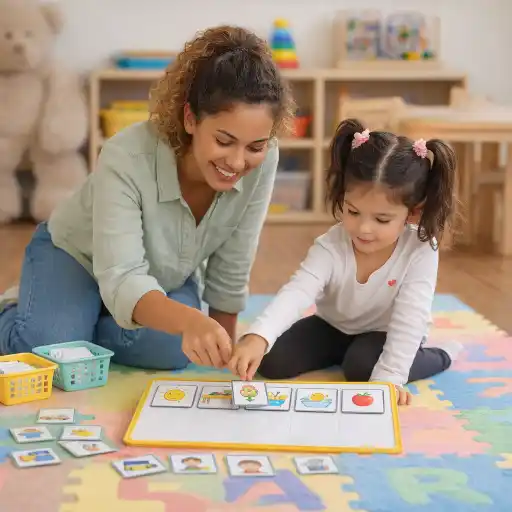
Pair the visual with a consistent cue when it helps: a cleanup song, a gesture, a chime, or a brief advance warning. Give children time to process the cue rather than repeating directions immediately. Invite a rotating helper to move the marker or turn a card, and acknowledge specific efforts: “You checked the picture and came to the rug.”
- 🌟 Let children help update the schedule or show what is finished.
- Use shared words and cues across teachers, aides, and substitutes.
- Explain changes briefly and update the picture where children can see.
- Gradually reduce adult prompts as children learn to check independently.
Consistency among adults matters. Directors can help by agreeing on the schedule’s location, shared language, and system for showing changes, so children receive a familiar message throughout the day.
How can you adapt schedules for individual needs and unexpected changes?
A whole-class schedule is a helpful starting point, but it may not give every child the right amount or type of information. Some children benefit from a portable strip, a small flip book, a personal schedule near their cubby, or a two-picture First-Then board. A child who finds many images distracting may need only the current activity and the next step. Another may understand a real object or photograph more easily than a generic icon.
Use observation to guide adjustments. Notice when a child seems unsure, needs repeated prompts, or finds a particular transition difficult. Consider whether the visual is recognizable, the sequence is clear, and the amount of information is manageable. Work with families and relevant specialists when a child needs individualized support, and keep adaptations respectful and strengths-based.
When plans change, update the schedule visibly and explain what is different: “It’s raining, so we’ll play in the movement room instead of outside.” A change card or “surprise” symbol can help signal that the plan has shifted. A visual schedule should create a reliable framework without suggesting that every day will unfold exactly the same way.
- Try photographs of the actual classroom and familiar routines.
- Use home-language labels, gestures, or other communication supports when useful.
- Show fewer steps if the full sequence feels overwhelming.
- Include transitions and waiting in the plan so it reflects children’s experience.
Remember: state requirements vary - check your state licensing agency if you are connecting visual schedules with compliance or documentation practices.
What common mistakes should you avoid when creating a visual schedule?
A schedule can lose its value when it is treated as decoration instead of a shared classroom tool. If the cards do not match the day, adults do not refer to them, or children cannot see them, the display is unlikely to support understanding. Start small, teach the system, and revise it based on how children actually respond.
- Too many pictures: Show the essential activities or break the day into shorter sequences.
- Unclear visuals: Choose familiar, uncluttered images and teach what each one means.
- Inconsistent adult cues: Agree on common language and a shared way to mark completion.
- No room for transitions: Include cleanup, handwashing, movement, and preparation time.
- Ignoring changes: Update the display and tell children what has changed.
- Expecting instant independence: Model and practice before fading prompts gradually.
If children do not look at the chart, that alone does not mean it has failed. They may already know the routine, or the display may need to be more accessible or relevant. Observe whether they can tell what comes next and move through activities with fewer reminders. The goal is functional understanding and participation, not constant attention to the board.
Choose one routine to improve first, such as arrival or cleanup. Make a few clear cards, teach children how to use them, and revisit the design after observing the routine. For more professional learning on classroom schedules and transitions, explore Every Moment Matters: Schedules and Transitions Buy Now $55.00.
Conclusion: What is the key to a visual schedule preschoolers will use?
Create a visual schedule from the real flow of the day, select pictures children understand, place the display where they can reach and see it, and explicitly teach them how to use it. Refer to it consistently, build in transition time, and adapt the amount or format of information to individual children. When the day changes, explain the change and update the visual rather than expecting children to infer what is different.
The central question—how can you create a visual schedule preschoolers will actually use?—has a practical answer: start simply, practice together, and adjust based on children’s responses. A flexible, well-taught schedule can help make routines more predictable and support children’s participation and growing independence.
Helpful ChildCareEd courses
- Every Moment Matters: Schedules and Transitions Buy Now $55.00 — practical learning about schedules, routines, and transitions.
- Moving About the Classroom: Effective Transitions for Everyday Buy Now $24.00 — strategies for making transitions purposeful and manageable in preschool.
- Self-Regulation & Change: Helping Children Cope Buy Now $16.00 — explores how routines and responsive care can support children through change.
- Coaching for Success: Inclusive Strategies to Support Children with Autism Buy Now
$55.00$45.00 — classroom-focused inclusion strategies and individualized routines. - Staying Positive: Guidance for Preschoolers Buy Now $24.00 — positive guidance approaches that support preschoolers’ independence.
- Behind the Scenes: Baby Routines ONLINE
- 45 Hour Child Growth and Development
- 45 Hour Preschool Methods and Materials
- Bienvenido! Welcoming All Families
- Children at the Wheel: Emergent Curriculum
- 45 Hour Infant and Toddler Methods and Materials
- Pediatric RSV First Aid & CPR/AED
- Texas Director Credential
- Every Moment Matters: Schedules and Transitions
- Mother’s Day Classroom Ideas Families Will Love
- Child Care Daily Schedule Examples: Free PDF Download
- Celebrando la amistad en el cuidado infantil durante el Día de los Mejores Amigos
- Canciones, juegos y preguntas de círculo para niños
- Can your program go screen-free with engaging analog activities?
- How can preschool teachers teach mindfulness and calm-down skills so young children actually use them?
- How can we develop classroom routines that preschoolers can follow?
- How can daily routines teach self-regulation to young children?
- How can storage, labeling, and daily routines make my classroom more efficient?
- How Can Child Care Providers Stay Organized Without Spending Hours Planning?
- How can songs and routines be used to teach emotional skills in early childhood?
- Why Is My Preschool Classroom So Chaotic? 7 Classroom Management Fixes to Try
- How Can Providers Create a Calm-Down Corner That Actually Works?
- How Can Visual Schedules Make Early Childhood Classrooms More Predictable and Inclusive?
- When a Favorite Teacher Is Absent, How Can Child Care Providers Support Children Through the Change?
- What Are 7 Printable Tools That Save Child Care Teachers Time?
- How Can Themed Activity Bundles Simplify Weekly Planning?
- How Can Child Care Providers Teach Preschoolers to Wait Their Turn?
- How Can You Create a Visual Schedule Preschoolers Will Actually Use?
- Is Your Preschool Lesson-Planning Routine Taking Too Much Time?
