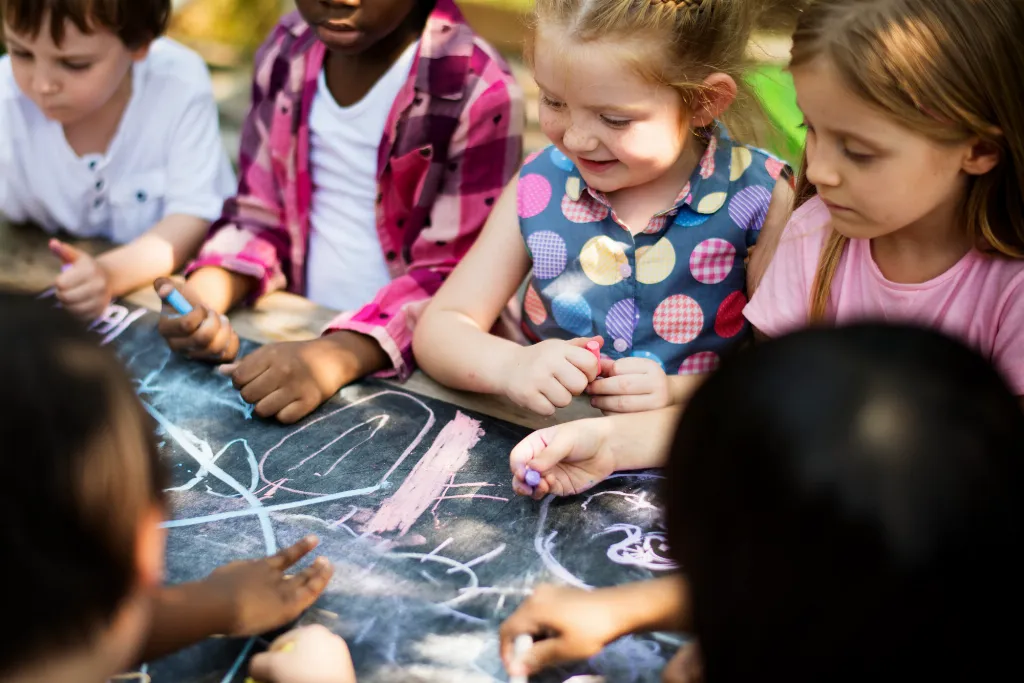
 This short guide helps child care leaders plan hands-on, low-prep summer activities that mix #summer #preschool #sensory #art #science learning with strong safety routines. Use the ideas below to build week-long blocks, small-group stations, or quick 10–20 minute invitations. Remember: state requirements vary - check your state licensing agency.
Why does summer art, science, and sensory play matter?
1) Outdoor, messy, and sensory rich play supports big skills: gross and fine motor, language, curiosity, and self-regulation. Good summer play keeps children moving and learning in playful ways (see ChildCareEd’s Summer Smiles).
2) Mixing art, science, and sensory gives children choices. When children choose, they often stay calmer and learn more. Messy materials like paint, sand, water, and ice are not “just fun” — they teach cause and effect and build #confidence (read the science behind messy play at ChildCareEd messy play).
What easy art activities can brighten our day?
Try these art invitations that are simple to set up, low-cost, and learning-rich. Each can run as a station so multiple small groups rotate.
- 🎨 Ice painting: Freeze colored water in trays or muffin tins. Let children paint as the ice melts. It’s cooling and teaches melting and color-mixing (process idea from Pre-K Printable Fun).
- 🖌️ Puffy paint and textured art: Use a simple puffy paint recipe for sun and ice-cream art. Great for fine motor and sensory touch (see Summer Smiles).
- 🎯 Water pistol painting (outdoors): Add washable paint to water pistols and let children spray on large paper outdoors. Super for large-motor control and joyful collaboration.
- ✂️ Recycled-collage station: Provide scraps, glue sticks, and safe scissors. Children plan and create — adults curate materials for safety and variety (invitations from No Time For Flash Cards).
- 🖼️ Melted crayon or crayon-resist art: Low-prep, high interest. Use hairdryers safely and one dryer per station; supervise closely (see arts + science ideas at Preschool STEM Camp).
Tips:
- Use smocks, outdoor mats, and washable supplies.
- Set clear choice cards: “Paint, Glue, or Collage” so kids know options.
- Offer one adult per 4–6 children during messy stations for quick support and cleanup.
How can we teach simple science experiments preschoolers love?
Young children learn science by doing. Focus on wonder, short steps, and repeatable experiments so children can try again. For seasonal, classroom-safe ideas that use the same simple scientific process, consider adding Halloween science activities to your program to increase engagement and theme-based learning.
- 🧪 Color-changing flowers: Put white flowers in colored water and watch petals change. Teaches absorption and time-based change (easy from Go Science Kids).
- ❄️ Ice exploration and melts: Freeze small toys in ice blocks; let children free toys with warm water and pipettes. Great for fine motor and cause-effect (No Time For Flash Cards).
- 🌫️ Swirling milk or soap-fireworks: Add food coloring to milk and touch with dish soap to create swirls. Short, magical demo for group circle time (classic preschool science).
- ⚖️ Balance and sink/float stations: Use shells, stones, corks, and sponges. Children predict, test, and sort — strong early science and math connections (Fantastic Fun & Learning).
How to run experiments safely:
- Prepare materials and clear the learning question: “What will melt fastest?”
- Have one adult model and then let children try in small groups.
- Keep small parts away from children who mouth objects; use larger, safe materials for the youngest.
For more science experiment ideas and step-by-step guides see the preschool science collections at Go Science Kids and Preschool STEM Camp.
What sensory and water play ideas are safe, low-prep, and learning-rich?
Sensory play is a summer staple. Keep water shallow, supervise closely, and use “zones” so adults know who watches which area.
- 💧 Shallow water stations: Water trays, tubs, and splash mats with a few inches of water. Keep one adult per small group and use a "water watcher" system (see water safety tips at ChildCareEd Texas water play and American Red Cross).
- 🏖️ Beach small-world and sand bins: Add shells, scoops, and small vehicles. Rotate so sand stays manageable and use outdoor bins or mats for easy cleanup (Fantastic Fun & Learning).
- 🔬 Sensory bottles and calm-down jars: Children make bottles with water, glitter, and safe fillers. They’re calming and teach visual tracking (Make Your Own Sensory Bottles Buy Now $0.00).
- 🧊 Ice table: Add ice, scoops, droppers, and colored water. Kids practice prediction, pouring, and observation while staying cool — see many summer sensory bin ideas at Fantastic Fun & Learning.
Important safety steps (must-do):
- Always designate a water watcher and remove distractions (phones, meals).
- Keep water depths shallow and empty containers immediately after play.
- Ensure staff have current CPR and water-safety refreshers; refer to CDC outdoor play guidance for illness and injury tips.
How do we plan, supervise, and avoid common mistakes?
Good planning keeps play joyful and safe. Use short blocks, check weather, and set quick huddles so everyone knows roles.
- 🗓️ Daily plan (60 seconds): 1) Who watches which zone? 2) Supplies ready? 3) Shade/water checked? ChildCareEd’s heat-safety tips are practical for setting shade and water routines (Heat Safety + Sun Protection).
- 👀 Active supervision checklist:
- Count children at every transition.
- Assign a single adult to each water or sand station.
- Keep rescue and first-aid supplies visible.
- 📚 Training & rules:
- Keep CPR and first-aid current.
- Run brief staff drills on water incidents and heat illness.
- State requirements vary - check your state licensing agency.
Common mistakes and how to avoid them:
- ❌ Skipping the weather/heat check. ✅ Fix: Add weather/Heat Index to opening routine and shorten outdoor blocks on hot days.
- ❌ Letting one distracted staffer supervise water. ✅ Fix: Assign a named water watcher and remove phones during water play.
- ❌ Using deep tubs or many children at one station. ✅ Fix: Shallow water only; small groups; immediate emptying after use.
FAQ (quick):
- Q: How deep can preschool water play be? A: A few inches at most for tubs and tables; never leave children unattended. See ChildCareEd water play.
- Q: How often count children? A: At every transition: door, yard, water play start/end.
- Q: Do splash pads need lifeguards? A: Follow local facility rules; active adult supervision and CPR-trained staff are required.
- Q: What about sun protection? A: Use hats, shade, timing, and sunscreen per program policy — see ChildCareEd heat safety and CDC guidance.
Conclusion
Summer is a wonderful time to blend #art, #science, and #sensory play. Keep activities short, grouped, and supervised with clear roles. Use shade, water, and daily huddles to prevent heat issues and maintain safety. For many practical templates and activity banks, check ChildCareEd resources like Summer Smiles and the ChildCareEd water/heat guides above. With simple planning your team can run joyful, learning-rich summer stations that children remember — and stay safe doing it.
- CDA Preschool Credential
- Lesson Planning for Preschoolers
- CDA Subject Area 2
- Building Equity: Inclusionary Practices in Preschool
- 45 Hour Preschool Methods and Materials
- CDA Family Child Care Credential
- 24 Hour Texas Pre-Service
- Art from the Heart for Preschoolers: Open Ended Art Projects that Build Self-Esteem
- Baby Play: Planning Infant and Toddler Activities
- Montessori Cultural Activities: Exploring the World Through Play and Learning
- Planning Summer Fun: Texas Child Care Providers
- ☀️Sunny Side Up: Smart & Safe Summer Fun for Kids!
- ¿Cuáles son las mejores actividades del Día de la Tierra para niños en casa o en el aula?
- Actividades de Otoño Fáciles para Preescolares esta Temporada
- Las Mejores Ideas de Excursiones para Guarderías en Dakota del Norte
- Creative National Ice Cream Day Ideas for the Classroom
- How can I plan peach-themed summer activities for preschoolers in Georgia?
- How can I use beach and ocean-themed summer activities in my California early childhood classroom?
- How can preschool teachers safely use summer weather and cloud activities with kids in Oklahoma?
- How Do Art Activities Support Cognitive Growth in North Dakota Preschoolers?
- Calabazas, hojas y manzanas: actividades de otoño para preescolares
- Cool Summer Fun: National Ice Cream Day Activities for Kids
- How can Minnesota child care programs keep kids learning and engaged over the summer?
- How can you turn summer days into learning moments at your Minnesota program?
- How can we build a Minnesota summer program that keeps school-agers engaged?
- Summer Preschool Activities for Art, Science, and Sensory Play
- Summer Crafts and Activities for Preschool Classrooms
- How can ocean-themed sensory bins and water play boost learning while staying safe in preschool programs?
- How can we explore sand, space, and science with young children in preschool settings?
- How can seasonal activities (spring, summer, fall, winter) combine fun with clear educational goals?
