Introduction
Designing a warm, safe, and useful #classroom helps children feel ready to learn. This article gives simple, practical steps for child care providers and directors. We use short lists, easy ideas, and links to helpful resources. Look at tips from ChildCareEd and others as you plan. Your goals are to support #children, encourage #play, and boost #learning in a thoughtful #environment.
Why it matters: A good space helps kids focus, makes routines smoother, and lets teachers do more teaching. A clear room design also shows families you care. Remember: state requirements vary - check your state licensing agency.
1) Why does the room layout matter?
The way you set up the room guides what children do. A clear layout tells children where to play, read, build, and rest. That means fewer interruptions and more time for real learning. ChildCareEd explains that the room is a “second teacher” because it shapes behavior and learning; see Classroom Arrangement and Designing Learning Spaces that Inspire Curiosity, Not Chaos.
How to think about layout (simple steps):
- Define zones: reading, art, blocks, dramatic play, sensory. Make each zone clear with rugs, shelves, or signs.
- Put materials at child height so they can choose and put things away.
- Leave clear paths so children move safely and adults can see across the room.
- Balance active and calm areas so noisy play does not disturb quiet work.
When you use zones, children know what to expect. For more center design ideas, read How to Design Centers That Promote Both Play and Learning.
2) How do I set up centers that invite both play and learning?
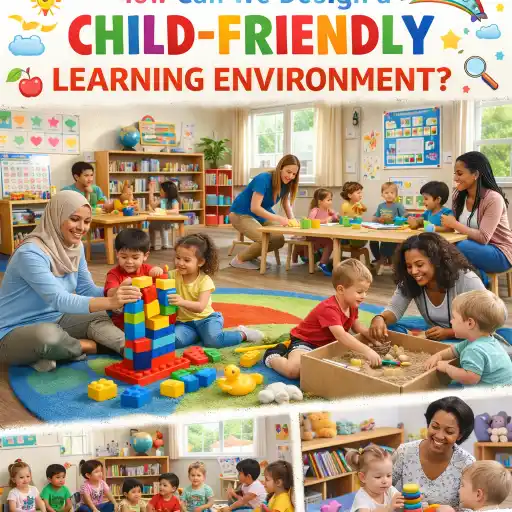
Good centers are simple, themed, and open-ended. They help children explore and learn without needing lots of adult help. Use these steps to set up great centers.
- Choose a theme for each center (e.g., science, art, blocks, dramatic play).
- 🟢 Use open shelving and baskets so children can see and reach materials.
- 🔵 Limit items in each invitation to 3–7 choices so kids are not overwhelmed.
- 🟡 Rotate materials weekly or monthly to keep interest high.
- 🔴 Label bins with pictures and words to support independence and language.
Open-ended materials like loose parts, blocks, sand, and water help children ask questions and solve problems. This approach is recommended in ChildCareEd’s center design guidance: How to Design Centers and in the practical checklist at Designing Learning Spaces that Inspire Curiosity, Not Chaos.
Role of the teacher:
- Observe and follow the child’s lead.
- Ask open questions to extend thinking (e.g., “What else could we try?”).
- Offer small group mini-lessons at centers to teach a new idea or skill.
3) How can I make the space safe, healthy, and inclusive?
Safety and health are the base for all learning. Use clear rules, checklists, and routines to keep children safe and included.
Key actions (easy to follow):
- ✅ Clean and sanitize toys and surfaces often. Follow CDC guidance for cleaning in early care settings: CDC Cleaning & Disinfecting.
- ✅ Keep sight-lines open so staff can supervise. Anchor shelves and keep cords tucked away.
- ✅ Use a safety checklist and positive learning environment checklist from ChildCareEd: Indoor and Outdoor Spaces Checklist Buy Now $0.00 and Creating a Positive Learning Environment Checklist Buy Now $0.00.
- ✅ Include children with disabilities by making reasonable accommodations. See ADA guidance for child care: Including All Children & ADA.
Remember to post simple routines for handwashing, eating, and transitions. Train staff in safe practices; ChildCareEd’s course on Creating Safe & Healthy Child Care Environments  Buy Now $55.00 can help. Also, state requirements vary - check your state licensing agency.
4) How can outdoor and nature spaces support learning?
Outdoor and nature spaces are rich learning places. You do not need a big yard—small gardens, nature tables, and short walks work well. ChildCareEd has many ideas about using nature as a classroom: Creative Ways to Use Nature and Little Explorers.
Simple outdoor ideas:
- 🌿 Nature table: display leaves, rocks, and photos for children to talk about.
- 🌱 Container gardening: let each child plant and care for one pot.
- 💧 Sensory stations: water play, sand, or mud kitchens offer big learning with little cost.
- 🚶 Short nature walks: count birds, compare leaf sizes, or listen for sounds.
Design outdoor spaces to be flexible. Use movable planters, low fences, and paths so the space can change with your group’s needs. For inspiration on larger design ideas, read the design case study at Early education case study: Using design to nurture diverse learners and the growth of nature-based programs like the University of Cincinnati’s work: UC Nature-Based Early Learning.
Conclusion: Quick checklist, common mistakes, and FAQ
Quick checklist (do these first):
- Define clear zones and label them.
- Make materials accessible at child height.
- Keep sight-lines open and traffic flow clear.
- Set up one calm area with soft seating.
- Plan simple outdoor nature activities weekly.
Common mistakes and how to avoid them:
- Putting noisy and quiet centers next to each other — fix by moving or adding sound buffers.
- Too many toys out at once — rotate and limit invitations.
- No clear storage — label bins so children help tidy up.
- Ignoring inclusion needs — use the ADA guidance and make simple accommodations early.
FAQ
- Q: How often should I rotate materials? A: Every 1–3 weeks keeps interest fresh.
- Q: How do I include children with special needs? A: Do an individualized assessment, talk to families, and use the ADA guide at ChildCareEd ADA.
- Q: What is one low-cost change with big impact? A: Lower shelves and picture labels so children can choose and return materials.
- Q: Where can I get more training? A: Explore ChildCareEd courses such as Creating Safe & Healthy Child Care Environments Buy Now $55.00 and center setup trainings.
Designing a child-friendly space takes small, steady steps. Use the links in this article for deeper ideas and tools. Your #classroom, your #children, and your team will thank you as the room becomes a true partner in learning.
- Behind the Scenes: Baby Routines ONLINE
- How To Keep A Healthy Class for Infants/Toddlers
- Easy Steps to Resume and Interview Success
- Children at the Wheel: Emergent Curriculum
- CDA Bridge Bundle: Family Child Care without Portfolio Review
- CDA Bridge Bundle: Infant/Toddler without Portfolio Review
- CDA Bridge Bundle: Preschool without Portfolio Review
- Texas Director Credential
- Anxiety: Signs & Strategies
- Building Social Foundations
- The Family Day Care Chronicles: Tales of Laughter, Learning, and Unexpected Adventures
- CDA Certification en Español: Recursos y Consejos para Educadores Bilingües
- Safety First, Boredom Never: Making Health and Safety Training Surprisingly Fun
- 🩺 Cumplimiento de Salud e Inmunización en Cuidado Infantil de Nevada ✔️
- 10 Ejemplos de Cómo la Cultura Influye en el Desarrollo Infantil
- Proporciones de Cuidado Infantil y Tamaños de Grupo por Edad en Virginia (Guía Rápida para Centros y Hogares)
- How can Georgia preschool teachers use positive guidance to help preschoolers share during indoor play?
- How Can Positive Guidance Build Respectful Classroom Routines in Texas Child Care Programs?
- How to Help Children Feel Safe and Welcome in Child Care
- Capacitación CDA gratuita en Illinois
- How Do Art Activities Support Cognitive Growth in North Dakota Preschoolers?
- How can professional development help early childhood educators and centers?
- Canciones, juegos y preguntas de círculo para niños
- Cómo simplificar la capacitación para sus empleados de daycare
- How can I make the case for play-based learning in my Michigan program?
- What are Oklahoma's child care ratios and group sizes by age for centers and homes?
- How can child care providers help children build friendship skills?
- How Can Halloween Fine-Motor Activities Be Fun Without Being Scary?
- How Can Child Care Programs Respect Children’s Privacy During a Prospective Family’s Tour?
