Young children first understand the world through relationships, routines, and the people, images, languages, and traditions represented in their everyday environment. For child care directors and providers, celebrating multiple traditions fairly is not about presenting a parade of costumes, foods, or isolated holidays—it is about creating consistent, respectful opportunities for children to learn about differences, recognize their own families and identities, and practice curiosity, empathy, and kindness. This guide offers practical planning steps, research-informed reflection questions, and sustainable classroom ideas that help programs honor the many #families in their care while avoiding stereotypes, maintaining professional boundaries, and keeping staff workloads realistic.
To strengthen culturally responsive practices, explore ChildCareEd’s self-paced online course Strength in Differences: Cultural Diversity  Buy Now $24.00. This training helps educators understand cultural competency, promote acceptance, consider diverse perspectives, and create environments where every child feels valued and respected. Programs can also use Community and Family Engagement in Childcare Buy Now $24.00 to build stronger partnerships with families and invite their knowledge, preferences, and traditions into classroom planning in meaningful ways. The goal is not to represent every tradition in exactly the same way, but to use an equitable, ongoing approach that reflects enrolled families, expands children’s understanding, and makes belonging part of the daily curriculum. State requirements vary, so always check with your state licensing agency.
Why it matters:
1) Children form identity and social expectations early; when classrooms reflect many lives, children develop empathy and self-worth. See practical approaches in How Can Early Childhood Classrooms Celebrate Diversity and Inclusion?.
2) Family engagement deepens when programs intentionally invite contributions rather than assume or tokenize participation. Practical event design and family partnership strategies can be found in Creating Inclusive Events That Celebrate All Families and Cultures.
1) How do I decide which traditions to include without favoring any group?
- Survey and map: List the cultures, languages, holidays, and family structures represented in your program. Invite families to add preferred ways to share (photo, story, recipe, song). See tools in Celebrate Every Family.
- Set selection criteria: Ask: Is this meaningful to children? Is participation voluntary? Will the activity be developmentally appropriate? These mirror the guidance in the NAEYC-style resource at Precious Children: Celebrating Holidays.
- Plan balance across the year: 1) Spotlight a few family-led traditions, 2) weave everyday cultural learning (greetings, books, music) into routines, 3) avoid trying to celebrate every holiday—prioritize depth over breadth. Consider spotlighting historically significant observances, such as Juneteenth, when they are meaningful to children and families.
- Document the decision: Post a short plan for families explaining why and how celebrations are chosen—transparency reduces misunderstandings.
2) How can I plan inclusive, low-cost celebrations that actually involve families?
- 📋 Plan with families, not for them: Invite representatives to co-create the agenda; ask what they can comfortably contribute (photo, short demo, a recorded greeting).
- 🧭 Offer multiple ways to participate: in-person, prerecorded audio, a photo on the family wall, or a simple note in their home language.
- 🍽️ Keep food optional and allergy-aware: use photos, pretend food, or scent jars when food is sensitive.
- 🎈 Make activities low-cost and sensory-rich: story corners, music samples, small art stations, a classroom map or passport activity—see Fun Multicultural Activities for Preschoolers.
- ♿ Remove access barriers: choose accessible venues/times, provide translation if possible, and offer child care during family meetings. State requirements vary - check your state licensing agency.
3) What classroom routines and materials support year-round #culture and #belonging (not one-off celebrations)?
- 📚 Rotate books and visuals that represent the children in your room and beyond; use careful selection to avoid stereotypes (Examining Multicultural Picture Books shows selection pitfalls).
- 🧸 Provide diverse play materials: dolls with different skin tones, multicultural props (everyday clothing vs. costumes), and real photos from families.
- 🔁 Daily rituals: greeting board in the home language of the week, family-photo wall, and a classroom passport that gets stickers when you explore a place or theme (see Passport ideas).
- 👥 Teacher language: regular use of “some families” and “many people” rather than absolute statements; don’t ask any one child to represent a whole culture.
- 🧑🤝🧑 Family voice: invite short, optional family contributions to centers or documentation—this strengthens trust and accuracy.
4) How do we avoid common pitfalls and the risk of cultural appropriation?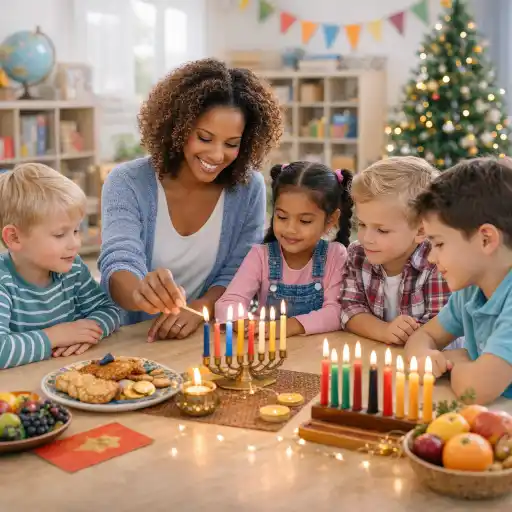
Errors usually come from simplification, tokenism, or treating cultural items as costumes. Avoid these common mistakes:
- 🚫 One-day “culture costume” events only. Instead, teach daily-life practices and values.
- 🚫 Asking a child to speak for their whole community. Use books, guest family members, or recorded family stories instead.
- 🚫 Relying on stereotypes or inaccurate materials. Vet books and artifacts—see the critique in Examining Multicultural Picture Books.
If you receive cultural gifts (e.g., clothing or ceremonial objects), treat them with care: consult the giver, learn proper handling, and avoid using sacred items as props—advice echoed in thoughtful commentary about cultural gifts (Slate: kimono Q&A).
5) How can I measure impact and keep improving with staff and families?
Use simple, repeatable checks and involve families and staff in reflection. Practical steps:
- 📈 Track small indicators weekly: number of children using non-English greetings, observed inclusive interactions (helping, invitation to play), and family shares submitted.
- 📝 Collect family feedback after events with a short bilingual form or a quick one-question exit poll—use the methods in Inviting Families into Observation & Assessment.
- 👩🏫 Staff reflection loop: monthly team meeting to review what worked, who was left out, and what to change. Link observations to professional learning—ChildCareEd offers courses like One World, Many Cultures.
- 🔁 Iterate: set one small goal each month (e.g., bilingual labels, a family story wall, or a rotating culture spotlight) and evaluate in 30 days.
FAQ: What directors and providers ask most often
- Q: Must we celebrate every holiday represented in our program? A: No. Prioritize meaningful, developmentally appropriate experiences and honor every family in other ways—books, displays, and invitations to share. See Precious Children guidance.
- Q: What if a family asks that we not include a celebration? A: Respect the request and provide alternate quiet activities for that child; co-create options with the family.
- Q: How do we manage time and budget? A: Focus on low-cost choices (story, music, family photos) and family-contributed materials. Use the event checklist in Creating Inclusive Events.
- Q: Who trains teachers on cultural sensitivity? A: Invest in short, regular professional learning (peer study groups, ChildCareEd courses, or local cultural liaisons) and make reflection routine.
Conclusion
Celebrating multiple traditions well is a long-game commitment: small, consistent choices in materials, language, family partnership, and event design add up to a classroom where every child feels seen. Use family voices to guide what is celebrated, center developmentally appropriate learning, avoid tokenism, and build simple measurement and reflection into your staff routines. When you do this, you strengthen relationships with #families, deepen #inclusion, and create daily evidence of #culture and #belonging in your program. For practical tools and ready-made lesson ideas, explore the ChildCareEd resources cited above and remember: state requirements vary - check your state licensing agency.
- 45 Hour Child Growth and Development
- SIDS: Saving Babies: A Change of Position, A Change in Tradition
- SIDS: Saving Babies: A Change of Position, A Change in Tradition
- Pediatric RSV First Aid & CPR/AED
- Texas Director Credential
- Building Bridges for Dual Language Learners
- 45 hour Growth and Development Birth-age 12 ONLINE
- Montessori Cultural Activities: Exploring the World Through Play and Learning
- Families, Communities, and Classrooms: Working Together for Children
- CDA Certification en Español: Recursos y Consejos para Educadores Bilingües
- ❄️ ¿Qué actividades al aire libre funcionan bien para los niños de Illinois en cada estación? 🌷🍂
- 👶 ¿Cuáles son las proporciones y grupos requeridos en Dakota del Norte? 🏫
- Recursos en Español sobre el Sueño Seguro del Bebé
- 10 Ejemplos de Cómo la Cultura Influye en el Desarrollo Infantil
- Proporciones de Cuidado Infantil y Tamaños de Grupo por Edad en Maryland (Guía Rápida para Centros y Hogares)
- Proporciones de Cuidado Infantil y Tamaños de Grupo por Edad en Virginia (Guía Rápida para Centros y Hogares)
- Consejos de Supervisión Activa para Salones de Preescolar y el Juego al Aire Libre
- Celebrando la amistad en el cuidado infantil durante el Día de los Mejores Amigos
- Canciones, juegos y preguntas de círculo para niños
- How can my classroom celebrate multiple traditions in ways that are fair, meaningful, and sustainable?
- What Makes a Great Home Daycare? 10 Things Parents Notice First
- Rosh Hashanah Kindergarten Lesson Plans: 5 Days of Apples, Kindness, and New Beginnings
- How Can We Celebrate Every Family and Create a Classroom Where Everyone Is Represented?
- How Can Child Care Programs Celebrate Hispanic Heritage Month Meaningfully?
- How Can Childcare Programs Encourage Meaningful Family Participation?
- How Can Classroom Traditions Create a Lasting Sense of Belonging?
- How Can Providers Create an Inclusive Classroom for Every Child?
- ¿Todos los niños deben participar en el tiempo de círculo?
- What Should You Ask Families Before a Classroom Winter Celebration?
