Preparing preschool children for kindergarten involves much more than teaching letters and numbers. Children also need strong relationships, predictable routines, growing independence, communication skills, emotional regulation, and confidence participating in a group. This article gives child care providers and directors a practical roadmap for building kindergarten readiness through play-based literacy and math experiences, self-help routines, peer interaction, family partnerships, developmental observation, and timely screening or referral when concerns arise. To strengthen staff knowledge, explore ChildCareEd’s self-paced online course How Preschoolers Develop  Buy Now $32.00, which helps educators understand preschool development and recognize when additional support may be needed, and Language Development in Early Childhood Buy Now $16.00, which offers strategies for strengthening communication, early literacy, vocabulary, and phonological awareness. Programs can also benefit from Environments That Inspire Independence and Exploration Buy Now $55.00 when designing classroom spaces and routines that encourage autonomy, curiosity, and successful transitions into kindergarten. Remember that state requirements vary, so always check with your state licensing agency.
Why it matters:
Short, repeated classroom routines and strong family partnerships produce measurable gains in children’s ability to join class, follow directions, and engage in learning. See syntheses and practical guidance from ChildCareEd and public health milestones at the CDC. State requirements vary - check your state licensing agency.
1) What core skills should preschoolers have before kindergarten?
- Language & early literacy
- Tell short stories, enjoy books, and play with rhymes and sounds. See ChildCareEd’s practical guidance on phonological play: What skills do preschoolers need?
- Thinking & early math
- Count objects, sort, compare sizes, and solve simple problems during daily routines.
- Social-emotional skills
- Take turns, wait briefly, use words for feelings, and join group activities. ChildCareEd emphasizes SEL in kindergarten transitions: How can child care programs best prepare?
- Self-help & #independence
- Toileting, handwashing, zippers, and simple lunch tasks reduce stress and support participation—use the ChildCareEd readiness checklist: Kindergarten Readiness Checklist.
- Motor & fine motor skills
- Hold a crayon, snip with scissors, and manipulate small objects to support classroom tasks.
2) How can teachers build these skills in the classroom?
- 😊 Short, active read-alouds
- Read 5–15 minutes, pause for predictions or emotion talk, and repeat favorite books. ChildCareEd’s lesson plans show how to make read-alouds interactive: How can classroom activities support early learning?. Including culturally responsive minibooks—such as a Hanukkah minibook that builds vocabulary and family connections—during read-alouds strengthens literacy, language, and cultural awareness for preschoolers.
- 🎲 Phonological & language play
- Use "I Spy" beginning sounds, rhyme games, and syllable stomps to build #phonological awareness every day (see ChildCareEd phonological ideas).
- 📊 Math in routines
- Count snack items, sort blocks, and ask comparative questions during transitions—these moments add up to real #readiness gains.
- 🔧 Fine motor & independence stations
- Rotate playdough, clothespins, beads, and dressing frames to strengthen fingers and self-help skills—embed 1–2 minute practice opportunities into arrival and coat time.
- 🤝 Explicit SEL teaching
- Use emotion cards, calm-down tools, and role play. Research and curricula like Second Step are useful for building self-regulation—see program summaries on ChildCareEd: Transitions & SEL.
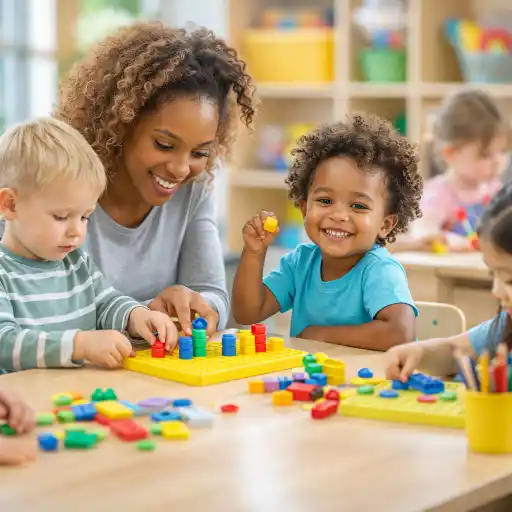
- Use emotion cards, calm-down tools, and role play. Research and curricula like Second Step are useful for building self-regulation—see program summaries on ChildCareEd: Transitions & SEL.
Quick teacher checklist: 1) pick one micro-skill to target this week, 2) keep activities under 15 minutes, 3) document one short observation per child weekly. For classroom activity ideas and templates, see ChildCareEd Resources.
3) How can programs partner with families to support the transition?
- 📄 Share one-page checklists
- Give families a short checklist that balances social, independence, and early academic goals—see ChildCareEd’s checklist model: Kindergarten Readiness Checklist.
- 🏫 Coordinate visits & orientation
- Arrange classroom visits, invite receiving kindergarten staff, and provide photo/video tours for families who cannot attend in person (see transition strategies at A Guide to Smooth School Transitions).
- 🎒 Share tiny home practices
- Suggest one 5–10 minute daily activity: read one page, count snack pieces, practice zippers. Keep suggestions strengths-based and feasible.
- 🤝 Use strengths-based conversations
- Ask what works at home, celebrate small wins, and offer help with enrollment forms. Research and practical briefs on transitions and family engagement are available from SEDL and ChildCareEd: SEDL webinar resources.
Reminder for families: state requirements vary - check your state licensing agency. Keep messages simple: one checklist, one short video or handout, and one suggested practice this week.
4) How do we recognize who needs extra support, and what steps should we take?
Early identification and respectful, timely referrals are acts of care. Use observation, validated milestone tools, and family conversations to decide next steps.
- 🔍 Observe & screen
- Use weekly observation notes and CDC milestone checklists: CDC Milestones. Standardized screens like BRIGANCE help teams spot strengths and gaps: BRIGANCE Early Childhood.
- 📞 Talk with families early
- Share concrete examples, ask how things look at home, and co-create a short plan. See family partnership tips at Inclusive Care Strategies.
- ✔️ Refer when needed
- If concerns persist, suggest a pediatric check-in, formal screening, or referral to early intervention. Hands & Voices and IDEA summaries outline transition and referral steps for children with additional needs: Hands & Voices transition guidance.
- 🔁 Document and adapt
- Keep short, dated notes, try classroom adaptations for 2–4 weeks, and share progress with families. Use ChildCareEd templates for documentation and inclusion planning.
Acting early and keeping conversations strengths-based makes referrals more effective and less stressful for families.
5) What quick first-day strategies and common mistakes should we avoid?
The first days set the tone. Use a predictable schedule, simple roles, and warm family outreach to reduce anxiety. Also, avoid common pitfalls identified in field research.
- 🧩 First-day practical steps
- 1) Post a simple visual schedule at the child's height. 2) Offer a calm corner and a sensory object for children who need it. 3) Pair new children with a buddy and give adults scripted welcome lines for families—see ChildCareEd’s transition tools: Transition resources.
- ⚠️ Common mistakes and fixes
- 😊 Mistake: Focusing only on academics. Fix: Protect play, routines, and SEL time daily (What Kindergarten Readiness Skills Do Children Need?).
- 🔁 Mistake: Long, technical checklists for families. Fix: Send one-page, strengths-based lists with one home activity.
- ❗ Mistake: Waiting to act on concerns. Fix: Screen early, document, and refer—CDC and ChildCareEd recommend timely action.
- 🎯 Quick classroom routines to keep
- 1) 5-minute circle warm-up (song + one question). 2) 2-minute transition warning and helper jobs. 3) 5–10-minute fine motor station daily.
Also consider sharing Scholastic family-friendly tips for preparing the first weeks: Scholastic: Prepare Your Child for Kindergarten.
Conclusion: What can you do tomorrow?
1) Pick 1 classroom routine to protect this week (a 5-minute read-aloud or a short clean-up song). 2) Send one clear one-page checklist to families with 2–3 tiny home ideas. 3) Note one observation per child and celebrate a small win with each family. For printable templates, family handouts, and staff courses, prioritize ChildCareEd free resources and the readiness trainings like Are They Ready for Kindergarten? Buy Now $35.00.
FAQ (quick): 1) Do children need to read before kindergarten? No — letter knowledge and rhymes help, but fluent reading is not expected. 2) How long should practice be at home? Short and steady—5–15 minutes daily. 3) When to refer? If a child consistently misses several milestones, start screening and coordinate with the pediatrician/early intervention. See the CDC milestone pages for guidance.
Thank you for the steady, strengths-based work you do. Small, repeated, playful steps—paired with clear family partnerships and early action when needed—create kinder, more successful transitions to #kindergarten.
- CDA: A Closer Look at Assessments
- CDA Preschool Credential
- CDA Home Visitor Subject Area 3 Part 3 Birth to 5
- CDA Home Visitor Subject Area 2 Part 3 Birth to 5
- CDA Infants/Toddlers: Lesson Planning Made Easy
- 24 Hour Texas Pre-Service
- Emergent Learning & Development
- Texas Director Credential
- Letter & Number Planning in Child Care
- Supporting Children's Independence
- Child Care Professionals
- Benefits of Preschool: Early Education Matters
- CDA Certification en Español: Recursos y Consejos para Educadores Bilingües
- Ramadan Activities for Kids: Classroom Ideas for Preschool Through School Age
- Creative Martin Luther King Jr. Day Activities for Preschool, Pre-K, and Kindergarten
- Cómo Celebrar el Día Nacional del Kindergarten
- Temas y Actividades para el Día Nacional del Kindergarten para Proveedores
- How can we prepare preschoolers for kindergarten success?
- Celebrando la amistad en el cuidado infantil durante el Día de los Mejores Amigos
- Canciones, juegos y preguntas de círculo para niños
- What Kindergarten Readiness Skills Should My Program Build?
- How Can Child Care Programs Best Prepare Little Ones for the Kindergarten Transition?
- How can we best prepare preschool children for kindergarten?
- How can preschool programs best prepare children for kindergarten?
- How Can Preschool Programs Best Prepare Children for Kindergarten?
- What Certification Do You Need to Teach Pre-K? Public School vs. Child Care Requirements
- Kindergarten Songs for Circle Time: 15 Sing-and-Move Ideas That Sneak in Learning
- Rosh Hashanah Kindergarten Lesson Plans: 5 Days of Apples, Kindness, and New Beginnings
- What Are the Best Print-and-Play Activities for Substitute Teachers?
- How Can Child Care Providers Support Kindergarten Emotions on the First Day of School?
