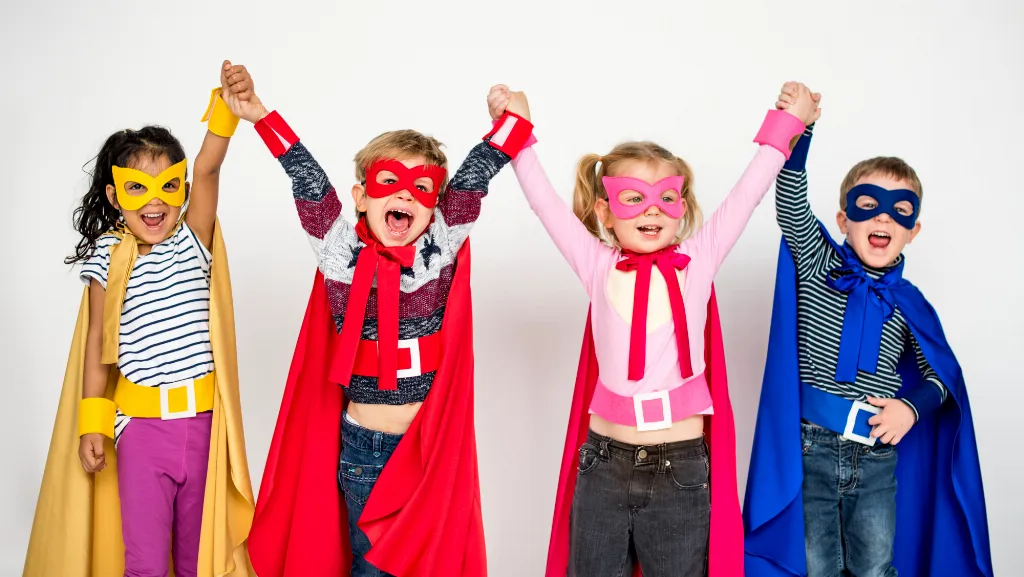
 Superheroes are fun for kids. They also help children learn about real people who help others. As a child care provider, you can use simple superhero examples to teach #superheroes about kindness, #helpers about community jobs, and how to keep kids safe during #play. This article gives easy ideas, links to helpful resources, and tips you can use right away.
For program-quality ideas and lesson sets, check resources such as fun superhero lessons on body awareness and safety.
What simple superhero examples can I use to show helpers and heroes?
- 🦸♂️ Super Sidekick Helpers (community helpers): Show a mail carrier, a teacher, and a firefighter as real-life heroes. Use photos, storybooks, or a dramatic play post office. See community helpers ideas at Preschool-Plan-It and pair with your own center materials.
- 🩺 Doctor Hero: Use stuffed animals and a toy stethoscope. Children practice being calm and caring. This reinforces empathy and basic health ideas. ChildCareEd offers health and safety courses that support these lessons: health & safety training Buy Now $0.00.
- 🚒 Firefighter Rescues: Read firefighter picture books and discuss how they help keep people safe. A list of picture books about helpers can be found at No Time For Flash Cards.
- 📬 Everyday Hero Tasks: Give simple missions like delivering a letter or helping a friend tie shoes. Missions teach responsibility and small acts of service.
- 🎖️ Everyday Hero Awards: Celebrate kindness with simple tokens or stickers. This builds confidence and shows that helpers are valued.
- 📚 Book Examples: Use superhero storybooks and community helper books to spark talk and role-play. See lists at Scholastic and ChildCareEd's The Super Hero in Us All.
Cite real helpers often. Children love to know who helps them at school and in their neighborhoods. Use the word #helpers when you talk about jobs, not just capes.
How can superhero play teach safety, body awareness, and empathy?
- 😀 Model safe moves first. Show a "safe leap" and say why we land on two feet. Remind children that some stunts are for stories only. Use ChildCareEd safety posts like these lessons on body awareness to guide your talk about limits and consent.
- 🧘 Teach body checks: pause and ask, "How does your body feel?" Offer breathing or superhero poses to calm big feelings. See ideas on emotional heroes at Somatic Superpowers.
- 🩹 Practice simple first aid rules and emergency plans. Encourage staff to take CPR/First Aid training like ChildCareEd CPR training. Remind staff: state requirements vary - check your state licensing agency.
- 🤝 Use role play to teach empathy. Have children practice helping a friend who is sad, or a stuffed animal with a scraped knee. This builds #empathy and caring behavior toward classmates.
- 📋 Reflect after play. Ask kids three short questions: What happened? Who needed help? What did we do? This builds language and problem-solving and links pretend actions to real-life choices.
These steps tie pretend #superheroes to real-life #safety habits. When kids know how their bodies feel and how to ask for help, they grow more confident.
How do I plan superhero activities for different ages in my program?
- 👶 Infants & Toddlers: Gentle superhero songs, soft capes, and simple rescue games with stuffed animals. Keep it short and safe. Use ChildCareEd infant/toddler safety courses for guidance: active supervision and safety Buy Now $0.00.
- 🧒 Young Toddlers (2–3): Dramatic play mailbox or mini clinic. Practice simple actions: bandage a bear, hand a note to the mail carrier. Materials: boxes, stickers, dress-up hats.
- 👧 Preschool (3–5): Superhero school lessons with stations like "Rescue Math," "Phonics Shields," and an obstacle course. See ideas from Superhero School and the phonics activity at Fantastic Fun & Learning.
- 🧑 School-age: Service projects as missions. Help younger classrooms, collect items for a local cause, or run a safety lesson for younger kids. Connect with community helper themes from Preschool-Plan-It.
- 🎨 Art & Movement: Include crafts (masks, capes), painting, and dance. Crafts collections and ideas are plentiful at sites like Messy Little Monster.
- 📚 Storytime & Literacy: Pair stories about helpers with follow-up questions and role-play. Use superhero picture book lists from Adventures In Storytime and community helper book lists at No Time For Flash Cards to choose titles.
Rotate centers, offer open-ended props, and scaffold language. For more on dramatic play benefits and ideas, see the WGU guide: Dramatic Play: Benefits & Ideas.
What common mistakes should we avoid and how do we include every child?
Inclusion and safe practice make superhero activities work for everyone. Here are common pitfalls and how to fix them. Use numbered steps for easy staff training.
- 😬 Mistake: Letting play get unsafe. Fix: Set clear, simple rules before play. Model safe actions. Use ChildCareEd courses on intentional safety for infants and toddlers: active supervision Buy Now $0.00 and preventative health & safety Buy Now $0.00.
- 🚫 Mistake: Using violent superhero stories. Fix: Choose stories that focus on helping, not fighting. Many picture books and homemade heroes work well (see Superhero School).
- 🌈 Mistake: Not including all children. Fix: Offer adaptive props and roles. Create quiet or small-group superhero stations. ChildCareEd resources on inclusion and ACEs can guide you: The Super Hero in Us All and A Better Space For All Buy Now $0.00. For providers who want focused training on Adverse Childhood Experiences and trauma-informed strategies, consider the course Become a super hero for young children.
- 🗣 Mistake: Skipping reflection. Fix: Add a 2–3 minute group talk after play. Ask children to name one kind thing they did and one safe rule they followed.
- ✅ Inclusion tip: Use roles that fit strengths. Not all kids want to run and jump. Offer planners, costume designers, or story writers as hero jobs so every child can shine. This honors different strengths and builds confidence.
When you avoid these pitfalls and plan for all children, superhero play becomes a powerful teaching tool for #safety, #play, and #empathy.
Conclusion and FAQ
Superhero examples help children learn to care for others, understand safety, and value helpers in the community. Use simple roles, practice safe actions, and include every child. For staff development, explore ChildCareEd courses to strengthen safety and inclusion practices: training resources Buy Now $0.00.
FAQ (quick answers for busy providers):
- Q: Can superhero play teach consent?
A: Yes. Teach children to ask before touching or hugging and practice safe play limits during role play. - Q: Should we ban popular comic characters?
A: You can include them but focus on helpful actions, not violence. Use homemade heroes to keep control. - Q: How long should a superhero center last?
A: 15–30 minutes for toddlers, 30–45 for preschoolers. Rotate themes weekly to keep interest. - Q: Do staff need special training?
A: First Aid/CPR is important. ChildCareEd offers courses like CPR training. Also consider inclusion and safety trainings.
Remember: state requirements vary - check your state licensing agency. Keep play joyful, simple, and safe. Your everyday choices make you the real heroes in children's lives.
- CDA Preschool Credential
- CDA Family Child Care Credential
- From Tantrums to Triumphs: Equipping Preschoolers with Self-Regulation Skills
- CDA Family Child Care Credential with Portfolio Review
- 24 Hour Texas Pre-Service
- CDA Bridge Bundle: Family Child Care without Portfolio Review
- CDA Bridge Bundle: Infant/Toddler without Portfolio Review
- CDA Bridge Bundle: Preschool without Portfolio Review
- Emergent Learning & Development
- Chef's in the Classroom
- Superheroes Wear Capes...And Take First Aid & CPR Classes
- Fun, superhero-themed lessons to teach kids about body awareness & safety
- Tiny Tastemakers to Make Vegetables Cool for Kids
- How to Create an Engaging Classroom
- How childcare professionals can de-stress during the holiday season
- Gross Motor Activities for Preschoolers: Games That Build Big Skills
- Cómo usar tu certificación de 90 horas en Maryland para completar tu CDA
- Actividades de Fiesta para Niños de Preescolar y Primaria
- Cómo Celebrar el Día Nacional del Kindergarten
- Calabazas, hojas y manzanas: actividades de otoño para preescolares
- Superhero Activities for Preschoolers: Play, Create, and Learn
- Superhero Examples for Kids: Learning About Helpers, Safety, and Kindness
- Superhero Theme Activities for Preschool and Child Care
- How can superhero-themed play help build confidence in young children?
- What Do Superheroes Teach Kids About Kindness and Courage?
- Can Superhero Day Capes and Pretend Play Teach Children to Help Others?
- How can superhero-themed winter science activities energize your classroom?
- How can we host a Costume & Character Day that truly builds imagination and learning?
- Can a Superhero Week Help Preschoolers Learn to Name and Manage Emotions?
- How Can You Turn a Superhero Theme Into a Full Week of Preschool Learning Centers?
