When a preschooler skips a number, it can be a clue about what to teach next—not a reason to worry or rush in with the answer. Explore practical ways to use visual number-sequence puzzles, including pumpkin-themed missing-number strips, to make the order from 1 to 10 easier to see and talk about; for a deeper foundation in playful math strategies, consider Early Mathematics Through Play Buy Now $24.00 and Math Foundations in Early Childhood  Buy Now $16.00.
Why does number order matter beyond reciting a count?
A child may recite “one, two, three…” smoothly and still find it hard to identify what belongs between 6 and 8. Reciting a familiar string and understanding the relationships among numbers are related but distinct skills. Completing a missing-number sequence asks children to hold the order in mind, notice a gap, connect number words with written numerals, and decide what comes next.
These early experiences contribute to number sense: children begin to understand that each number has a place in a stable sequence and represents a quantity. The Head Start preschool mathematics goals include knowing number names and the count sequence, recognizing small sets, and connecting quantities with numerals. A simple puzzle can give educators a window into developing skills without turning the activity into a formal test.
For providers, the practical value is twofold: puzzles invite engaging practice and help reveal which kinds of support are useful. A child who says the right number but chooses the wrong card may need more numeral-to-quantity matching. Another child who counts from one each time may benefit from practicing counting on. Notice strengths as well as needs—each strategy is information for responsive instruction.
How can pumpkin puzzles make a number sequence visible?
A missing-number strip turns an invisible spoken sequence into something children can see, point to, and rearrange. In the Missing Number Pumpkin Puzzles: Number Sequences 1–10 for Preschool Buy Now $2.00, each strip has one missing numeral and choices children can match to the gap. The seasonal theme can make a math center feel inviting, while the central learning goal remains clear: identify the number that belongs in order.
Start with a range the child can approach successfully. If 1–10 feels like too much, cover part of the strip and work with 1–5. Say the sequence together, touch each numeral as you count, and invite the child to select a card for the blank. When a child is ready, ask what comes before or after the missing number, or invite them to explain how they decided.
- Lay the number strip and numeral choices where children can reach and compare them.
- Read the sequence aloud, pointing to each number once.
- Pause at the blank: “Which number would keep our counting in order?”
- Place the selected card, then count the full sequence together to check.
- 🌟 Celebrate careful checking and trying a strategy—not speed or a perfect first response.
For repeated use, laminate pieces or add hook-and-loop dots, as appropriate for the classroom and children’s ages. Always supervise small materials.
What visual and hands-on supports help children find the missing number?
Children often make better sense of number order when symbols are connected with movement and quantity. Pair the puzzle with counters, linking cubes, dot cards, or a floor number path. For example, after choosing 5 for a gap, a child can make a group of five objects or stand on 5 along a number path. These representations help bridge the spoken number, the numeral, and the amount it names.
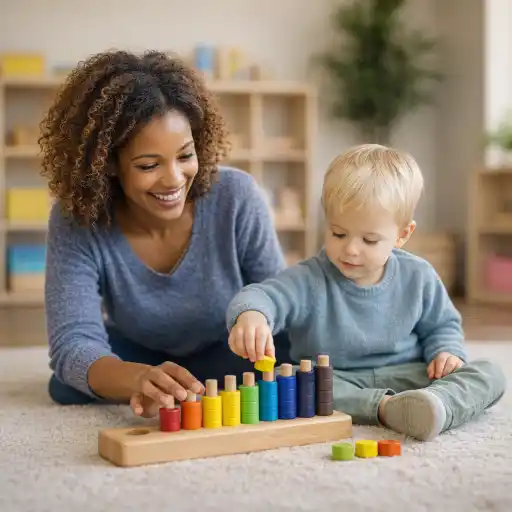
Use a calm, conversational prompt rather than correcting immediately. Try “Let’s start at the number before the blank,” “What comes after 4?” or “How could we check?” If the child hesitates, model one example aloud, then leave room for the child to try the next one. For children developing English or another classroom language, name numbers in familiar languages where possible and pair number words with clear visual cues.
- Number cards: Shuffle and arrange cards from 1–5, then extend to 1–10.
- Objects: Match a numeral to a corresponding set of blocks or counters.
- Movement: Walk, hop, or tap along a floor number path, pausing at a covered spot.
- Visual structure: Use dots or ten-frames when numeral symbols alone are difficult to interpret.
Keep the experience brief and playful. A few thoughtful turns with an encouraging adult can be more useful than a long worksheet session.
How can educators notice progress and choose a next step?
Observe the child’s process, not only whether the card placed in the blank is correct. Does the child count from 1, begin at the number before the gap, use a visual reference, or match the numeral to a quantity? Can they tell you how they knew? These details help distinguish a sequence challenge from numeral recognition, attention, language, or quantity-matching needs.
Look for patterns across several opportunities and settings rather than treating one mistake as a fixed ability. A short note might record: “Completed 1–5 with a number path; counted aloud to find 4; next, offer a 1–6 strip with fewer choices.” Such observations can guide instruction while keeping expectations responsive to the individual child.
- Beginning: Use 1–5, model the count, and offer two or three numeral choices.
- Practicing: Use 1–10 with one blank and invite the child to explain or check.
- Extending: Ask for the number before and after, reverse the sequence, or let the child create a puzzle for a peer.
Preschoolers develop at different rates, and fatigue, unfamiliar materials, or the language of a prompt can affect a response. State requirements vary - check your state licensing agency when determining documentation or assessment expectations.
Which common pitfalls can providers avoid?
One common pitfall is assuming that a skipped number means a child cannot count. The child may know the verbal sequence but struggle with written numerals, or may understand the task but lose their place while scanning the strip. Check with another representation—say the sequence aloud, use number cards, or count objects—before deciding what support to offer.
Another pitfall is making the task harder too quickly. Moving from a familiar 1–5 sequence to a busy 1–10 strip with multiple choices may introduce unnecessary frustration. Begin with a manageable challenge and adjust only one feature at a time: number range, number of choices, visual cues, or adult support. Avoid emphasizing speed; thoughtful checking matters more than a quick answer.
Finally, do not rely on printables alone. Puzzles work best as one part of a varied math environment that includes conversation, manipulatives, songs, movement, and everyday counting. Keep feedback specific and strengths-based: “You counted carefully and checked which number comes after 6.” This communicates that mistakes are useful clues and that children can revise their thinking.
How can providers help preschoolers feel confident with number sequences?
When preschoolers skip numbers, visual sequence puzzles offer a practical, low-pressure way to explore what comes next from 1 to 10. Use a manageable number range, connect numerals to quantities and movement, invite children to explain or check their choices, and observe their strategies over time. The aim is not flawless performance on the first try; it is a growing sense that numbers have an order children can investigate and understand.
For a ready-to-use small-group or center activity, explore the pumpkin missing-number puzzles Buy Now $2.00. With patient guidance and playful practice, providers can help children approach number sequences with greater curiosity and confidence.
Explore related ChildCareEd courses
- 45 Hour Child Growth and Development
- CDA Home Visitor Subject Area 3 Part 3 Birth to 5
- 45 Hour Preschool Methods and Materials
- Power of Art: Bldg Self-Esteem & Positive Behavior for ALL Abilities
- Birth to Five CDA Credential with Portfolio Review
- 45 Hour Infant and Toddler Methods and Materials
- 45 Hour School Age Methods and Materials
- Every Moment Matters: Schedules and Transitions
- 🎉STEM-sational Fun: How Can You Spark Preschoolers’ Curiosity with Engaging STEM Activities? 🔬🧪🔢
- 👶 ¿Cuáles son las proporciones y grupos requeridos en Dakota del Norte? 🏫
- Recursos en Español sobre el Sueño Seguro del Bebé
- Apoyo en Español para Capacitaciones Grupales Presenciales y por Zoom en Cursos Selectos
- Proporciones de Cuidado Infantil y Tamaños de Grupo por Edad en Maryland (Guía Rápida para Centros y Hogares)
- Proporciones de Cuidado Infantil y Tamaños de Grupo por Edad en Virginia (Guía Rápida para Centros y Hogares)
- Opening a Daycare Is a Business Decision, Not Just a Dream
- How can I teach colors, shapes & numbers through play in Michigan classrooms?
- Celebrando la amistad en el cuidado infantil durante el Día de los Mejores Amigos
- Canciones, juegos y preguntas de círculo para niños
- Cómo simplificar la capacitación para sus empleados de daycare
- How can everyday play build number sense in young children?
- How Can Task Cards Make Independent Center Time Run Smoothly?
- How Can You Use a Hundreds Chart Beyond Rote Counting?
- How Can Preschoolers Build Towers of the Same Height with Different Numbers of Blocks?
- Why Can a Child Skip Count from Two but Not from Six?
- Why Can a Child Skip Count by Twos but Not by Sixes?
- How Can Simple Fall Activities Support Kindergarten Readiness Through Play?
- How Can Bathroom Signs Make Handwashing and Bathroom Routines Easier for Preschoolers?
- How Can Preschoolers Build Confidence When They Skip Numbers?
