A fallen block tower, a missing puzzle piece, or a disagreement over a pretend-play role can become a valuable learning moment when children have time to think and try again. The self-paced ChildCareEd course From Play to Planning: Building Culturally Competent, Child-Centered Curriculum  Buy Now $55.00 explores play, scaffolding, problem-solving, and inclusive curriculum planning to help you strengthen everyday classroom practice. Read on for practical ways to turn ordinary play into opportunities for children to build confidence, flexible thinking, and persistence.
Why is everyday play a powerful setting for problem-solving?
Preschool problem-solving is a process, not simply arriving at the answer an adult expects. Children notice a challenge, generate an idea, test it, observe what happens, and decide whether to continue or change course. A child who turns a puzzle piece, widens a block-tower base, or asks a peer for help is practicing important thinking and communication skills.
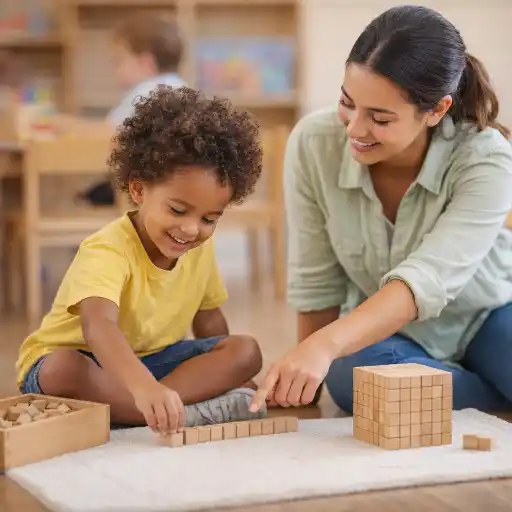
Play gives children reasons to use these abilities. It is active, meaningful, and often social; children can test ideas repeatedly without the activity feeling like a formal lesson. In block play, for example, children may explore balance, space, and cause and effect while learning to share materials or coordinate a shared design. NAEYC’s discussion of what children learn from block play highlights problem-solving alongside imagination, mathematics, science, and social-emotional growth.
These moments matter because young children are still developing the ability to plan, manage frustration, and consider alternatives. A manageable challenge offers practice while communicating, “Your ideas are worth trying.” The aim is not to prevent every mistake or make every task easy. It is to create safe, engaging opportunities for children to explore, revise, and experience themselves as capable learners.
- Open-ended play invites more than one possible solution.
- Peer play gives children practice listening, negotiating, and sharing ideas.
- Repeated attempts help children notice that a first try is information—not failure.
Which everyday play experiences invite children to think through a challenge?
Teachers do not need elaborate equipment or a separate problem-solving lesson. Look for authentic questions already arising during play and routines, then offer accessible materials and enough time for children to act on their ideas. Open-ended materials—blocks, cardboard, fabric, recycled containers, art supplies, and safe natural objects—can be combined and adapted in many ways.
- Construction: Invite children to build a bridge for a toy vehicle, make a shelter for an animal figure, or figure out how to keep a tower standing.
- Art and loose parts: Ask how a group might attach, arrange, or display materials when their first approach does not work.
- Dramatic play: Introduce a gentle story problem, such as a pretend café needing more plates or a clinic needing to organize its waiting area.
- Outdoor exploration: Wonder together how to move water through a channel, carry several objects, or make a safe path over uneven ground.
- Daily routines: Invite children to help decide how to distribute materials, tidy a busy center, or ensure everyone has a turn.
Offer a clear purpose without prescribing the result: “How could we make a ramp the car can travel down?” A simple design is materials plus a goal plus, when useful, one manageable constraint. A task might be to build a bridge using a small selection of blocks. Keep the challenge flexible: children may solve it differently from one another, and their unexpected approaches often reveal rich thinking.
For educators seeking more context on planning play intentionally, NAEYC describes the teacher’s role in observing, planning, and guiding learning through play. The adult prepares a thoughtful environment, notices children’s interests, and extends learning without taking over.
How can teachers scaffold children’s thinking without solving the problem?
Scaffolding is responsive support that helps a child move forward while preserving the child’s ownership of the task. The first step is often to pause and observe. Is the child experimenting, planning, asking a peer, or showing signs of distress? A quiet moment can give children room to discover a next step without adult interruption.
When support is needed, begin with a prompt rather than a solution. Questions such as “What do you notice?”, “What have you tried?”, and “What else could work?” make children’s thinking visible and keep the problem with them. Wait for a response; children may need time to process, gesture, or find words.
- Observe: Notice the child’s approach, interest, and emotional state.
- Prompt: Use one open-ended question or a descriptive comment: “The bridge moved when the car went over it.”
- Offer a small support: Point out a relevant material, show a visual, or offer two choices if the child seems overwhelmed.
- Model a small step: Demonstrate a related strategy briefly, then invite the child to continue.
- Fade your help: Step back as the child begins testing ideas independently.
Specific encouragement reinforces the process: “You tried a wider base after the first tower tipped.” NAEYC’s guidance on mastery motivation emphasizes the value of appropriate challenge, independence, gentle guidance, and feedback that recognizes effort. Notice persistence and strategy use rather than praising only speed, accuracy, or a finished product.
How can play support social problem-solving and cooperation?
Many everyday classroom problems involve people as well as materials. Two children may want the same prop, disagree about who will play a particular role, or have different ideas about how a shared structure should look. These moments are demanding, but they also offer real reasons to practice communication, perspective-taking, and collaboration.
Teach and rehearse simple language during calm moments, using puppets, stories, role-play, and familiar play scenarios. Phrases might include “Can I have a turn when you’re finished?”, “Let’s trade,” “Can we build it together?”, or “I need help.” Children who communicate in different ways may benefit from gestures, picture cards, communication devices, sentence starters, or extra wait time. Make room for children’s home languages and varied communication styles.
When a disagreement occurs, first ensure safety and acknowledge each child’s experience without assigning blame. Then name the shared problem: “You both want the same truck.” If the children are upset, support calming before inviting them to consider solutions. Offer a small number of safe, reasonable options and give children space to choose or suggest another idea.
- Plan small-group activities with a shared goal, such as creating one large mural or building a town together.
- Model listening as well as offering ideas: “I heard your plan. What does your partner think?”
- Comment on helpful strategies: “You made a plan to take turns, and both of you got to use the scoop.”
- Respect differences in how children approach cooperation; participation can look different across individuals and families.
Cooperative play develops over time. Some children may first watch or play alongside peers before joining a shared plan. Offer gentle invitations and accessible roles without requiring every child to participate in the same way or at the same pace.
What can teachers try this week to make problem-solving part of play?
Start small: choose one familiar play area and identify a behavior you want to encourage, such as trying another strategy, asking for help, or negotiating a turn. Add an open-ended invitation, then protect uninterrupted time for children to explore. You might set out blocks and toy animals with the prompt, “How could you make a place where all the animals can fit?”
During play, notice before intervening. Use a calm tone, one open question, and enough wait time for children to respond. When a child tries an idea, describe what you saw rather than judging the outcome. At the end, make reflection brief and conversational: “What did you try? What changed? What might you do next time?” Children can answer with words, drawings, gestures, or by showing their construction.
Consistency across the team helps children recognize a familiar routine. Directors can invite staff to share one observation during a huddle and discuss which supports to add or fade. For additional professional learning, these English-language ChildCareEd courses connect closely to the strategies in this article:
- The Best Promotion is Play Buy Now $24.00 — explores how play supports development, creativity, problem-solving, and cooperation.
- Role of Play in Learning Buy Now $16.00 — examines the role of play in children’s learning and development.
- You’re Not My Friend Anymore: Learning Conflict Resolution Buy Now $16.00 — focuses on developmentally appropriate approaches to peer conflict.
- Supporting Children’s Independence Buy Now $24.00 — addresses independence, self-regulation, and children’s conflict-resolution skills.
Professional learning can deepen educators’ understanding, while thoughtful observation and everyday practice help translate ideas into the classroom. Small, repeated opportunities make problem-solving part of the play children already love.
Conclusion: How can preschool teachers introduce problem-solving through everyday play?
Preschool teachers can introduce problem-solving by making room for meaningful challenges in ordinary play and routines. Offer open-ended materials, invite children to notice and explore a problem, and give them time to test more than one idea. When support is needed, scaffold with a prompt, a small adaptation, or a brief model—then return the thinking to the child.
Play also gives children a natural context to practice cooperation, communication, and persistence. Observe and celebrate how children approach a challenge, not just whether they reach an adult’s preferred answer. With inclusive materials, calm guidance, and consistent reflection, everyday classroom moments can help children see themselves as capable problem-solvers.
For a deeper course of study in playful, child-centered planning, explore From Play to Planning: Building Culturally Competent, Child-Centered Curriculum Buy Now $55.00. Together, intentional play and thoughtful teaching can help #preschoolers grow their #curiosity, #persistence, #creativity, #cooperation, and #confidence—one small challenge at a time.
- 45 Hour Child Growth and Development
- CDA Home Visitor Subject Area 2 Part 3 Birth to 5
- Birth to Five CDA Credential with Portfolio Review
- Pediatric Blended First Aid & CPR/AED Adult, Child, Infant
- Pediatric RSV First Aid & CPR/AED
- CDA Bridge Bundle: Family Child Care without Portfolio Review
- CDA Bridge Bundle: Infant/Toddler without Portfolio Review
- CDA Bridge Bundle: Preschool without Portfolio Review
- Texas Director Credential
- Bye Bye Winter: The Role of Outdoor Play in Early Childhood Development
- Celebrando la amistad en el cuidado infantil durante el Día de los Mejores Amigos
- Canciones, juegos y preguntas de círculo para niños
- The Role of Teachers in Child Growth and Development
- How Does Play Support Children’s Physical, Cognitive, and Social Growth?
- Do Toys Come Alive: How Can Pretend Play Spark Creativity in Your Daycare?
- How Can Preschool Teachers Help Children Build Problem-Solving Skills?
- How Can Everyday Play Help Children Become Flexible Thinkers?
- Is the Lost Art of Letting Children Figure It Out Worth Rediscovering?
- Types of Curriculum in Early Childhood Education: Which Approach Fits Your Classroom Best?
- How Can Child Care Programs Build Meaningful School Readiness?
- Teacher-Directed or Child-Directed? Finding the Right Classroom Balance
- How Can Child Care Providers Support Preschool Development?
- How Can Puppets Support Communication and Literacy in Early Childhood?
- What Is Purposeful Play—and Why Is It Replacing Worksheets?
- How Can Child Care Providers Assess Children Through Everyday Activities?
- How Can Everyday Classroom Problems Become Child-Led Investigations?
- How Can Early Childhood Teachers Encourage Problem-Solving Without Giving the Answer?
- How Can Teachers Turn Everyday Classroom Problems Into Learning Opportunities?
- How Can Preschool Teachers Introduce Problem-Solving Skills Through Everyday Play?
