How Can Everyday Play Help Children Become Flexible Thinkers?
Struggling to help children move from rigid routines to adaptable problem-solvers? Everyday play is one of the most efficient, low-cost ways to build cognitive flexibility — the ability to shift strategies, accept change, and try new solutions. For a practical next step, consider the ChildCareEd course The Best Promotion is Play Buy Now $35.00, which connects movement, games, and guided moments to early thinking skills; another excellent complement is Play, Learn, Grow Buy Now $25.00 for classroom-ready planning and observation tools.
What is cognitive flexibility and why does it matter for my classroom?
Cognitive flexibility — sometimes called flexible thinking or shifting — is the child’s ability to change approaches when a plan fails, switch rules, or see alternative solutions. It’s a core part of #executivefunction and supports classroom cooperation, problem solving, and later academic success. When children gain flexibility they tolerate frustration better, accept new routines, and can try different strategies during play and learning. This is why play that invites role changes, problem solving, and rule variation is more than recreation — it’s intentional skill-building.
Why it matters: stronger flexible thinkers are better at following multi-step routines, adapting to new classmates or schedules, and persisting through novel tasks. International reviews and ChildCareEd summaries emphasize this link between flexibility and school readiness; for a deeper classroom framing see Executive function in preschool. State requirements vary - check your state licensing agency.
How does everyday play actually build flexible thinking?
Play offers repetition, low-stakes experimentation, and social negotiation — the exact conditions where flexible thinking grows. In pretend play children assign and swap roles, which forces perspective shifts; in construction play children adapt plans when structures fall; in movement games they practice start/stop cues and alternate rules. These moments repeatedly recruit the neural systems that support switching and problem solving. The science is clear: short, repeated, playful challenges produce measurable gains in flexibility and related executive skills (see reviews in the literature and movement-and-cognition research).
Practical mechanisms at work during play:
- Choice & variation — open-ended materials encourage multiple solutions.
- Role negotiation — children must modify behavior to keep play going.
- Rule shifts — game variations (e.g., Opposite Day) require switching responses.
- Physical movement — links body actions to shifting attention and planning.
What classroom activities and games strengthen flexible thinking?
Below are concrete, classroom-ready activities you can add to daily routines. Each is short, playful, and scalable by ability.
- 🎭 Opposite Day: give two opposite cues ("up" means touch the floor). Increase complexity slowly.
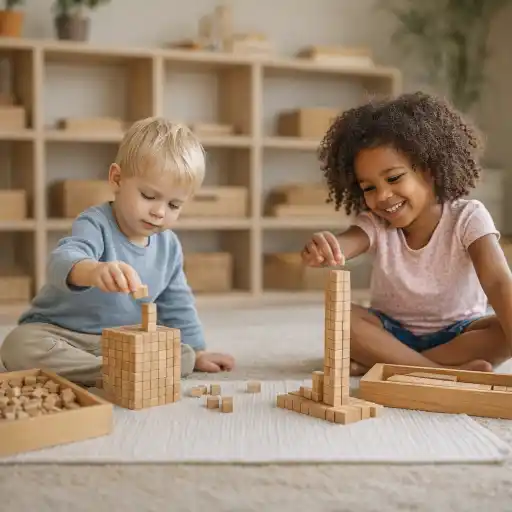
- 🏗️ Build-and-Redo: groups design a simple block structure; after one run, change one rule (no hands, or only two blocks) and ask them to adapt.
- 🕹️ Switch-the-Leader pattern: copy a short movement pattern, then swap rules mid-sequence.
- 🧩 Problem-of-the-day: present a small dilemma ("Too many trucks for one mat — what else can we use?") and collect several child solutions.
- 🎵 Freeze/Change Dance: play music; when it stops, call a new movement-rule (walk, tiptoe, hop) to practice quick switching.
Tips for success: keep challenges short (30–120 seconds initially), provide visual supports for children who need them, and celebrate attempts. For detailed lesson plans and adaptations across ages, see Playful Spaces for Infants & Toddlers  Buy Now $24.00 and Play with Purpose: Supporting Children with Autism Buy Now
 $55.00$40.00 for inclusive strategies.
How should I design the environment and routines to invite flexibility?
Environment and scheduling make or break opportunities for flexible thinking. Deliberately design spaces and routines that signal experimentation and choice.
- Zone the room with open-ended materials (blocks, loose parts, scarves) and rotate them weekly to prompt new uses.
- Use visual choice boards and role cards so children can swap responsibilities mid-play.
- Protect long play blocks (30–60 minutes for preschoolers) so children can invest and revise plans. State requirements vary - check your state licensing agency.
- Embed micro-practices in transitions: 1–2 minute games (copy patterns, Opposite Day commands) during arrival or after outdoor play.
Why it works: predictable routines combined with frequent small changes let children practise shifting without anxiety. Train staff to notice and narrate examples of flexible thinking ("I like how Maya tried a new way when the blocks fell!"). For curriculum-level planning that links play to learning goals, explore From Play to Planning Buy Now $55.00.
How can we measure progress, include families, and avoid common mistakes?
Short, consistent documentation and family partnership magnify impact. Use quick snapshots to record flexible-thinking moments: one photo, one sentence, one next-step. Share these in a weekly note to families with a simple tip to try at home (e.g., "Try a Plan B game at dinner: what’s another way to use a spoon?").
Common mistakes — and how to avoid them:
- ❌ Over-directing play — Fix: offer one open prompt, then step back.
- ❌ Cutting play short — Fix: protect longer, uninterrupted blocks when possible.
- ❌ Using single-use toys — Fix: choose loose parts and materials that invite many roles.
FAQ (quick)
- Q: How often should we run flexibility games? A: Multiple short practices daily are best (arrival, transitions, and a mid-day burst).
- Q: What if a child resists change strongly? A: Use scaffolds (visual cues, shorter steps), co-regulation, and involve families; consider referrals when patterns persist.
- Q: Can these activities support math and language too? A: Yes — flexibility supports problem solving, spatial reasoning, and conversation growth.
- Q: Where can I get ready-to-use activities? A: ChildCareEd courses like The Best Promotion is Play Buy Now $35.00 and Play, Learn, Grow Buy Now $25.00 include scripts and lesson templates.
Conclusion
Everyday play is a practical, research-backed pathway to help children become flexible thinkers. In short: protect play time, offer open-ended materials, teach one small game that requires switching, and document brief wins to share with families. If your goal is to help children shift strategies, tolerate change, and try new solutions, start with two actions this week: (1) add one 2-minute switching game during a transition, and (2) create and rotate a loose-parts challenge that requires a Plan B. For hands-on staff training and lesson plans, enroll in ChildCareEd courses like The Best Promotion is Play Buy Now $35.00, Play, Learn, Grow Buy Now $25.00, and Play with Purpose Buy Now $55.00$40.00. Building #flexibility through #play supports #children and strengthens your #classroom as a space for confident problem solvers and joyful learning.
- CDA Home Visitor Subject Area 3 Part 3 Birth to 5
- Teacher-Child Interactions for Stronger CLASS® Outcomes
- CDA Home Visitor Subject Area 2 Part 3 Birth to 5
- Moving About the Classroom: Effective Transitions for Everyday
- Birth to Five CDA Credential with Portfolio Review
- Pediatric RSV First Aid & CPR/AED
- The Best Promotion is Play
- Play with Purpose: Supporting Children with Autism
- Everyday Safety: Creating Healthy Environments
- Moving About the Classroom: Effective Transitions for Everyday
- CDA Certification en Español: Recursos y Consejos para Educadores Bilingües
- 💛🧩 ¿Cómo puedo hacer que mi enseñanza sea inclusiva para los niños con autismo?
- 10 Ejemplos de Cómo la Cultura Influye en el Desarrollo Infantil
- Proporciones de Cuidado Infantil y Tamaños de Grupo por Edad en Nueva Jersey (Guía Rápida para Centros y Hogares)
- Proporciones de Cuidado Infantil y Tamaños de Grupo por Edad en Virginia (Guía Rápida para Centros y Hogares)
- Cómo Trabajar en el Cuidado Infantil en Carolina del Norte: Requisitos y Pasos
- Cómo Ser Maestra de Preescolar en California
- Celebrando la amistad en el cuidado infantil durante el Día de los Mejores Amigos
- Canciones, juegos y preguntas de círculo para niños
- How can child care programs support creativity through open-ended art?
- How Can Everyday Play Help Children Become Flexible Thinkers?
- How Can Child Care Providers Nurture Critical Thinking in Young Children?
- How Can Loose Parts Play Turn Everyday Objects Into Powerful Learning Opportunities?
- How Can Emergent Readers Support Vocabulary Growth?
- How Can Child Care Providers Build Strong Early Math Skills Every Day?
- How Can Early Math Activities Build Young Children’s Mathematical Thinking?
- How Can Everyday Classroom Problems Become Child-Led Investigations?
- ¿Todos los niños deben participar en el tiempo de círculo?
- How Can Child Care Programs Protect Preschool Playtime When the Schedule Gets Crowded?
- How Can Teachers Turn Everyday Play Into Learning Opportunities?
