A preschooler may notice a friend crying, struggling with a toy, or standing alone—but knowing what to do takes practice and supportive guidance. Explore Opportunity for Growth: Emotional Development  Buy Now $16.00 to deepen your understanding of the developmental foundations of empathy and strengthen the everyday classroom practices that help children respond with care.
Why does recognizing a friend’s need matter?
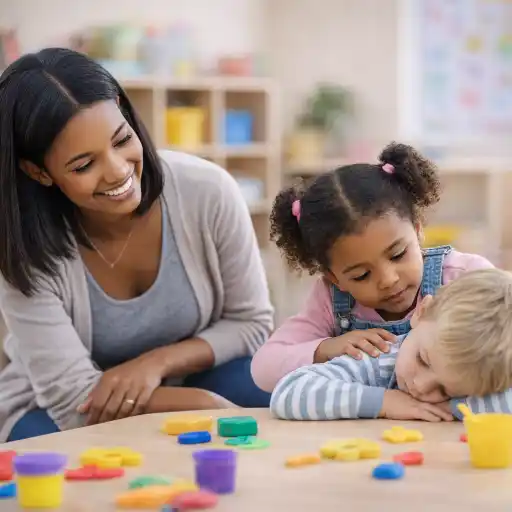
Recognizing that another person may need help is an early step toward empathy: children notice a possible feeling or need, consider what might be happening, and choose a respectful response. In preschool, that process is still developing. A child might see a peer fall but not know whether to offer a hand, find a teacher, or give the friend some room. These moments are not tests of character; they are opportunities for teaching.
Social-emotional learning is part of children’s participation in play, relationships, and classroom life. NAEYC describes socially and emotionally healthy young children as developing the ability to understand others’ emotions, show empathy, express preferences, and negotiate with peers. Supporting these abilities helps children build a caring community while recognizing that each child’s way of communicating or accepting help may differ.
Adults can make the skill visible by noticing caring actions and naming their effect: “You saw that Leo dropped the pieces and offered to help him pick them up.” This connects observation to action without suggesting that children must fix every problem.
- Children learn that feelings and needs can be noticed and discussed.
- Peers gain simple ways to offer support and ask for adult help.
- Teachers can coach safety, choice, and kindness in the same moment.
Empathy grows gradually through warm relationships, modeling, and repeated practice—not through pressure to respond perfectly.
What clues can children learn to notice?
Start by helping children describe what they can actually observe. A friend might be crying, looking worried, holding a broken construction, having trouble reaching something, or saying, “I can’t do it.” A child may also move away, become quiet, gesture, point to a picture, or use a communication device. These are possible clues, not proof of a particular emotion or need.
Use tentative language and encourage checking rather than guessing: “I notice Amira is looking at the pieces on the floor. She might want help—or she may want to pick them up herself. We can ask.”
Teach children to notice a range of cues together:
- Words and sounds: “Help,” “stop,” crying, or a call for an adult.
- Actions and posture: reaching, stepping back, pausing, or trying something repeatedly.
- Facial expressions and voice: clues that may invite a gentle check-in.
- The situation: a spill, a fallen structure, or a peer left out of play.
Explain that one clue does not tell the whole story. Children do not need to diagnose a friend’s feelings; they can notice, ask, and respect the answer. This approach supports #empathy while making room for differences in culture, temperament, disability, language, and communication.
How can teachers model a helpful response?
Children learn by watching adults respond to everyday needs. When a child falls, for example, move close, check safety, and narrate your process: “You fell. I’m going to check if you’re hurt. Would you like me to stay with you?” Then, if appropriate, invite nearby children to offer support without assigning them responsibility for the other child’s care.
Model a short sequence children can remember: notice, ask, listen, and respond. Provide phrases they can try, such as “Are you okay?”, “Do you want help?”, or “Should I get a teacher?” Teach children that helping can mean staying nearby, offering an item, inviting someone into play, getting an adult, or giving a friend space. A hug or touch should never be assumed; children can ask first and accept “no.”
Specific feedback helps children connect their choice to its effect. Rather than general praise like “You’re so nice,” say, “You noticed the lid was stuck and asked Maya if she wanted help. She said yes, and you held the container.” Acknowledging kindness this way builds understanding without turning care into a performance or reward.
- Use a calm voice and get down to children’s eye level when appropriate.
- Offer choices instead of deciding what a peer must want.
- Thank children for noticing, asking, listening, or getting help.
- Show that adults remain responsible for safety and care.
Warm, responsive teaching gives children a model of care they can gradually adapt in their own relationships.
Which activities build the skill through play and routines?
Brief, repeated practice in calm moments helps children try out caring responses before a real situation feels urgent. Books are a useful starting point: pause when a character encounters a problem and ask, “What do you notice?” “What might they need?” and “How could we check?”.
Puppets can act out familiar classroom moments—a puppet drops crayons, cannot reach a book, or wants to join a game. Invite children to suggest several responses and practice the language. There is rarely just one helpful choice: a character may need assistance, company, space, or an adult.
- 😊 Feelings-and-needs check: Use a puppet or picture and ask what clues children notice before brainstorming possible supports.
- Helping-role play: Practice asking “Do you want help?” and responding to “yes,” “no,” or “not yet.”
- Read-aloud pause: Invite children to identify what a character may be feeling and what information they would want to ask.
- Daily noticing: At cleanup or snack, name real examples of offering, accepting, or declining help respectfully.
Keep activities voluntary and inclusive. Children can speak, point, use signs or pictures, act with a puppet, or observe first. The aim is not to make every child a helper at all times; it is to give the group flexible tools for connection.
How can teachers respond when a child needs help—or declines it?
When a child signals distress or a possible need, first ensure safety and offer a calm check-in. Ask a simple, open question: “Would you like help?” Give the child time to answer through words, gestures, movement, or an assistive communication method. If the child accepts, ask what kind of help would be useful. If the child declines and there is no safety concern, respect that choice and remain available.
Children sometimes miss a cue or respond in a way that is not helpful. Coach the behavior without labeling the child: “You saw Noah crying and grabbed his toy. Let’s pause. You can ask if he wants help, bring me, or give him space.” If a child is hurt or at risk, adults should intervene directly and promptly; peers are never responsible for managing emergencies.
Adapt support for children who communicate differently, are learning English, or need more time to process social cues. Visual emotion cards, picture choices, modeling, smaller-group practice, and familiar phrases in a child’s home language may help. Ask families about approaches that comfort the child and coordinate with relevant specialists when appropriate. Inclusive settings may need to adapt activities and teaching practices so children with varying needs can participate meaningfully, as CSEFEL’s inclusion guidance for early childhood programs explains.
Use objective observation: note the situation, the child’s communication, the support offered, and what happened next. Avoid interpreting one missed cue as a lack of caring. If you connect these practices to training or licensing expectations, state requirements vary - check your state licensing agency.
Conclusion: What helps children become caring, capable peers?
Preschool teachers help children recognize when a friend needs help by teaching them to notice observable clues, consider possibilities without assuming, ask respectfully, listen to the answer, and choose a safe response. The central goal is not for children to solve every peer’s difficulty; it is to help them learn that noticing and checking in can be caring first steps—and that adults are available when more support is needed.
Build the skill into stories, puppet play, routines, and real classroom interactions. Model several forms of help, respect a child’s choice to accept or decline, and recognize specific caring actions. Offer multiple communication pathways so every child can participate. With patient repetition and responsive relationships, children can develop stronger #relationships, #communication, and #belonging while learning that help can look different from one friend to another.
Explore related professional learning
- Opportunity for Growth: Emotional Development Buy Now $16.00 — explores emotional development and its connection to empathy and social skills.
- Brighter Futures: Social Emotional Development Buy Now $16.00 — focuses on compassion, kindness, and responsive interactions.
- Supporting Social Learning: Creating Classrooms that Care Buy Now $35.00 — offers strategies for relationships, community, and children’s problem-solving.
- Social Foundations and Responsive Classrooms Buy Now $24.00 — covers social-emotional development, prosocial behavior, and conflict resolution.
- Trauma-Sensitive Care: Supporting Young Children with Empathy Buy Now $16.00 — addresses empathetic, supportive practice with young children and families.
- CDA Preschool Credential
- CDA Home Visitor Subject Area 3 Part 3 Birth to 5
- Birth to Five CDA Credential with Portfolio Review
- CDA Bridge Bundle: Preschool
- Baby Steps to Milestones
- CDA Bridge Bundle: Family Child Care without Portfolio Review
- CDA Bridge Bundle: Infant/Toddler without Portfolio Review
- CDA Bridge Bundle: Preschool without Portfolio Review
- 45 hour Growth and Development Birth-age 12 ONLINE
- CDA Certification en Español: Recursos y Consejos para Educadores Bilingües
- Cómo Trabajar en el Cuidado Infantil en Carolina del Norte: Requisitos y Pasos
- Celebrando la amistad en el cuidado infantil durante el Día de los Mejores Amigos
- Preschool Team-Building Activities for Better Communication and Friendship
- How Do You Explain Ego to a Child Without Making It Sound Like a Bad Thing?
- Can You Become a Daycare Lead Teacher Without a Degree?
- Preschool Classroom Rules: How to Teach Expectations Without Constant Reminders
- How Can Child Care Providers Teach Young Children About Fairness and Equity?
- How Can Teachers Encourage Sharing Without Forcing It?
- How Can Providers Teach Children to Notice When a Friend Needs Space?
- Why Do Young Children Tattle, and How Should Teachers Respond?
- How Can You Plan Staff Training That Engages Experienced Child Care Teachers?
- How Can Teachers Help Children Rejoin Play After a Conflict?
- How Can Teachers Help Children Understand Personal Space and Boundaries?
- How Can Teachers Help Preschoolers Recognize When They Need a Break?
- How to Check Children’s Understanding of Bus Safety Rules
- How Can Educators Teach Children to Comfort a Friend Without Requiring Hugs?
- How Can Teachers Support Children Who Become Upset When They Lose a Game?
- How Can Preschool Teachers Help Children Recognize When a Friend Needs Help?
