A crying friend may welcome company, practical help, or a quiet moment, and children can learn to ask before offering comfort. Adapt the My Toolbox of Love Buy Now $0.99 craft into a conversation about caring actions, inviting children to draw or dictate ideas such as offering a tissue, getting a teacher, or asking, “Would you like me to sit nearby?” Model respecting the answer, including when someone wants space. For professional learning on relationships, classroom community, and children’s problem-solving, explore Supporting Social Learning: Creating Classrooms that Care Buy Now $35.00. Read on for ways to nurture empathy while keeping hugs and other physical affection optional.
Why does comforting without forced touch matter?
When children see a peer crying, they may reach out, offer a toy, or imitate comfort they have experienced. These are meaningful beginnings of #empathy. At the same time, children are learning that a caring intention does not automatically make touch welcome. A hug may soothe one child and feel uncomfortable or overwhelming to another.
Teaching children to ask first supports #consent and #boundaries without discouraging kindness. The message is not “Don’t help”; it is “Notice, ask, and respect the answer.” Children learn that feelings can be acknowledged, each person’s body and preferences matter, and friendship can continue even when someone declines physical contact. Head Start describes social-emotional learning as including understanding feelings, making friends, regulating emotions, and solving problems—skills children develop through relationships and practice.
Adult responses set the tone. When a child declines a hug, and the educator accepts that choice warmly, the child sees that a boundary is ordinary communication, not rudeness or rejection. That example gives children a practical model for peer interactions and helps create a classroom where children can express preferences safely.
How can educators teach children to notice and ask?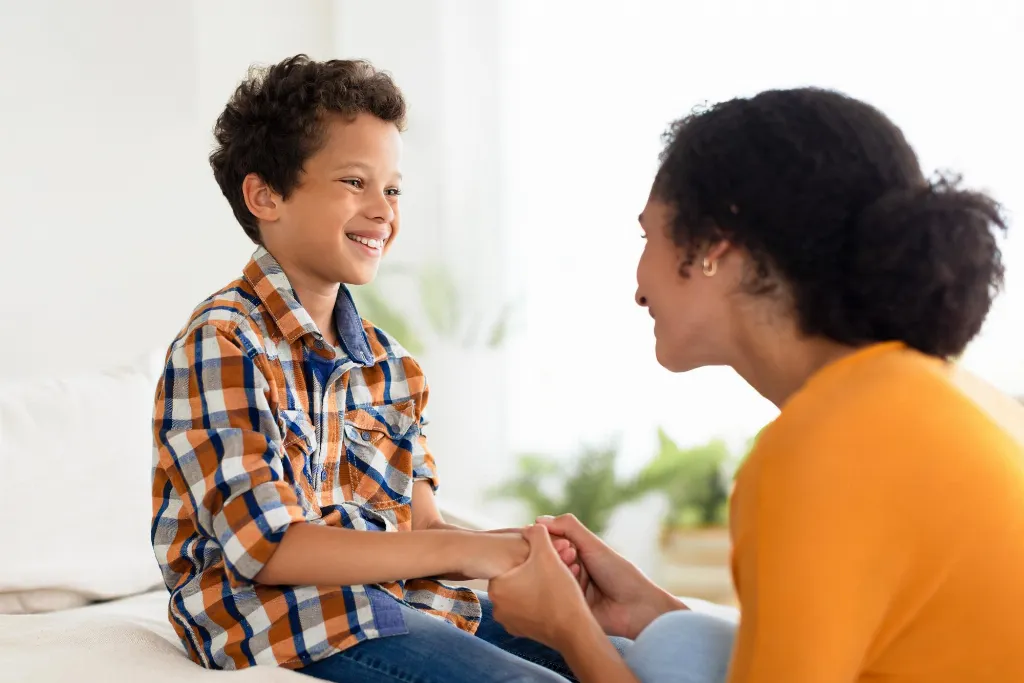
Begin with observable cues, while reminding children that cues are clues rather than proof. A friend may be crying, turning away, becoming quiet, or moving to a calm space. Rather than asking children to guess exactly what another person feels, coach them to pause and check in: “I see your friend is upset. Let’s ask what might help.”
Offer short phrases to practice when everyone is calm:
- “Are you okay?”
- “Would you like help?”
- “Do you want me to sit nearby, or would you like space?”
- “Would you like a hug, a wave, or no touch?”
Accept spoken words, gestures, signs, communication devices, or picture choices as answers. A child who cannot yet respond verbally might point, nod, shake their head, or move away. Teach a simple routine: notice, pause, ask, and honor the answer. “No,” “not now,” or moving away means stop; children do not owe an explanation. This approach also reflects guidance on helping children recognize when a friend needs space.
What are caring alternatives to a hug?
Help children understand that comfort can take many forms. Some children want a trusted person nearby; others prefer quiet, distance, or a familiar object. Encourage children to offer choices rather than decide what a friend needs. A calm “I’m here if you want me” can communicate care without touching.
- Ask whether the friend wants company, space, or help finding an educator.
- Offer a tissue, a favorite book, or a comfort item—after checking whether the child wants it.
- Invite the friend to sit nearby or join a familiar, low-pressure activity.
- Use kind words: “That looks hard,” or “I can stay near you.”
- Give space and check back later without insisting on a response.
These options are invitations, not assignments. A child who is upset should not be expected to accept a gift, talk, or play before they are ready. For a creative classroom prompt, educators can use ChildCareEd’s ideas for teaching children to comfort friends without requiring hugs to help children name different caring actions, such as listening, offering help, sharing kind words, or giving space.
How can play and daily routines build these skills?
Children benefit from brief, repeated practice—not just one conversation after a difficult moment. Use puppets or story characters to act out a friend who feels sad and a classmate who wants to help. Pause and ask, “What might the friend say?” and “What could the helper do if the answer is no?” Rotate roles so children practice offering support and setting boundaries.
During real routines, name respectful choices specifically: “You asked before sitting beside Lee. Lee asked for space, and you listened.” This identifies the skill more clearly than general praise such as “You’re nice.” Group meetings, story conversations, and art activities can also invite children to draw or describe different ways to show care.
- Use a puppet scenario to practice asking before offering a hug.
- Read a story about feelings and discuss what support a character might welcome.
- Invite children to draw “tools of care,” such as listening, kind words, or giving space.
- 😊 Notice and acknowledge a child who accepts a peer’s “no” without pressure.
Warm, responsive relationships help children feel secure enough to express preferences. Remember that communication, sensory needs, culture, and comfort with closeness vary. Adapt visuals and activities so every child can participate, including children who communicate nonverbally or need more time.
How should educators respond when a child’s offer is declined?
Keep the response calm and matter-of-fact. If a child offers a hug and the peer says no, affirm the boundary and guide the helper toward another option: “Your friend said no to a hug. You can ask if they want a tissue, or give them space.” Avoid suggesting that the refusal is unkind. The child is allowed to decline touch, and the helper still has ways to show care.
If a child continues trying to touch after a peer refuses, intervene promptly: “I won’t let you hug them. They said no.” Then offer a non-shaming alternative: “You can sit over here, offer a kind word, or ask me for help.” If either child is upset, reduce demands and return to teaching when everyone is calm.
Do not require hugs, kisses, or physical contact as proof of friendship, a forced apology, or a repair. Meaningful repair might involve checking whether the peer is okay, returning an item, rebuilding something, or honoring a request for space. Share consistent language with colleagues and families while welcoming different communication styles and family traditions. State requirements vary - check your state licensing agency.
Conclusion: What is the core lesson children need?
Educators can teach children to comfort a friend without requiring hugs by helping them notice feelings, ask what support is welcome, offer caring choices, and respect the response. Empathy does not depend on touch: listening, kind words, a helpful item, quiet company, or giving space can all communicate care.
Keep the message simple and consistent: “We can care about a friend and respect their body and choices.” Model it in ordinary interactions, practice through play, and recognize children when they ask first or accept a no. For a deeper exploration of community building and social learning, consider Supporting Social Learning: Creating Classrooms that Care Buy Now $35.00, and review CDA Subject Area 3  Buy Now $80.00 for broader learning about children’s social and emotional development. Additional relevant courses include Opportunity for Growth: Emotional Development Buy Now $16.00, Social Foundations and Responsive Classrooms Buy Now $24.00, and Teach with Respect ONLINE Buy Now $24.00.
- 45 Hour Child Growth and Development
- You're Not My Friend Anymore: Learning Conflict Resolution
- CDA Home Visitor Subject Area 3 Part 3 Birth to 5
- CDA Home Visitor Subject Area 2 Part 3 Birth to 5
- Birth to Five CDA Credential with Portfolio Review
- Pediatric RSV First Aid & CPR/AED
- Creating Environments that Nurture Growth and Community
- Texas Director Credential
- Every Moment Matters: Schedules and Transitions
- CDA Certification en Español: Recursos y Consejos para Educadores Bilingües
- 💛🧩 ¿Cómo puedo hacer que mi enseñanza sea inclusiva para los niños con autismo?
- Requisitos Para Ser Maestra Principal En Un Daycare: Lo Que Necesitas Para Empezar
- 10 Ejemplos de Cómo la Cultura Influye en el Desarrollo Infantil
- Proporciones de Cuidado Infantil y Tamaños de Grupo por Edad en Nueva Jersey (Guía Rápida para Centros y Hogares)
- Proporciones de Cuidado Infantil y Tamaños de Grupo por Edad en Virginia (Guía Rápida para Centros y Hogares)
- ¿Cuál es la Diferencia Entre la Crianza Respetuosa y la Crianza Permisiva?
- Cómo Trabajar en el Cuidado Infantil en Carolina del Norte: Requisitos y Pasos
- Cómo Trabajar en el Cuidado Infantil en California: Requisitos y Pasos
- Cómo Ser Maestra de Preescolar en Illinois
- Cómo Ser Maestra de Preescolar en Wisconsin
- Cómo Ser Maestra de Preescolar en Maryland
- Celebrando la amistad en el cuidado infantil durante el Día de los Mejores Amigos
- Canciones, juegos y preguntas de círculo para niños
- Cómo simplificar la capacitación para sus empleados de daycare
- How Can Kindness Challenges Strengthen Classroom Community?
- How Can Providers Teach Children to Notice When a Friend Needs Space?
- How Can Child Care Providers Teach Conflict Resolution to Preschoolers?
- How Can Teachers Help Children Understand Personal Space and Boundaries?
- How Can Educators Teach Children to Comfort a Friend Without Requiring Hugs?
