A child’s strong preference for one playmate can be a meaningful friendship—not a problem to fix—but it may also make group play and changing circumstances harder to navigate. Learn how to honor that bond while gently widening opportunities for connection, and explore Supporting Social Learning: Creating Classrooms that Care  Buy Now $24.00 for practical ways to build community, relationships, and problem-solving in your classroom. If you want a focused next step on peer disagreements, You’re Not My Friend Anymore: Learning Conflict Resolution Buy Now $16.00 offers relevant professional learning.
Why might a child prefer one particular friend?
Young children often form close preferences as they learn what friendship feels like. A familiar playmate can offer predictability, shared interests, and a sense of safety. Preschoolers are developing the complex skills needed to sustain relationships, negotiate play ideas, understand another person’s perspective, and cope with disappointment. A strong preference may therefore reflect an emerging social strength rather than a deficit.
At the same time, an exclusive pair can create strain. One child may feel left out when the friend plays with someone else; the preferred friend may feel pressured to remain available; and other children may struggle to enter the play. A classroom study of young children’s shifting peer relationships describes how intense dyadic preferences and exclusions can create distress for the children and disrupt the group. The useful first step is to observe closely, not to label the children as selfish, possessive, or unkind.
Notice when the pair seeks each other out, what activities they enjoy, how they respond to interruptions, and whether either child appears distressed or constrained. Consider temperament, developmental stage, language, culture, and the children’s own perspectives. As the American Academy of Pediatrics explains, preschoolers may gravitate toward particular peers while gradually learning to cooperate and recognize others’ feelings. Respect the bond while remaining attentive to everyone’s participation and comfort.
How can teachers respect the friendship without making it exclusive?
Avoid treating a close friendship as a behavior to extinguish. Instead, affirm the connection and communicate that classroom friendships can include more than two people. For example: “You and Mateo enjoy building together. There is room for another builder, too.” This approach recognizes the children’s relationship while making inclusion a shared classroom value.
Support children in expressing preferences without giving them authority over who is allowed to play. Children may choose what they play and set reasonable boundaries around materials or ongoing pretend-play ideas; adults can still guide them away from hurtful exclusion. Rather than impose a blanket “everyone must play together” rule, help children find a workable entry point or another meaningful activity. A child can maintain a special connection while also practicing flexibility and building broader peer relationships.
- Describe what you observe without assigning motives: “You both chose the kitchen area and are making lunch.”
- Offer a specific, optional role for another child: “Ari is looking for a job. Could Ari deliver the food?”
- Help the pair communicate a boundary respectfully: “We’re finishing this game. You can be next, or you can help us set the table.”
- Notice flexibility and welcoming behavior: “You made space for another cook and kept your restaurant game going.”
Research and educator guidance emphasize the importance of meaningful participation rather than simply placing children together. The ECE Resource Hub’s guidance on peer relationships recommends explicit teaching, repeated practice, and intentional partnering. Keep #friendship warm and voluntary, not a classroom assignment imposed on children.
How can we gradually widen a child’s peer experiences?
Build from the children’s shared interests. If two friends love trains, invite a third child to make a station, create tickets, or build a bridge. Give each child a genuine contribution and let the play remain child-led. A shared purpose often creates a more natural opening than simply announcing, “Now everyone play together.” Start with brief, low-pressure opportunities and expand the group gradually when the children seem comfortable.
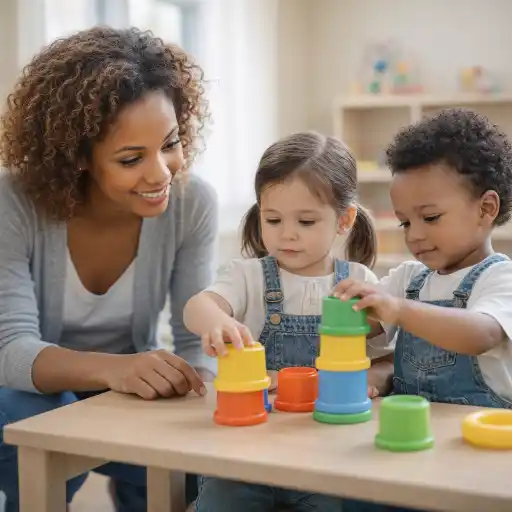
Plan intentional interactions across the day, not only during free play. Partner jobs, collaborative art, small-group construction, and story conversations create chances to connect with different classmates without requiring a child to give up a valued friendship. Rotate partners thoughtfully over time; avoid repeatedly pairing the same child with a designated “helper,” which can feel stigmatizing or one-sided.
- Try a two- or three-child project with a shared goal, such as making a pretend garden.
- Offer complementary roles: one child gathers materials, another plants, and another makes signs.
- Use a short invitation: “Would you like to help your friend and Noor make a road?”
- Let children observe or decline when appropriate, and offer another way to participate later.
Observe whether interaction is reciprocal: do children exchange ideas, respond to one another, and contribute to the play? If one child is merely watching or following, adjust the materials or roles to make participation more authentic. Evidence on early peer collaboration highlights the value of shared goals, communication, role exchange, and problem-solving. Small, repeated invitations can extend a child’s social world without devaluing an important bond.
What should teachers do when jealousy or conflict appears?
When a preferred friend plays with someone else, a child may protest, grab, or say, “You’re not my friend.” These moments can be painful to witness, but they are also opportunities to teach emotional language and relationship skills. First ensure safety and acknowledge the feeling without endorsing controlling behavior: “You wanted to play with Sam and feel upset that Sam is playing with Lee. You may feel disappointed; you may not push or tell someone they cannot play.”
Then offer a practical next step. Children might ask to join, choose another activity, wait for a turn to play together, or invite a different classmate. Keep the coaching brief during heightened emotion and return to practice later when everyone is calm. The NAEYC’s three-step approach to conflict recommends describing behavior and feelings, explaining the impact, and guiding children toward an appropriate alternative.
- “You both want to play with the same friend. What could each of you do?”
- “You can ask, ‘Can I play next?’ or choose the blocks while you wait.”
- “Friends can play with different people. You can tell your friend you’d like to play together later.”
Avoid forcing an apology or demanding immediate sharing as a substitute for learning. Support repair when harm occurs, and acknowledge specific efforts: “You told Sam you felt sad and asked to play later.” Consistent, calm language helps children learn that feelings are welcome while coercion and unsafe actions are not.
How can teachers respond to individual needs and partner with families?
Some children may rely on one familiar peer because joining play is difficult, the classroom feels overwhelming, communication is still developing, or predictable interaction supports their comfort. Do not assume a diagnosis or interpret a small friendship circle as a concern by itself. Ask what the child’s behavior may be communicating, and consider whether the environment, group size, activity, or communication demands create barriers.
Offer multiple ways to join: a spoken phrase, gesture, picture, communication device, shared material, or meaningful play role. A child may need time to watch before participating. Make sure classroom activities are accessible and that invitations are genuine rather than pressure to perform sociability.
Communicate with families in a strengths-based, factual way. Share what you observe, ask about the child’s interests and successful social experiences, and agree on supportive language across settings. If patterns persist and affect the child’s well-being or access to play, consult your program’s inclusion resources or relevant specialists and follow your program’s procedures. Document observable behavior and context rather than labels. State requirements vary - check your state licensing agency.
What are the main takeaways for teachers?
When a child wants to play with one friend, teachers do not need to break up the friendship or leave the children to manage every difficult moment alone. The goal is to honor a meaningful connection while making room for choice, flexibility, and belonging across the classroom. Observe first, then offer gradual, interest-based opportunities for children to play with others.
Use brief, respectful coaching when jealousy or exclusion arises: validate feelings, set clear limits on unsafe or hurtful actions, and teach children useful words and alternatives. Adapt activities and communication supports to each child, and work with families when you need a fuller picture. Small steps—an added role, a new partner task, or a calm invitation—can expand peer experiences while protecting the trust children have built with one another.
- Respect close friendships; avoid treating them as problems in themselves.
- Make participation authentic through shared goals, meaningful roles, and flexible invitations.
- Teach children that feelings are valid, but peers are not possessions.
- Recognize small efforts toward flexibility, inclusion, and repair.
- Collaborate with families and specialists if a child’s well-being or access to play is affected.
- 45 Hour Child Growth and Development
- 45 Hour Preschool Methods and Materials
- What Makes Me Special: An Overview of Autism and ADHD
- Birth to Five CDA Credential with Portfolio Review
- CDA Bridge Bundle: Preschool
- 45 Hour School Age Methods and Materials
- CDA Bridge Bundle: Family Child Care
- CDA Bridge Bundle: Infant/Toddler
- Bienvenido! Welcoming All Families
- Recursos en Español sobre el Sueño Seguro del Bebé
- Celebrando la amistad en el cuidado infantil durante el Día de los Mejores Amigos
- First Week of Pre-K Activities That Help Children Feel Comfortable
- How Can Teachers Encourage Sharing Without Forcing It?
- How Can Providers Teach Children to Notice When a Friend Needs Space?
- How Can Educators Help Children Negotiate When Pretend-Play Rules Change Midgame?
- What Are the Best Ways to Support Children Who Struggle with Sharing?
- How Can Teachers Help Children Understand Personal Space and Boundaries?
- How Can Educators Teach Children to Comfort a Friend Without Requiring Hugs?
- How Can Educators Teach Children to Comfort a Friend Without Requiring Hugs?
- How Can Child Care Providers Help Children Repair a Conflict Beyond “Say Sorry”?
- How Can Preschool Teachers Encourage Children to Use Words During Conflict?
- How Can Preschool Teachers Help Children Recognize When a Friend Needs Help?
- How Can Teachers Help Children Practice Negotiation During Pretend Play?
- How Can Halloween Pretend Play Teach Children to Say “Stop” and “Ask First”?
- How Can Children Practice Asking Permission Before Touching During Everyday Play?
- How Can Teachers Support Children Who Become Frustrated When a Friend Changes the Game?
- What Should Teachers Do When a Child Only Wants to Play With One Friend?
- How Can Teachers Help Preschoolers Talk About Their Feelings Through Art?
- How Should Providers Respond When a Child Says, “Only My Best Friend Can Come” During Fall Pretend Play?
