Introduction: Why this matters
Aggressive behavior in a preschool room can feel scary and overwhelming. When a child hits, bites, or throws things, everyone—children and staff—needs a trusted adult to keep them safe and teach new skills. This article gives clear, kind, and practical steps you can use right away and over time. It also explains why we use calm, teaching responses instead of shaming or quick punishments.
Why it matters:
- Children learn best when they feel safe and connected.
- How adults respond shapes a child’s future behavior and confidence.
- Teaching skills now reduces repeated incidents and helps the whole class learn.
You will see links to helpful ChildCareEd articles and research so you can dig deeper. For licensing rules, remember: state requirements vary - check your state licensing agency.
How can I stop aggressive behavior right now and keep everyone safe?
In the moment, your job is simple: keep children safe, be calm, and stop harm fast. Try these steps, using short words and a steady voice:
- 🔒 Safety first: Move between the children or step in between actions to block a hit. Use your body to protect, not scare.
- 🗣️ Name it and set a clear limit: Say one short sentence like, “Hands are for gentle touch. Hitting hurts.” ChildCareEd's no-shame guidance explains using calm, firm limits here.
- 🤝 Care for the hurt child first: Check and comfort them. Show you took action to help.
- ➡️ Move the child who was aggressive to a safe spot nearby to help them reset (not as a punishment).
- 🔁 Give a quick replacement: “Use gentle hands” or “Say ‘stop’.” Short teaching works better once everyone is calm (Montessori tips for quick, safe responses are useful here).
Keep your words short. Long talks belong later when the child is calm. Use neutral, factual language—this protects the child’s dignity and helps learning. For tools to use in the moment, see ChildCareEd’s resource ideas like cue cards and break cards here.
What teaching strategies prevent aggression and build better skills?
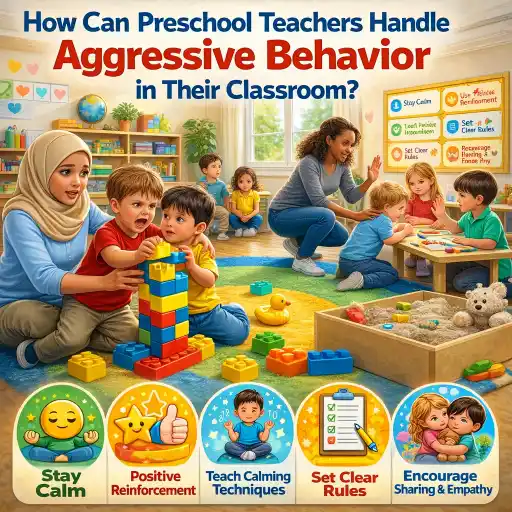
Stopping the moment is only step one. Next, teach replacement skills so children know what to do instead. Use simple, repeated teaching and practice. Try this plan:
- ✅ Teach one clear skill at a time: e.g., “gentle hands,” “use words,” or “ask for a turn.” Practice in circle time and role-play.
- 📆 Prevent by design: Change the room to reduce triggers—add duplicates of popular toys, create clear play areas, and give regular movement breaks. These prevention steps come from developmentally appropriate practice ideas here.
- 🛠️ Use visual supports and small tools: First/Then cards, break cards, and cue cards help children understand steps and wait for a turn. See practical examples at ChildCareEd here.
- 🌟 Catch them being good: Give specific praise for the skill you want: “I saw you use gentle hands—thank you.” Positive feedback helps the behavior repeat.
- ⏱️ Practice, practice, practice: Rehearse scripts and use timers for turns. Teaching when children are calm is much more effective.
Common mistakes and how to avoid them:
- ❌ Mistake: Long lectures after an incident. ✅ Fix: Short limit, then teach later when calm.
- ❌ Mistake: Shaming or calling a child “bad.” ✅ Fix: Use “no shame” language and focus on the behavior, not the child (see tips).
- ❌ Mistake: No changes to the environment. ✅ Fix: Adjust space, materials, and schedule to reduce triggers.
Teaching skills takes time. Use small steps and keep routines steady. These are core to #prevention, #communication, and a calm classroom where #preschoolers learn better.
How does trauma or stress affect aggression, and what trauma-informed steps help?
Sometimes aggression comes from stress or trauma. Kids who have had scary or chaotic experiences may react quickly because their bodies feel unsafe. It helps to remember: behavior is communication. Learning about trauma helps you respond with care, not punishment.
- 📚 Learn the basics: Trauma can make children act out or shut down. ChildCareEd explains how stress shapes behavior in their article on trauma and tantrums here.
- 🧘 Regulate, relate, then reason: First calm the child, then connect, then teach (a sequence explained in trauma-informed resources like Eastern CT State’s guidance here).
- 🚶 Use relational activities: Walks, coloring side-by-side, or sensory breaks help lower stress so learning can happen.
- 🔎 Watch for patterns: If a child’s aggression follows loud noises, transitions, or hunger, adjust the plan to reduce those triggers.
- 🤝 Be predictable and warm: Clear routines, calm voices, and trusted staff make children feel #safe and less likely to act out.
Do not rely only on behavior charts for trauma-related behaviors—those can backfire. Instead, use relational, sensory, and predictable supports. When needed, partner with mental health professionals. PBS and trauma-informed models can guide how to create stronger supports for children who need more help PBS Pyramid.
How do I work with families and track patterns to prevent repeats?
Families are your partners. Communication and data help everyone understand what is happening and what to try next. Use simple, respectful steps:
- 📋 Track what happens: Use an ABC chart—Antecedent (what happened before), Behavior (what the child did), Consequence (what happened after). This helps you spot triggers and trends. A good overview of tracking and planning is in ChildCareEd courses like "Heart-to-Heart Communication" and "Going Head-to-Head" (course
 Buy Now $16.00).
 - 💬 Talk with families calmly: Share a strength, share the fact, and share the plan. For example: “Lena loves blocks. Today she hit during cleanup twice. We are teaching ‘gentle hands’ and using a 2-minute warning.”
- 🤝 Ask for family strategies: “What helps at home when this happens?” Use the same words at school and home when possible.
- 📞 When to get extra help: If behavior is unsafe, happens often, or your strategies don’t help after steady practice, ask your director or a specialist. State requirements vary - check your state licensing agency.
- 🧾 Make a plan together: If needed, create a simple behavior plan with goals, supports, and who will do what. Use positive behavior supports and link families to community resources when helpful resources.
Keeping records is professional and protects children and staff. Use clear, kind notes and share plans with families so everyone uses the same approach.
Conclusion: Practical next steps you can try tomorrow
1) Keep calm and secure the scene: short, clear limits and safety first. 2) Teach one replacement skill and practice it often. 3) Design the room and schedule to reduce triggers. 4) Use trauma-informed steps when stress may be part of the cause. 5) Track patterns and work with families—data + kindness helps you get better results.
For more tools and courses, explore ChildCareEd’s articles and trainings linked above. You do important work. Small, steady changes—done with warmth and clear limits—make big differences for children and your team.
- CDA Home Visitor Subject Area 2 Part 3 Birth to 5
- Professional Presence in Early Childhood
- CDA: A Closer Look at Assessments
- Ouch! Biting & Hitting Hurts
- CDA: Special Needs: Understanding the Whole Child
- 45-Hour Infant and Toddler Curriculum
- Creating Environments that Nurture Growth and Community
- Texas Director Credential
- 45 hour Growth and Development Birth-age 12 ONLINE
- Supporting Families and Caregivers in Language and Literacy
- CDA Certification en Español: Recursos y Consejos para Educadores Bilingües
- 👶 ¿Cuáles son las proporciones y grupos requeridos en Dakota del Norte? 🏫
- Recursos en Español sobre el Sueño Seguro del Bebé
- Cómo ser director de cuidado infantil en Maryland
- 10 Ejemplos de Cómo la Cultura Influye en el Desarrollo Infantil
- Proporciones de Cuidado Infantil y Tamaños de Grupo por Edad en Maryland (Guía Rápida para Centros y Hogares)
- Proporciones de Cuidado Infantil y Tamaños de Grupo por Edad en Nueva Jersey (Guía Rápida para Centros y Hogares)
- Proporciones de Cuidado Infantil y Tamaños de Grupo por Edad en Virginia (Guía Rápida para Centros y Hogares)
- Cómo Celebrar el Día Nacional del Kindergarten
- Retraso del Habla en la Guardería: Cómo Pueden Ayudar los Proveedores
- Cómo Ser Maestra de Preescolar en Illinois
- Cómo Ser Maestra de Preescolar en Maryland
- How can New York preschool programs safely handle aggressive behavior?
- Celebrando la amistad en el cuidado infantil durante el Día de los Mejores Amigos
- Diversión fresca de verano: actividades del Día Nacional del Helado para niños
- Canciones, juegos y preguntas de círculo para niños
- Cómo simplificar la capacitación para sus empleados de daycare
- How should child care providers respond to biting, hitting, and aggressive behavior?
- How Can Child Care Providers Handle Difficult Conversations with Parents About Behavior?
- Why Is My Preschooler Suddenly Aggressive, and How Can Child Care Providers Help?
