Art and creativity help children learn language, muscles, feelings, and thinking. This guide is for New York child care providers and directors. You will find clear steps for hands-on art, safe setups, ways to show learning, and ideas to include families and staff. The five most important words in this article are #art #creativity #children #process #materials — look for them as you read. Also, state requirements vary - check your state licensing agency.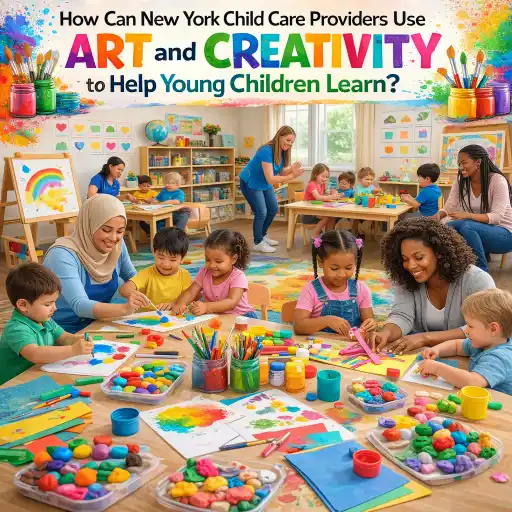
Why does art matter in early childhood?
Art matters because it teaches many skills at once. Short answer: Art helps with fine motor skills, talking, feelings, and problem-solving. Here are quick reasons why it matters:
- 🎨 Art builds motor skills: Using crayons, clay, or scissors strengthens little hands (see Benefits of Art Exploration).
- 💬 Art grows language: Children tell stories about their work and learn new words (see How to Encourage Creativity).
- 🧠 Art supports thinking: Mixing colors and testing materials teaches cause and effect.
- 😊 Art helps feelings: Open-ended making lets children express emotions and build confidence (see Open-Ended Art Activities). Professionals can also use art-based approaches to support emotional development; learn more about art therapy for young children.
Why it matters: When art is part of daily routines, children practice making choices and solving problems. That makes classroom learning stronger and more joyful.
What kinds of art activities work best for young children?
There are two styles of art. Knowing both helps you plan smartly:
- Process (open-ended) art — The child leads. No single “right” result. Use loose parts, paints, and clay. This boosts #creativity and independence. Read more at Process Art or Product Art and Why Open-Ended Art Matters.
- Product (teacher-directed) art — The teacher shows a model and steps. Good for teaching specific skills and following directions.
Balance tip: Offer mostly open-ended invitations and include 1–2 product projects a month (holidays or learning specific skills). A simple weekly plan might be:
- 📌 Monday: Process invitation (paint, collage, loose parts)
- 🎨 Wednesday: Short process station (play dough or scratch art; see DIY Scratch Art)
- ✂️ Friday: One product-style skill lesson
For ready-to-use lesson plans, check the sample Creative Arts lesson at Creative Art Explosion Buy Now $0.00.
How can we set up a safe, creative classroom in New York?
A good setup makes art easier, safer, and kinder to clean up. Use these steps to create a practical space:
- 🪜 Accessibility: Put paper, crayons, and tools on low shelves so children can reach them themselves. Label bins with pictures (see What classroom materials best foster learning and creativity?).
- 🎨 Zones: Keep one messy area (paint/easel) and one low-mess area (crayons, collage). Rotate who uses the messy area to limit crowding.
- 🧯 Safety & storage: Store glues and solvents locked or high when not in use. Check labels for non-toxic seals and keep MSDS info. ChildCareEd’s article on Illinois Rule 407 shows supply lists and safety ideas — a good reminder to check rules in your state: Rule 407 guidance. State requirements vary - check your state licensing agency.
- 🧽 Cleanup routines: Teach a 3-step clean-up: put tools away, wipe the table, wash hands.
- 📂 Drying & display: Use racks or a hallway line to show work at child height. Display process photos and quotes so families see the learning (see documentation ideas at Assess child progress).
- 🔁 Rotate #materials and loose parts every 2–6 weeks to keep interest high.
Use environmental strategies to boost social play at art centers: close a few centers, add novel loose parts, and place socially skilled peers near children who need support (see CSEFEL What Works Brief).
How do we plan, document, and avoid common mistakes?
Planning and simple documentation make art count for learning. Follow these steps and common-sense tips:
- Plan with purpose: Pick 1 learning focus (fine motor, color words, turn-taking). Use a short plan or the sample lesson plan at Creative Art Explosion Buy Now $0.00.
- Document simply: 1–2 photos, a child quote, and a short note (what the child did) is enough. Keep notes in each child’s file and post-process photos for families (see assessment tips).
- Use small measurable goals: e.g., “Will use a paintbrush independently during art time 3 of 5 days.”
Common mistakes and how to avoid them
- 🛑 Forcing every child’s work to match a model — Offer a sample idea, then let children choose.
- ⚠️ Over-helping — Ask questions instead of fixing a child’s piece. Say, “Tell me what you want to try next.”
- ❗ Not telling families the goal — Send a photo and a one-sentence note about learning behind the activity.
- 🔍 Unsafe supplies — Buy labeled non-toxic materials and check recalls. Keep safety logs and MSDS sheets accessible.
If you want staff training in New York, ChildCareEd lists many approved courses for NY providers (Childcare Courses in New York). For deeper art training, consider courses like Art from the Heart Buy Now $35.00 or Power of Art Buy Now $35.00.
Conclusion — What can you try this week?
Try one small change this week and see big gains. Here’s a simple 5-step plan you can do now:
- 📌 Pick one process art invitation (paper, paint, and a few loose parts).
- 🎯 Name the learning focus (e.g., making marks, using color words).
- 📷 Take one photo and write one sentence describing what the child did.
- 📣 Send the photo and note to families so they see learning behind the art.
- 🔁 Try the same invitation again in 2 weeks and compare notes.
You are doing important work. Small changes — more open-ended invitations, clear routines, and simple documentation — make art a powerful tool for learning. For more ideas and printable plans, visit ChildCareEd articles and trainings linked above. And remember: state requirements vary - check your state licensing agency.
- CDA Home Visitor Subject Area 3 Part 3 Birth to 5
- Many Colors, One Canvas: MD ECE Conference
- Power of Art: Bldg Self-Esteem & Positive Behavior for ALL Abilities
- Bienvenido! Welcoming All Families
- Pediatric RSV First Aid & CPR/AED
- CDA Bridge Bundle: Family Child Care without Portfolio Review
- Art from the Heart for Preschoolers: Open Ended Art Projects that Build Self-Esteem
- Classroom Setup for Child Care
- Texas Director Credential
- Montessori Cultural Activities: Exploring the World Through Play and Learning
- Healthy Cooking for Picky Kids
- Empowering Early Childhood Education: NYAEYC
- How Can Childcare Educators Thrive in the Big Apple?
- Tiny Hands, Big Dreams: Fostering Creativity in Preschoolers
- CDA Certification en Español: Recursos y Consejos para Educadores Bilingües
- 🔍 ¿Qué ves cuando observas a un niño aprender?
- Field Trip Ideas in New York: Engaging, Educational, and Fun Adventures for Children
- Capacitación en Salud y Seguridad Preventiva en Línea para Proveedores de Cuidado Infantil
- Proporciones de Cuidado Infantil y Tamaños de Grupo por Edad en Maryland (Guía Rápida para Centros y Hogares)
- Proporciones de Cuidado Infantil y Tamaños de Grupo por Edad en Nueva Jersey (Guía Rápida para Centros y Hogares)
- Proporciones de Cuidado Infantil y Tamaños de Grupo por Edad en Virginia (Guía Rápida para Centros y Hogares)
- Can play-based learning and academic readiness work together for New York educators?
- What age-appropriate learning activities should we use for infants, toddlers & preschoolers in New York?
- How Do Art Activities Support Cognitive Growth in North Dakota Preschoolers?
- How can New York childcare providers build self-confidence in toddlers?
- How can New York child care providers use art and creativity to help young children learn?
- Celebrando la amistad en el cuidado infantil durante el Día de los Mejores Amigos
- Canciones, juegos y preguntas de círculo para niños
- Cómo simplificar la capacitación para sus empleados de daycare
- What Does the CoComelon Debate Mean for Providers — How Should We Manage Screen Time for Toddlers?
