Summer in Minnesota can bring hot days, wildfires that send smoke, and sudden storms. This guide helps child care providers and directors plan and act so children stay safe and comfortable. Use the short steps below to prepare, decide, and respond. Remember: state requirements vary - check your state licensing agency.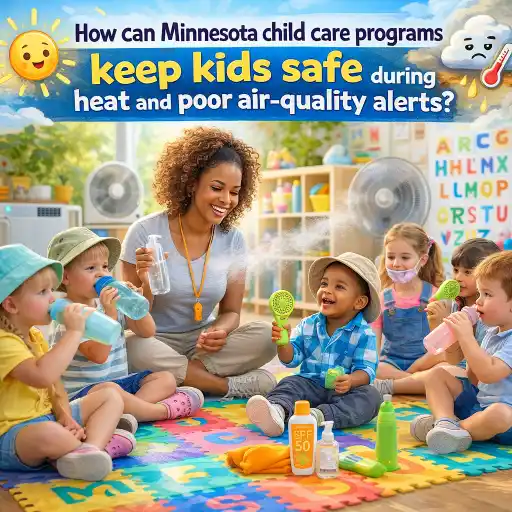
Why it matters
1) Children breathe more air for their size, so bad air and heat affect them faster than adults. The Minnesota Department of Health explains why smoky days and hot days are a real health risk for kids and staff — see the Minnesota Outdoor Air Quality Guidance for Schools and Child Care and the MDH Extreme Heat page.
2) Planning keeps children healthy, lowers stress for staff, and builds family trust. ChildCareEd has easy plans, checklists, and training to help you start right away. How can Minnesota child care programs prepare?
1. How do we get ready before an alert happens?
- 📋 Make or update a written emergency plan. Include evacuation routes, shelter spots, family reunification, and who checks alerts. ChildCareEd offers a planning guide and sample forms: ChildCareEd preparedness.
- 📋 Building your emergency plan: For programs that need to create or strengthen a written emergency plan before summer arrives, ChildCareEd's Creating an Emergency and Disaster Preparedness Plan
 Buy Now $16.00 is a 2-hour online course walking providers through how to develop a clear, practical emergency plan covering evacuation routes, reunification steps, AQI decision rules, and family communication — directly supporting the plan-writing, hazard-mapping, and Go-Bag preparation steps described in this article.
 - 🎒 Pack a classroom Go-Bag (attendance sheet, emergency contacts, meds if allowed, first aid, water, snacks, power bank). See ChildCareEd's Go-Bag checklist.
- 🗺️ Do a hazard walk at child height and map exits. Use a simple hazard map tool or the ChildCareEd hazard-mapping tips.
- 🔁 Assign roles: who watches AQI and weather, who grabs the Go-Bag, who calls families. Practice those roles in a drill.
- 🚨 Emergency and disaster preparedness: To build staff confidence in responding to heat waves, smoke events, and evacuations, ChildCareEd's Emergency and Disaster Preparedness Buy Now
$55.00$45.00 is a 6-hour online course covering how to prepare for, respond to, and recover from a range of emergencies in early childhood settings — a direct match for the drill practice, role assignments, shelter-in-place procedures, and post-event documentation steps outlined in this guide. - 🔧 Check your building systems: run filters, test fans, and know how to set HVAC to recirculate during smoke (MDH and EPA guidance are helpful: Wildfire Smoke - MDH, EPA IAQ guide).
Do these small steps now so staff feel ready when a real alert comes. Put a printed checklist by the exit door and practice twice a year. Check local tools like AirNow and the MPCA for daily air forecasts and sign up for alerts.
2. When should we keep children indoors because of heat or smoke?
- 🔎 Check AQI and heat each morning and before outdoor play. Use AirNow, MPCA maps, or MDH tools linked from the Minnesota guidance (MDH outdoor air guidance).
- 📏 Use simple cutoffs that many programs use:
- 0–50 (Good): normal outdoor play.
- 51–100 (Moderate): watch sensitive children; consider shortening outdoor time.
- 101–150 (Unhealthy for Sensitive Groups): move vigorous activities indoors; limit running games.
- 151+ (Unhealthy or worse): everyone stays indoors; run filters and limit activity.
- 💧 For heat, check the heat index (temperature + humidity). Offer water breaks, shade, and low-energy play during high heat. MN's heat guidance and the Red Cross give clear cooling actions: MDH Extreme Heat, Red Cross heat safety.
- 😷 On smoky days, run HVAC on recirculate, use MERV 13+ filters or HEPA portable cleaners, and avoid indoor pollution sources. MDH recommends keeping kids inside and using filtered air: Wildfire Smoke - MDH.
Post your AQI cutoffs by the door so substitutes and new staff make the same choice. #airquality #heat #smoke #children #safety
3. What should staff do during a heat, smoke, or power-outage alert?
- ⚠️ Confirm the alert type (watch, advisory, or warning). A warning means act now. Use NWS and local health updates.
- Heat day actions:
- 🟠 Move activities to shaded or air-conditioned rooms.
- 🔵 Offer water often, schedule quiet play, and avoid heavy exercise during peak heat.
- 🔺 If power is out and the building is too hot, relocate to a cooling center or partner site.
- Smoke day actions:
- 🫁 Close doors and windows, set HVAC to recirculate, and run HEPA units in main rooms.
- 🧯 Avoid indoor activities that pollute the air (frying, candles, unnecessary vacuuming).
- 📝 Watch for symptoms (coughing, shortness of breath) and follow health plans for children with asthma.
- If you must evacuate or shelter-in-place:
- 🔔 Take the Go-Bag, attendance list, and meds (if allowed). Do a head count before leaving and after arrival.
- 📞 Call 911 if anyone is in immediate danger. Use your reunification steps to contact families when safe.
- 🩺 First aid: For heat illness, cool the child with damp cloths, offer sips of water, and call 911 for confusion, fainting, or a very high temperature. See ChildCareEd first-aid tips: First Aid for Heat Illness Buy Now $0.00. Many programs also require or strongly encourage staff to complete CPR and First Aid training; consider enrolling in our summer CPR and First Aid courses for child care providers.
Document what happened, check on children after the event, and debrief staff to update your plan. Practice these actions in drills so they feel normal during a real alert.
4. How do we train staff, communicate with families, and avoid common mistakes?
Good practice and clear messages make families calmer and staff quicker to act. Use short drills, posted rules, and simple family notes.
- Train and practice:
- 🧑🏫 Run short drills for thunder move-ins, smoke-day indoor shifts, and heat slow-downs twice a year.
- 📋 Review roles so everyone knows who checks AQI and who grabs the Go-Bag each time.
- 📚 Use ChildCareEd courses and templates to guide training: ChildCareEd preparedness.
- Communicate with families:
- 📣 Share your posted cutoffs and a short template message. Example: “AQI is ___. We are using indoor plans and running HEPA filters. Please send asthma meds if needed.”
- 📩 Tell families where reunification will happen and how you’ll send updates.
- Common mistakes and fixes:
- ❌ Mistake: Relying on one distant AQI station. ✅ Fix: use local maps (AirNow, MPCA) and check more than once per day.
- ❌ Mistake: No assigned Go-Bag person. ✅ Fix: put names on the plan and practice during drills.
- ❌ Mistake: No ready indoor routine for smoky or hot days. ✅ Fix: create calm, active, safe indoor centers before summer.
- Quick FAQ for families (copy into your messages):
- Q: How will we know if outdoor play is canceled? A: We check AQI and heat twice daily and follow our posted cutoffs.
- Q: What if my child needs medicine? A: Keep health forms current and meds on site per policy.
- Q: Who decides to evacuate? A: The director follows the written plan and local emergency orders.
Use the ChildCareEd weather and preparedness resources and the MDH tools for Minnesota-specific guidance. Small habits — daily checks, a posted AQI chart by the door, and two quick drills each season — protect kids and make your program run smoothly. #preparedness #safety
Conclusion
Start with two actions this week: 1) make or refresh a Go-Bag and attendance checklist, and 2) post an AQI + heat cutoff sign by the exit and assign who checks it. Use the Minnesota and ChildCareEd links in this guide for templates and training. Staying ready keeps children healthy and families trusting your care.
Use clear numbers and a posted rule so staff can act fast. Follow Minnesota guidance and Air Quality Index (AQI) levels to decide. Preparation is simple when you break it into steps. Use these actions this week: Have a short action list for the day of the alert. Follow your written plan and use the roles you practiced.
- CDA Certification en Español: Recursos y Consejos para Educadores Bilingües
- Recursos en Español sobre el Sueño Seguro del Bebé
- Proporciones de Cuidado Infantil y Tamaños de Grupo por Edad en Virginia (Guía Rápida para Centros y Hogares)
- Consejos de Supervisión Activa para Salones de Preescolar y el Juego al Aire Libre
- Child Care Weather Guidelines: Using the 2026 Weather Watch Chart
- Air Quality and Child Care in Georgia: Outdoor Play Safety Tips
- Safe Temperature Regulations in Daycare: Georgia Rules for Child Care Providers
- How can Minnesota child care programs prepare for severe weather and poor air quality?
- How can Minnesota child care providers prepare for severe weather and poor air quality?
- Canciones, juegos y preguntas de círculo para niños
- How can Minnesota child care programs keep kids safe during heat and poor air-quality alerts?
- How can Minnesota child care programs keep infants and toddlers hydrated and safe in hot weather?
- How can child care programs protect children with asthma during Minnesota air-quality alerts?
- What are Minnesota's safe temperature rules for daycare and how do we follow them?
- Air Quality and Outdoor Play: Guidance for Schools and Child Care Programs
- Weather Alerts and Child Care: How to Protect Children During Unsafe Conditions
- How to Plan Safe Outdoor Activities During Hot Weather and Poor Air Quality
- Daycare Outdoor Weather Safety: Temperature, Heat Index, and Playtime
- Childcare Weather and Air Quality Chart: Keeping Outdoor Play Safe
- What AQI Should Kids Stay Inside? A Child Care Guide to Safe Outdoor Play
