Child care leaders need clear, simple steps to keep children safe when it’s very hot or very cold. This article explains practical routines and Minnesota guidance so your staff can act quickly and confidently. You will see easy lists, a short checklist, and links to trusted resources. Remember: state requirements vary - check your state licensing agency. This piece focuses on #Minnesota, #children, #temperature, #safety, and #hydration.
What are Minnesota's rules for daycare temperatures and why does it matter?
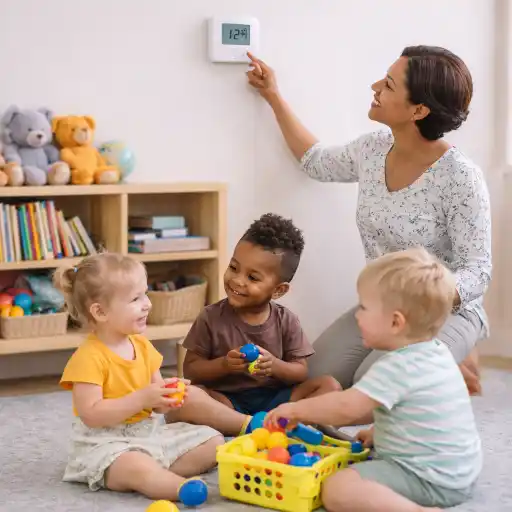
Minnesota state agencies encourage child care programs to plan for indoor air quality, heat, cold, and smoke. The Minnesota Department of Health offers a wide set of tools about ventilation, heat index, cold index, and outdoor air guidance in its Environmental Health pages and the Minnesota Outdoor Air Quality Guidance for Schools and Child Care. These pages help programs choose when to go outside, shorten play, or stay indoors.
Why it matters:
- Young children respond faster to heat and cold than adults. The CDC notes that infants and toddlers rely on adults for cooling and fluids.
- Poor air (wildfire smoke, high AQI) raises risk for asthma and breathing problems; Minnesota guidance gives steps to protect kids on smoky days (MDH outdoor air guidance).
- Drinking water safety matters too: MDH recommends testing for lead in drinking water in child care settings (Lead in Drinking Water).
How should we check and record temperature and air quality each day?
- 👀 Check 1) temperature/heat index, 2) wind/wind chill, 3) lightning/storms, 4) AQI (air quality), and 5) playground surface (hot slides, puddles).
- 📝 Record readings: morning arrival, before nap, before afternoon outdoor time. Keep one person assigned to the check.
- 📲 Use local tools: MDH recommends AirNow and Minnesota MPCA maps for AQI and the CDC HeatRisk dashboard for heat planning (MDH outdoor air guidance).
- 🔁 Re-check before each outdoor block — weather and AQI can change quickly.
What daily routines protect kids from heat, cold, and scalds?
- 🥤 Offer water on a schedule: arrival, before going outside, every 10–15 minutes while outside on hot days, before nap, and after nap. See hydration tips in ChildCareEd’s hydration post and the CDC infant guidance (CDC).
- 🌳 Shade and timing: set shade areas before children go out, move vigorous play to cooler morning/evening times, and split outdoor time into short blocks (Preparing for Extreme Heat).
- 🧥 Dress and gear: layer for cold, light loose clothes for heat, hats and boots as needed. Keep spare clothing available.
- 🚿 Hot water safety: label sinks and test tap temperatures. Use anti-scald tools on faucets when possible and keep hot liquids out of child areas (see practical center tips at ChildCareEd Texas water safety article).
- 👩⚕️ Train staff in pediatric first aid/CPR and heat illness recognition; ChildCareEd offers related courses (Pediatric First Aid & CPR).
What common mistakes happen and how do we stay inspection-ready?
Many problems come from skipping simple checks. Use this list to avoid common pitfalls and to be ready for visits.
- ❌ Mistake: Checking weather only once. ✅ Fix: Check before every outdoor block and record it on the weather chart (Childcare Weather Chart).
- ❌ Mistake: Relying on thermostat instead of classroom thermometer. ✅ Fix: Place a thermometer about 3 feet above the floor and log actual classroom temps (best practice from ChildCareEd resources).
- ❌ Mistake: No assigned roles for water or shade. ✅ Fix: Assign a "water watcher" and a staff member to prep shade/cooling kit before outdoor time.
- ❌ Mistake: Not testing drinking taps for lead. ✅ Fix: Follow MDH lead testing recommendations and use the model checklist: MDH Lead in Drinking Water.
FAQ (short answers)
- Q: Who decides to cancel outdoor play? A: The director or the staff person assigned to the weather chart using posted rules.
- Q: How often check air quality? A: Before each outdoor block and any time smoke or haze is visible; see MDH outdoor air guidance.
- Q: What signs mean call 911? A: Confusion, fainting, very high body temp, or loss of consciousness—these are emergency signs of heat stroke or severe illness.
- Q: Where to find printable charts and training? A: ChildCareEd weather articles and printable charts: Weather Watch and Weather Chart.
Conclusion
Start with three simple steps today:
- 📌 Post a weather/AQI chart by every exit and assign a daily checker.
- 💧 Use a water and shade routine: water on arrival, before outside, every 10–15 minutes outside, and after nap.
- 📝 Keep short logs: weather checks, temperature readings, training, and incident notes so you are ready for licensing visits.
Use the Minnesota Department of Health pages for state direction (MDH Environmental Health, MDH Outdoor Air Guidance) and the practical ChildCareEd tools for routines and charts (for example, Preparing for Extreme Heat and the hydration post). State requirements vary - check your state licensing agency. Thank you for keeping children safe with smart, simple routines.
Make checks quick and repeatable so staff do them every time. Use a posted weather chart and a short log by the exit. ChildCareEd has ready guides like the Child Care Weather Watch Guidelines and the printable Childcare Weather Chart to help teams decide fast.Simple routines prevent most problems. Use numbered steps that staff can follow without stopping to think.- Recursos en Español sobre el Sueño Seguro del Bebé
- Capacitación en Salud y Seguridad Preventiva en Línea para Proveedores de Cuidado Infantil
- Lista para Guardería en Casa en Illinois: Cómo Iniciar una Guardería en el Hogar
- Lista para Guardería en Casa en Texas: Cómo Iniciar una Guardería en el Hogar
- In-Home Daycare Requirements in Illinois
- Child Care Weather Guidelines: Using the 2026 Weather Watch Chart
- Safe Temperature Regulations in Daycare: Virginia Rules for Child Care Providers
- Safe Temperature Regulations in Daycare: California Rules for Child Care Providers
- How can Minnesota child care programs keep kids safe during heat and poor air-quality alerts?
- How Long Can a Daycare Stay Open Without Power?
- What are Minnesota's safe temperature rules for daycare and how do we follow them?
- Daycare Temperature Regulations in Arizona: How Hot Is Too Hot?
- Daycare Temperature Regulations in California: What Providers Should Know
- Daycare Temperature Regulations in Utah: How Hot or Cold Is Too Much?
- Alaska Daycare Center Standards: What Providers Need to Know
- Oregon Daycare Center Standards: What Providers Need to Know
- Oregon Home Daycare Standards: What Providers Need to Know
- What are Minnesota Child Care Ratios and Group Sizes by Age (Center + Home Quick Guide)?
- MN Daycare Rules and Regulations 2026: Current Requirements and Upcoming Changes
- Reglas y regulaciones de guarderías en Minnesota 2026: Requisitos actuales y próximos cambios
