This guide helps Minnesota child care directors and providers get ready for severe #weather, wildfire smoke, tornadoes, heat, and other air-quality alerts. You will find simple steps, clear lists, and links to useful resources you can use today. We focus on keeping children safe, calm, and comfortable while you make fast, confident choices. Remember: state requirements vary - check your state licensing agency.
We use plain language, checklists, and short steps so staff can practice and follow the plan. For ready templates and training, see ChildCareEd's Free Emergency Preparedness Plan and the Sample Childcare Emergency Action Plan Buy Now $0.00. For Minnesota-specific air guidance, see the Minnesota Outdoor Air Quality Guidance for Schools and Child Care. Our five key words: #children #safety #airquality #preparedness #weather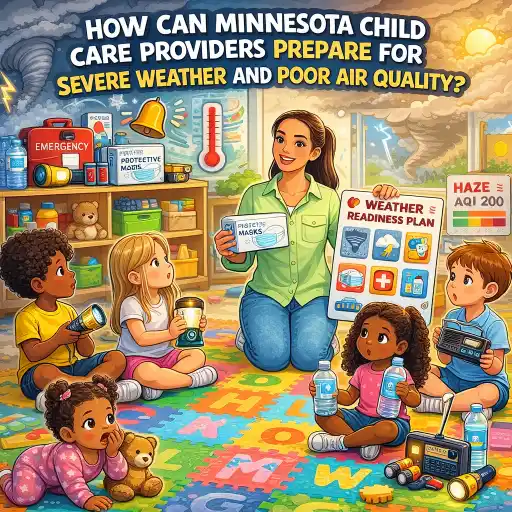
What should be in our emergency plan for severe weather and air-quality alerts?
- Risk checklist (easy list to post):
- Storms/tornadoes
- Heat waves or cold snaps
- Wildfire smoke and poor AQI
- Flooding or power loss
- Written plans to post and share:
- Evacuation map and second meeting spot
- Shelter-in-place / tornado shelter locations
- Lockdown steps
- Cleaner air space use and rules
- Emergency supplies:
- First aid and 72-hour food/water (see Emergency Supply List Buy Now $0.00)
- Spare medications and health plans for each child
- Flashlights, battery radio, extra phone chargers
- Communication:
- Parent contact list and out-of-area contact
- Staff call tree and emergency roles
- How and when you will update families
- Special needs and inclusion: plan for children with mobility, medical, or communication needs
Use ChildCareEd's training to build and test your plan: Emergency and Disaster Preparedness (online)  Buy Now
 $55.00$45.00. Also, keep a ready "Go-Bag" by the exit with attendance sheets, meds, and important records as part of your posted plan. For a short, practical course that focuses on regular drills, quick decision routines, and classroom tools staff can use during a real event, see Fire Drills, Flashlights & Fast Thinking: Why Emergency Preparedness Is a Must.
How should staff act when a severe weather or air-quality alert arrives?
- Check the source (quick):
- 🔎 Air quality: use AirNow or the Minnesota MPCA site
- 🌩️ Weather alerts: local NWS or NOAA radios
- Follow a traffic-light rule (post this):
- 🟢 Green = normal outdoor play
- 🟡 Yellow = shorten or adapt outdoor plans (more water, shade, lower activity)
- 🔴 Red = stay inside or move to shelter or cleaner air space
- For smoke or poor AQI:
- 🫁 Keep children inside; close doors and windows
- 🔁 Set HVAC to recirculate and use the best filter you have (MDH suggests MERV 13 when possible: see Wildfire Smoke - MN Dept. of Health)
- 😷 If outdoors is unavoidable, limiting activity is better than masking very young children; for adults and olderchildrenr, en a well-fitted N95/KN95 helps (see CDC: Wildfire Smoke and Children)
- For tornado warnings:
- ☔ Go to your pre-identified safe room (no windows, lowest floor)
- 🧸 Bring the attendance sheet and comfort item(s)
- 📣 Keep kids quiet and do head counts before and after
- For extreme heat:
- 💧 Offer water often and move activities to cooler times/places
- 🌳 Use shade and reduce active play
If anyone has trouble breathing or severe symptoms, get medical help right away. For Minnesota air guidance specifics and activity adjustments,nts see the Minnesota Outdoor Air Quality Guidance.
How can we make indoor spaces safer with ventilation, filtration, and cleaner air spaces?
- HVAC and filters:
- 🔧 Keep HVAC systems serviced and change filters often. Use the highest MERV rating your system supports (MDH and experts recommend MERV 13 where possible). See MDH Environmental Health and CDC guidance on ventilation.
- Portable cleaning options:
- 🧰 Use portable HEPA air cleaners in high-risk rooms (nurse office, isolation room, infant rooms)
- 🛠️ Build or use Corsi-Rosenthal boxes (box fan + MERV filters) if you need low-cost cleaning
- Cleaner air spaces for community use:
- 🏫 Identify a room with tight doors and good filtration to be your cleaner air space (see Canada’s guidance for building-level checklists: Guidance for Cleaner Air Spaces)
- 🔒 Minimize in-and-out traffic to avoid bringing smoke inside
- Daily habits:
- 🪟 Close windows/doors when smoke is present
- 🔁 Run HVAC fans continuously (set fan to ON when possible)
- 🧽 Avoid indoor activities that add pollution (frying, smoking, candles)
For technical help,p consider consulting your facilities person or local HVAC professional. The CDC ventilation tool and Minnesota resources can help you make safe choices.
How do we train staff, talk with families, and avoid common mistakes?
Training and clear communication turn a plan on paper into real safety for children. Practice, post your rules, and review after drills.
- Train and practice:
- 🧑🏫 Run regular drills: fire monthly,tor nado,a,do and shelter-in-place quarterly
- 📋 After each drill, debrief: what worked and what needs fixing
- 🎓 Use ChildCareEd courses and templates: Emergency and Disaster Preparedness Buy Now
$55.00$45.00 and the Sample Plan Buy Now $0.00
- Communicate with families:
- 📣 Share emergency plans at enrollment and send quick updates during events
- 📱 Use a text group or app for fast messages and an out-of-area contact for reunification
- Common mistakes and how to avoid them:
- ❌ Skipping daily weather/AQI checks — ✅ Fix: assign one staff person to check AirNow or local MPCA each outdoor block
- ❌ No Go-Bag or expired meds — ✅ Fix: check the bag monthly and after staff changes
- ❌ Relying on cloth masks for smoke — ✅ Fix: use HEPA filtration indoors; reserve well-fitted N95s for adults/older children following guidance
FAQ (quick answers)
- Q: How often should we check air quality? — A: Before each outdoor block and anytime smoke is visible. Use AirNow or MPCA.
- Q: When do we send children home? — A: Only when it is safe and you can reach parents. Have a reunification plan and a backup shelter spot.
- Q: Can preschool children wear N95s? — A: Very young children may not get a good fit. Prioritize indoor filtration and limiting outdoor time. See CDC advice.
- Q: What filter rating do we need? — A: Use the highest MERV your HVAC supports; portable HEPA cleaners help in rooms where kids spend time.
- Q: Where can I get templates and training? — A: ChildCareEd provides templates and courses: Free Emergency Preparedness Plan and online classes.
Action steps to finish today:
- Post a simple traffic-light weather/AQI chart by every exit (see Child Care Weather Watch Guidelines).
- Make or refresh your Go-Bag and check medications.
- Assign staff to check AirNow/MPCA and run one short drill this month.
For Minnesota-specific health and air guidance, see the Minnesota Department of Health pages on Wildfire Smoke, Tornadoes, and Outdoor Air Quality Guidance. Thank you for doing this important work — your planning keeps our #children safe and learning.
Why it matters: Children breathe more air per pound than adults, and they can get sicker faster when the ir is smoky or when storms hit. Having a clear, practiced plan keeps kids safe and helps staff act without panic.When an alert happens, use a short decision routine,e so everyone knows the steps. Count and check often. Keep children calm with quiet activities and familiar routines.Good indoor air reduces risk when outdoor air is smoky. Small changes can make a big difference for children with asthma and other health needs.
- CDA Certification en Español: Recursos y Consejos para Educadores Bilingües
- 🌪️Fire Drills, Flashlights & Fast Thinking: Why Emergency Preparedness Is a Must
- Proporciones de Cuidado Infantil y Tamaños de Grupo por Edad en Maryland (Guía Rápida para Centros y Hogares)
- Proporciones de Cuidado Infantil y Tamaños de Grupo por Edad en Nueva Jersey (Guía Rápida para Centros y Hogares)
- Proporciones de Cuidado Infantil y Tamaños de Grupo por Edad en Virginia (Guía Rápida para Centros y Hogares)
- Guías del Clima para el Juego al Aire Libre en el Cuidado Infantil
- Lista para Guardería en Casa en Texas: Cómo Iniciar una Guardería en el Hogar
- ¿Qué Temperatura Es Demasiado Fría para Jugar al Aire Libre en el Cuidado Infantil?
- Capacitación Previa al Servicio para Proveedores de Cuidado Infantil en Georgia
- Air Quality and Child Care in North Carolina: Outdoor Play Safety Tips
- How can Minnesota child care programs prepare for severe weather and poor air quality?
- How can Minnesota child care providers prepare for severe weather and poor air quality?
- How can Minnesota child care programs keep kids safe during heat and poor air-quality alerts?
- How can Minnesota child care programs keep infants and toddlers hydrated and safe in hot weather?
- How can child care programs protect children with asthma during Minnesota air-quality alerts?
- What are Minnesota's safe temperature rules for daycare and how do we follow them?
- How can child care programs protect children on poor air-quality days?
- Weather Alerts and Child Care: How to Protect Children During Unsafe Conditions
- Cómo Planificar Actividades al Aire Libre Seguras Durante el Calor y la Mala Calidad del Aire
- Daycare Outdoor Weather Safety: Temperature, Heat Index, and Playtime
