When smoke, ozone, or dust changes the air outside, child care teams need a decision they can make quickly and explain confidently. This guide translates AQI categories into practical outdoor-play actions, while Safe and Sound: Creating Healthy Environments for Every Child  Buy Now $55.00 can help strengthen your broader indoor- and outdoor-environment practices and support professional learning hours where applicable.
Why does AQI matter so much for young children?
Outdoor play supports physical development, attention, social learning, and emotional well-being. The CDC explains that children benefit from opportunities to run, climb, explore, and practice movement skills outdoors. However, air pollution can change the risk profile of that same play period.
Children breathe more air relative to their body size than adults, and their lungs are still developing. During vigorous play, children inhale more deeply and rapidly, increasing the amount of pollution that reaches the lungs. Fine particles, especially PM2.5 in wildfire smoke, can penetrate deeply into lung tissue; ozone can irritate the airways and worsen coughing or wheezing.
Children with asthma, chronic respiratory conditions, or other health vulnerabilities may respond sooner than their peers. A predictable policy protects them without requiring staff to diagnose risk in the moment. It also reassures families that decisions are based on a consistent health framework rather than personal preference.
The goal is not to eliminate outdoor play. It is to balance developmental benefits with exposure reduction by adjusting timing, intensity, duration, or location.
What AQI level means children should stay inside?
The U.S. AQI uses six color-coded categories. AirNow identifies AQI values above 100 as unhealthy first for sensitive groups and, at higher levels, for everyone.
- 🟢 0–50, Good: Outdoor play may proceed as planned, subject to normal weather and supervision checks.
- 51–100, Moderate: Most children can usually participate, but observe children with asthma or unusual sensitivity. Consider reducing strenuous activity if conditions are worsening.
- 101–150, Unhealthy for Sensitive Groups: Move vigorous or prolonged play indoors. If outdoor time continues, make it shorter and low intensity, with close attention to children who have respiratory needs.
- 151–200, Unhealthy: Keep all children indoors and reduce vigorous indoor activity.
- 201–300, Very Unhealthy: Stay indoors, minimize exertion, and follow local health alerts.
- 301 and higher, Hazardous: Remain indoors, follow emergency public-health instructions, and consider whether the facility can maintain safe indoor conditions.
There is no universal child care cutoff that replaces local guidance, medical plans, or licensing rules. Many programs choose a conservative threshold, such as moving active play indoors at AQI 101 and keeping everyone inside at AQI 151. State requirements vary - check your state licensing agency.
How should staff check AQI before outdoor play?
AQI is a planning tool, not a once-daily formality. Check a trusted local source before each outdoor block, including morning and afternoon play. Recheck whenever staff smell smoke, see haze, notice reduced visibility, or receive an alert.
- Use AirNow, a local environmental agency, or another reliable monitor serving the program’s area.
- Record the AQI, time, pollutant when available, and decision: outdoor play, modified play, or indoors.
- Compare the reading with visible conditions. Smoke or strong odors warrant caution even when an online reading appears delayed or comes from a distant monitor.
- Assign one primary AQI checker and a backup. The director or designated decision-maker should apply the posted policy consistently.
Forecast AQI can support scheduling. For example, if ozone is predicted to rise during the afternoon, a program may schedule outdoor activity earlier and reserve lower-intensity indoor options for later. With wildfire smoke, however, conditions can change rapidly, so forecasts should not replace real-time checks.
A short daily log creates continuity across shifts and supports transparent family communication. It also helps the program evaluate whether its cutoff is practical after several events.
How can programs protect children with asthma or respiratory concerns?
Children with asthma should not be singled out or excluded from participation without a health-based plan. Instead, use current individual health information and work with families to understand triggers, symptoms, medication permissions, and emergency steps.
- Keep each child’s asthma or health action plan current and accessible to authorized staff.
- Store prescribed quick-relief medication according to program policy, with required permissions and expiration checks.
- Ensure staff know which symptoms require immediate action, including persistent coughing, wheezing, chest tightness, unusual fatigue, or visible breathing difficulty. For a refresher on recognizing early signs of respiratory distress in children, review this guide.
- Move a symptomatic child to a cleaner indoor space, remain calm, follow the child’s written plan, notify the family, and seek emergency care when indicated.
- Document the AQI, activity, symptoms, medication administered according to policy, and communication with the family.
Primary protection during smoke events is reducing exposure: staying indoors, closing windows and exterior doors, and using appropriate filtration. Masks are not a dependable substitute for sheltering and cleaner air, particularly when a young child cannot achieve a proper respirator fit. Families should consult the child’s health care professional about individual respiratory concerns.
Inclusive practice also means preparing meaningful alternatives. A child should still have opportunities for movement, choice, peer interaction, and exploration when outdoor play is paused.
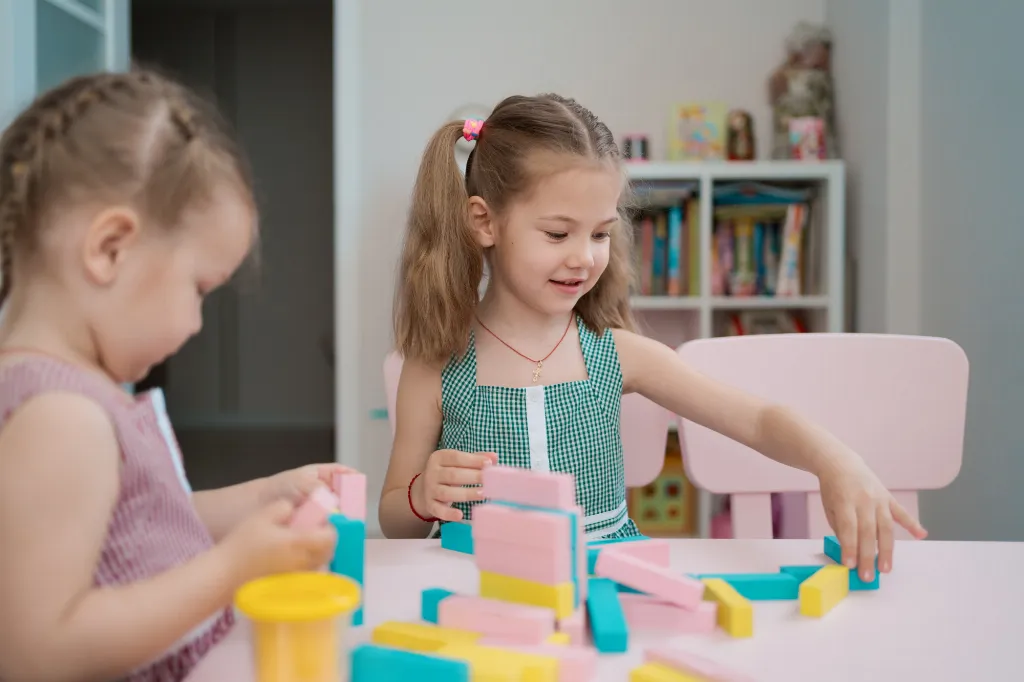
What should indoor play look like on poor-air days?
Moving indoors does not mean the day becomes passive or developmentally limited. Prepare a rotating menu of activities that supports gross-motor development while avoiding unnecessarily strenuous exertion.
- Story-based movement, stretching, yoga, and animal walks.
- Short dance intervals with quiet recovery periods.
- Indoor obstacle courses using safe, age-appropriate equipment.
- Music, dramatic play, construction, sensory exploration, and art.
- Small-group games that reduce crowding and support active supervision.
During smoke events, improve indoor air when feasible by keeping windows and doors closed, using HVAC recirculation when appropriate for the system, and operating properly sized portable HEPA cleaners. Consult facilities professionals before changing HVAC filters or settings. Avoid activities that add particles or fumes, such as frying, candles, incense, or heavy dust-producing cleaning while air quality is poor.
Designate a clean-air room with minimal exterior-door traffic, particularly for naps and children with respiratory vulnerabilities. Remember that closing the building can create heat or ventilation concerns; monitor temperature, comfort, carbon monoxide protection, and local public-health instructions.
Staff should preserve ratios, sightlines, and accountability during the transition. Indoor movement can become crowded quickly, so use smaller groups, defined boundaries, and clear supervision assignments.
How can directors build a reliable AQI policy?
A strong policy is brief enough to use under pressure and detailed enough to guide consistent action. Include:
- Approved AQI sources and the times staff must check them.
- Program-specific thresholds for normal, modified, and indoor activity.
- Alternative procedures for smoke, ozone, dust, extreme heat, storms, and power outages.
- Roles for checking AQI, deciding activity, supervising vulnerable children, preparing indoor spaces, and communicating with families.
- Documentation requirements and procedures for reviewing incidents.
Practice the plan before wildfire season or another predictable pollution period. A five-minute drill can rehearse moving children inside, bringing attendance records and medications, closing exterior openings, starting filtration, and communicating with families.
A simple message reduces confusion: “Today’s AQI is ___. We are following our outdoor-air policy and will use indoor activities. Please confirm that your child’s health information and medications are current.” Keep messages factual, calm, and free of medical promises.
Common mistakes include checking AQI only once, relying on a distant monitor, waiting for children to show symptoms, treating masks as the primary solution, and having no engaging indoor plan. Correct these by assigning responsibility, posting one clear rule, preparing activity bins, and reviewing the policy after each event.
Conclusion: What is the safest practical answer?
Children should generally remain indoors when AQI reaches the “Unhealthy” range, 151 or higher, and programs should strongly consider moving active play indoors when AQI reaches 101–150. Children with asthma or other respiratory vulnerabilities may need earlier, individualized protection. Visible smoke, strong odors, rapidly worsening conditions, extreme heat, or official health alerts can justify staying inside regardless of a delayed reading.
The most effective approach combines a trusted AQI check, a posted cutoff, documented decisions, cleaner indoor air, prepared alternatives, current health plans, and calm family communication. Outdoor play remains a valuable part of early learning; thoughtful AQI planning helps children receive its benefits without ignoring environmental health risks.
For additional professional development, consider Emergency and Disaster Preparedness—Online Buy Now $55.00$45.00 for practical preparation around emergencies and environmental hazards, Administration of Medicine Buy Now $16.00 for medication procedures and chronic-condition support, Engaging Indoor Activities for Inclement Weather Buy Now $24.00 for meaningful indoor planning, and 1,2,3, Eyes on Me: Classroom Safety Buy Now $32.00$24.00 for supervision and safety practices.
Keep the routine visible: #AQI, #children, #outdoorplay, #asthma, and #safety.
Sources and further reading
- AirNow AQI Basics
- AirNow Air Quality and Outdoor Activity Guidance
- CDC Wildfire Smoke and Children
- CDC Outdoor Play and Safety for Children in ECE
- EPA Healthy Child Care and Early Learning Facilities Self-Assessment
- ChildCareEd Air Quality and Outdoor Play Guidance
- Minnesota Outdoor Air Quality Guidance for Schools and Child Care
- Lesson Planning for Preschoolers
- Creating the Natural Outdoor Classroom
- Legal & Ethical Essentials in Child Care
- Bienvenido! Welcoming All Families
- Healthy Starts: Safety, Nutrition, and Wellness in Child Care
- Play, Learn, Grow
- Texas Director Credential
- Safeguarding Young Lives: A Comprehensive Guide to Child Care Safety
- Family Child Care: Building, Premises, and Outdoor Safety
- Mindful Supervision: Balancing Safety & Independence in Montessori
- ❄️ ¿Qué actividades al aire libre funcionan bien para los niños de Illinois en cada estación? 🌷🍂
- Consejos de Supervisión Activa para Salones de Preescolar y el Juego al Aire Libre
- Portland Air Quality and Child Care: When Is It Safe to Play Outside?
- Air Quality and Child Care in Texas: Outdoor Play Safety Tips
- Air Quality and Child Care in Georgia: Outdoor Play Safety Tips
- Air Quality and Child Care in Nevada: Outdoor Play Safety Tips
- Air Quality and Child Care in California: Outdoor Play Safety Tips
- Air Quality and Child Care in Virginia: Outdoor Play Safety Tips
- Air Quality and Child Care in Maryland: Outdoor Play Safety Tips
- Air Quality and Child Care in Wisconsin: Outdoor Play Safety Tips
- Safe Temperature Regulations in Daycare: Wisconsin Rules for Child Care Providers
- Safe Temperature Regulations in Daycare: North Carolina Rules for Child Care Providers
- Safe Temperature Regulations in Daycare: Georgia Rules for Child Care Providers
- When the Sky Turns Hazy: How Should North Dakota Child Care Providers Protect Kids from Wildfire Smoke?
- How can California child care providers prepare for wildfire smoke, power outages, and closed classrooms?
- How can Washington providers keep children safe and learning when wildfire smoke forces us indoors?
- What are New York's rules for safe temperatures in daycare and how do we follow them?
- Air Quality and Outdoor Play: Guidance for Schools and Child Care Programs
- Cómo Planificar Actividades al Aire Libre Seguras Durante el Calor y la Mala Calidad del Aire
- What AQI Should Kids Stay Inside? A Child Care Guide to Safe Outdoor Play
