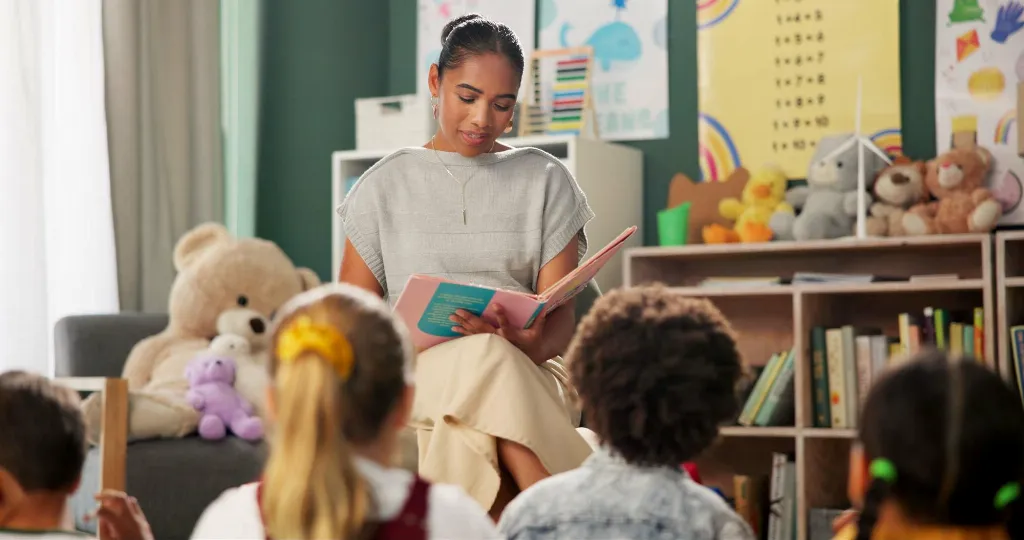
 National Book Month is a perfect time to make your classroom feel cozy, happy, and ready for reading. A “reading wonderland” does not have to be expensive or fancy. It just needs to be inviting, easy to use, and part of your daily routine. #NationalBookMonth #classroomideas #earlyliteracy
This guide shares clear steps for infant through school-age classrooms. You’ll get setup ideas, simple activities, routine helpers, family connections, and common mistakes to avoid.
If you want ready-to-use plans start with this ChildCareEd resource: https://www.childcareed.com/r-00834-national-book-month-classroom-activities.html Buy Now $0.00
How can I set up a cozy reading space that children actually want to use?
A great reading space feels calm and easy. Children should be able to reach books and enjoy them without needing an adult every time.
Try these simple steps:
-
Pick a small, quiet spot
-
Choose a corner away from loud play (if possible).
-
Add a soft rug or mat to help define the space.
-
-
Add comfortable seating
-
Use floor pillows, a small couch, beanbags, or cushion chairs.
-
For infants, add a safe mat area for tummy time and lap reading.
-
-
Use low shelves and clear bins
-
Place books where children can see covers (front-facing helps).
-
Label bins with pictures + words so children can clean up on their own.
-
-
Choose gentle lighting
-
Use a lamp or soft light if your program allows it.
-
Avoid harsh overhead lighting in the nook when possible.
-
-
Add 1–2 theme props
-
Example: a stuffed bear for “animals,” a puppet for “feelings,” or a toy rocket for “space.”
-
Props invite children to retell stories through play.
-
Quick tip for older kids: Try a “book tasting” tray. Put out 3 books and let children “sample” each one for 3 minutes. They can choose a favorite to read longer. #readingfun
What is the easiest way to choose and rotate books during the month?
Rotation keeps reading exciting. It also helps children focus instead of feeling overwhelmed by too many choices.
Use this simple plan:
-
Keep 10–15 books in the nook each week
-
Rotate weekly by a theme, like:
-
Animals
-
Families
-
Friendship
-
Community helpers
-
Feelings
-
Seasons
-
Space
-
Include different types of books:
-
Board books (great for infants and toddlers)
-
Picture books (great for preschool)
-
Early chapter books (great for school-age)
-
Wordless books (great for storytelling and language learners)
-
Multilingual books (great for non-native English speakers and bilingual families)
Helpful routine: Put a sticky note on the inside cover with 1 idea:
-
“Ask: What do you see?”
-
“Ask: How does the character feel?”
-
“Ask: What might happen next?”
This helps every staff member lead a strong read-aloud.
What reading activities work best for infants and toddlers?
For infants and toddlers, keep it short, warm, and repeated. Tiny moments add up!
Try these do-able ideas:
-
2–5 minute “book bursts”
-
Read the same short book more than once a day.
-
Repetition builds comfort and language.
-
-
Touch-and-feel reading
-
Let children touch textures while you name objects.
-
-
Sound and rhythm reading
-
Use books with animal sounds, vehicles, or simple rhymes.
-
Add fingerplays like “Itsy Bitsy Spider.”
-
-
Face-to-face reading
-
Hold the book so children can see your mouth and expressions.
-
This supports language learning for all children, especially ESL learners. #languagegrowth
-
Mini script you can use:
“Look! A dog. Woof woof! Can you point to the dog?”
What activities make reading exciting for preschoolers and school-age children?
Older children love choice, action, and being part of the plan.
Preschool ideas (5–15 minutes):
-
Interactive read-aloud
-
Ask 1–2 open questions (not too many).
-
Example: “What would you do?” or “How do you think they feel?”
-
-
Puppet helper
-
Let a puppet “ask” one question during the story.
-
-
Story + center connection
-
Read a book about cooking, then add pretend menus and order pads to dramatic play.
-
Read a book about animals, then add animal sorting or matching.
-
School-age ideas (15–30 minutes):
-
Reader’s theater
-
Children act out a story with simple parts.
-
-
Book vote
-
Put 3 book choices on a chart. Children vote with stickers.
-
-
Class-made book
-
Each child makes one page (draw + sentence). Bind it into a class book.
-
Staff-friendly visual cues:
Use small signs like 📖 (read), 🎭 (act it out), 🎶 (song/rhyme). These cues help children know what’s next and help staff stay consistent.
How can we use routines and play to build real literacy skills every day?
Literacy grows best when it happens all day long—not only during storytime.
Use this simple 3-step habit:
-
Before reading
-
Show the cover and name the author.
-
Teach 1–2 “power words” (words you will repeat).
-
-
During reading
-
Ask one question, wait, then respond.
-
Example: Child says “sad.” Adult says, “Yes, sad. He is sad because he lost his toy.”
-
-
After reading
-
Do a quick retell: first, next, last
-
Use drawing, puppets, or movement.
-
Easy literacy-in-play ideas:
-
Label centers (Blocks, Art, Kitchen)
-
Put notepads in dramatic play for “orders” and “lists”
-
Make a “word wall” with simple pictures
-
Create tiny class books (one page per child)
These small steps build vocabulary, story skills, and confidence. #literacy
How can we involve families in a simple, respectful way?
Families make National Book Month stronger. Keep it easy, optional, and welcoming for busy parents.
Try these ideas:
-
Send home a simple reading calendar
-
Weekly theme + one question families can ask.
-
-
Invite families to share a favorite book
-
They can bring it in, or tell you the title and why they love it.
-
-
Offer a short family storytime (15–30 minutes)
-
Include cozy seating and a few multilingual books when possible.
-
-
Share a “grab-and-go” literacy kit
-
One book + one activity (like a puppet stick or picture cards)
-
For ready-to-use classroom plans that also work for family sharing, use: https://www.childcareed.com/r-00834-national-book-month-classroom-activities.html Buy Now $0.00
What are common mistakes during National Book Month, and how do we fix them?
Here are common pitfalls that can make reading feel stressful—and easy fixes to keep it joyful.
-
Mistake: One big event, then nothing
-
Fix: Plan small weekly mini-events (like “Pajama Read Day” or “Favorite Book Friday”).
-
-
Mistake: Asking too many questions during the story
-
Fix: Ask 1–2 questions and pause to listen.
-
-
Mistake: Books are out of reach or messy
-
Fix: Use low shelves and labeled bins. Keep only 10–15 books out at a time.
-
-
Mistake: Activities are too hard for the age group
-
Fix: Shorten the activity. Add movement. Choose simpler books.
-
Which ChildCareEd training courses can help staff lead stronger read-alouds?
These courses support reading routines, language growth, and positive classroom practice:
-
Related ChildCareEd article (useful for ideas and planning):
https://www.childcareed.com/a/celebrating-national-reading-month.html

FAQ: Quick answers for busy teachers and directors
-
How long should a read-aloud be?
Infants: 2–5 minutes, Preschool: 5–15 minutes, School-age: 15–30 minutes. -
What if we don’t have many books?
Rotate donations, swap books between classrooms, and use your local library when possible. -
Can volunteers read to children?
Often yes, but follow your program rules and local licensing requirements. -
How do I pick diverse books?
Choose books that show many cultures, languages, abilities, and family types so children can see themselves and learn about others.
A reading wonderland is built from small, repeatable steps: a cozy nook, a simple rotation plan, age-fit activities, literacy routines, and family-friendly connections. With steady daily habits, National Book Month can spark a love for books that lasts all year.
- Celebrate the Joy of Reading on National Book Lovers Day
- Reindeer Ready? Creative Holiday Games to Engage Preschoolers
- CDA Certification en Español: Recursos y Consejos para Educadores Bilingües
- 💛🧩 ¿Cómo puedo hacer que mi enseñanza sea inclusiva para los niños con autismo?
- 📖 ¿Cómo puedo hacer que la hora del cuento sea la parte más poderosa de mi día?
- 👶😴¿Es Normal que los Niños Griten o Lloren al Despertarse?
- Juegos de Motricidad Gruesa
- Turn Your Classroom Into a Reading Wonderland for National Book Month
- Can 30-Minute Literacy Centers for Pre-K Really Work?
- ¿Cuáles son las mejores actividades del Día de la Tierra para niños en casa o en el aula?
- ¿Cómo puedo usar escenarios de juego de roles de primeros auxilios en mi aula?
- Actividades de Fiesta para Niños de Preescolar y Primaria
- Cómo Celebrar el Día Nacional del Kindergarten
- Actividades de Otoño Fáciles para Preescolares esta Temporada
- Temas y Actividades para el Día Nacional del Kindergarten para Proveedores
- Ejemplos de Crianza Respetuosa vs. Crianza Permisiva
- How can child care providers use the science of reading to boost early literacy in New York?
- Celebrando la amistad en el cuidado infantil durante el Día de los Mejores Amigos
- Diversión fresca de verano: actividades del Día Nacional del Helado para niños
- Canciones, juegos y preguntas de círculo para niños
