Want to convert cardboard tubes, bottle caps, and kitchen scraps into regular, high-value learning invitations that build curiosity and early #STEM habits? Practical, low-cost materials invite problem‑solving, language growth, and repeated trials—skills packaged kits often limit. For ready classroom strategies and activity templates, explore Beautiful Junk: Using Recycled Materials in the Classroom and deepen your science routines with Building Early Science Foundations  Buy Now $16.00—both provide short, actionable training you can use immediately to gain applicable PD and classroom tools.
How do everyday objects support inquiry and long-term learning?
Everyday items are pedagogically powerful because their ambiguity requires children to plan, predict, test, and revise. When a child stacks a cardboard tube, tests whether a bottle cap will balance, or repurposes a yogurt cup, they engage scientific dispositions—curiosity, persistence, and flexible thinking. Research shows that open‑ended materials produce more STEM behaviors than single‑use toys (see summaries like Phys.org and early‑childhood analyses such as Science in Early Childhood Classrooms).
Why it matters: these small, repeatable investigations build language, measurement, and reasoning over time and are equitable because they use low‑cost supplies. Embed brief documentation (photo + child quote) to make learning visible and plan next steps. Use simple rotations so materials feel fresh and predictable for staff and children. Keep the core goals clear: support #everyday exploration with a consistent question, space, and documentation rhythm that helps your program show measurable growth in thinking and vocabulary.
What everyday materials work best and how should I prepare them?
Choose versatile, safe, and manipulable items that invite many uses. Aim for variety across texture, size, and affordance so children can test multiple hypotheses.
- Common classroom picks: cardboard tubes, small boxes, bottle caps, plastic lids, yogurt cups, fabric scraps, paper, and straws.
- Fine‑motor friendly: large beads, spoons, droppers, clothespins, and thick markers.
- Natural loose parts: sticks, shells, stones, pinecones—great for comparison and measurement.
- Extend investigations outdoors with guided nature walks and long-term observation projects to deepen understanding and connect classroom investigations to the natural world.
- 🧰 Storage & prep tip: pre‑sort into labeled bins by size and hazard level so staff set up invitations fast.
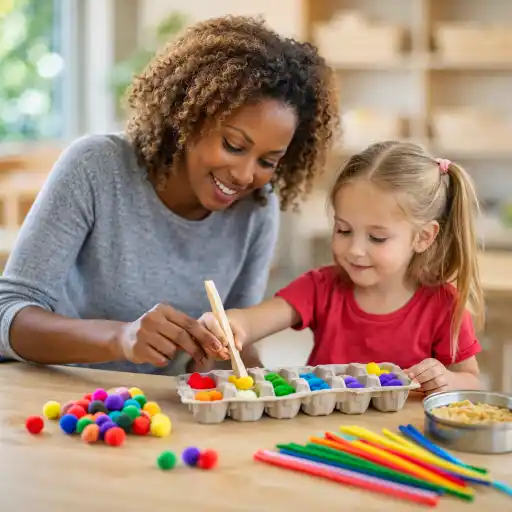
Safety checklist: remove choking hazards for younger groups, sanitize porous items when needed, and store sharp objects separately. state requirements vary - check your state licensing agency. Keep invitations limited (3–6 options) to avoid overwhelm and to support deeper engagement.
How do I design low‑prep invitations and teacher moves that deepen learning?
Design invitations that are quick to assemble and structured to encourage exploration rather than guided outcomes. Use a simple format: a short question prompt, 3–6 materials on a tray, and one documentation step.
- Sample invitation: "Which of these will float?" (materials: clear cup, sponge pieces, bottle caps, a small rock)
- Teacher moves (short, targeted): observe first; ask one open question; encourage a single test; invite description or a quick sketch.
- Documentation routine: take a photo, write one child quote, and tag the skill (counting, predicting) for later reflection.
For course-based strategies on structuring science routines and concise adult prompts, see Basic Science in Early Childhood Buy Now $25.00 and Building Early Science Foundations Buy Now $16.00—these trainings provide teacher‑tested scripts and checklists you can implement during daily invitations.
How can I adapt materials and invitations for diverse learners and family engagement?
Thoughtful adaptations ensure all children participate meaningfully. For infants and toddlers, scale up size and prioritize sensory experiences. For children with fine‑motor challenges, provide larger manipulatives and two‑handed tools. Use visual sequences and photo prompts for children needing predictable steps. For Dual Language Learners, label materials in home languages and accept explanations in the child’s preferred language. Invite families by sending one photo and a single question to try at home—this builds continuity between classroom and home.
Professional learning that addresses inclusion and culturally responsive materials is useful here: courses like CDA: Curriculum Alignment & Materials Buy Now $16.00 and Enhancing STEM Education for Infants and Toddlers Buy Now $16.00 explain practical adaptations and family partnership strategies that strengthen implementation across diverse classrooms. For resources that help teachers tailor invitations, scaffolds, and individualized plans to each child's specific needs, see Individualized Learning Online Courses.
How do I avoid common mistakes and sustain a materials‑based STEM approach?
Common pitfalls are predictable and fixable:
- ⚠️ Over‑directing: adults solving problems reduces inquiry—fix by asking one open question and waiting.
- ❗Too many materials: overwhelm shortens engagement—fix by limiting to 3–6 items.
- 🧼 Avoiding mess: skipping messy investigations loses high‑value exploration—fix by planning trays, smocks, and short cleanup routines.
- 📷 Poor documentation: learning disappears without evidence—fix with a repeatable photo + quote method.
Sustain the approach by rotating loose parts weekly, keeping a teacher planning card with the invitation question and learning goal, and scheduling brief reflection in staff meetings. Offer targeted PD to refresh skills—consider short courses and workshops on ChildCareEd to build consistent adult moves, documentation techniques, and unit ideas so your team can maintain fidelity over time.
FAQ
- Q: Do I need special kits to teach STEM with everyday items? A: No—open‑ended, recycled materials are highly effective; the key is the question, time to test, and adult prompts.
- Q: How long should invitations run? A: 10–20 minutes for focused invitations; multi‑day investigations can extend over weeks.
- Q: How do I include infants and toddlers? A: Scale materials to size, emphasize sensory tubs, and supervise closely—see Enhancing STEM Education for Infants and Toddlers Buy Now $16.00 for applied strategies.
- Q: How can I make documentation manageable for busy staff? A: Use a single photo and one child quote per invitation; compile into a classroom notebook to note growth.
- Q: Are these activities safe for licensing? A: Generally yes when you follow safety checks, but state requirements vary - check your state licensing agency.
Conclusion
Turning everyday items into meaningful learning experiences requires intentional prompts, simple teacher moves, and a predictable documentation routine. With a small set of organized #materials, a clear question, and consistent adult scaffolds, you can build daily opportunities for #children to test ideas, expand vocabulary, and practice early #STEM thinking. Start with one low‑prep invitation this week, rotate materials, and support staff with short PD such as Beautiful Junk, Building Early Science Foundations Buy Now $16.00, Basic Science in Early Childhood Buy Now $25.00, Enhancing STEM Education for Infants and Toddlers Buy Now $16.00, or CDA: Curriculum Alignment & Materials Buy Now $16.00 to deepen practice. Trust the play, document the thinking, and make room for inquiry every day.
- Balancing Physically Active Play in Child Care
- From Play to Planning: Building Culturally Competent, Child-Centered Curriculum
- Art from the Heart for Preschoolers: Open Ended Art Projects that Build Self-Esteem
- 45-Hour Infant and Toddler Curriculum
- Creating Engaging and Meaningful Learning Experiences
- Sensitive Periods in Montessori: Guiding Natural Learning
- Creating Environments that Nurture Growth and Community
- Texas Director Credential
- Balancing Active Play in Child Care
- Enhancing STEM Education for Infants and Toddlers
- CDA Certification en Español: Recursos y Consejos para Educadores Bilingües
- National Massachusetts Day for Kids: Explore the Bay State Through Play
- Preschool Schedule That Works: When to Plan Centers, Circle Time, and Outdoor Play
- How Can We Celebrate Every Family and Create a Classroom Where Everyone Is Represented?
- How Do Light vs. Heavy Activities Build Early Measurement Skills?
- Which Low-Cost Printables Make the Biggest Classroom Impact?
- How Can Child Care Providers Turn Everyday Routines into Learning Opportunities?
- How Can Child Care Providers Teach Young Children About Fairness and Equity?
- How Can Bilingual Printables Help Spanish-Speaking Families Feel Included?
- How Can Sensory Bin Ideas Promote Early Language Skills?
- How Can Child Care Providers Teach Young Children to Take Turns?
- How Can Child Care Providers Build a Developmentally Appropriate Curriculum for Infants?
- How Can Child Care Providers Teach Preschoolers to Wait Their Turn?
- How Can Child Care Providers Help Children Understand How Community Helpers Contribute?
- ¿Todos los niños deben participar en el tiempo de círculo?
- How Can Family Child Care Providers Carry Individualized Support Into Everyday Activities?
- What Makes a High-Quality Child Care Program?
- How Can Teachers Turn Everyday Play Into Learning Opportunities?
- How Can Toddler Sensory Play Become a Science Investigation?
- What Are the Best Ways to Support Cooperative Play in Preschool?
