Planting a classroom garden with preschoolers is a high-impact, low-cost way to combine science, social-emotional learning, motor development, healthy eating, and family engagement. When planned thoughtfully, a garden becomes a predictable learning routine where children can dig, plant, water, measure, observe changes, care for living things, and experience meaningful outcomes such as a flower blooming or a vegetable becoming ready to harvest. Starting with one container, windowsill planter, or small raised bed keeps the project manageable while giving children repeated opportunities to explore life cycles, weather, measurement, responsibility, and cause and effect. This article offers practical planning steps, inclusive adaptations, documentation ideas, and strategies for involving families so the garden remains sustainable throughout the season.
To strengthen nature-based learning, explore ChildCareEd’s self-paced online course Creating the Natural Outdoor Classroom  Buy Now $16.00. The course helps educators create outdoor environments where children can connect with nature through sensory experiences, exploration, and purposeful learning. Providers can use these principles to turn even a very small garden into an engaging classroom space that supports curiosity, cooperation, observation, and hands-on discovery. State requirements vary, so always check with your state licensing agency.
How do I plan a safe, developmentally appropriate classroom #garden?
Plan with purpose. Use a short numbered checklist to clarify scope, responsibilities, and learning goals:
- 🔎 Define scope: 1) Indoor pots or outdoor raised bed; 2) Amount of sunlight available. See space planning guidance at How can I start a small garden project with New York preschoolers?.
- 🧭 Align goals: Map 2–4 learning objectives (science observation, counting/measuring, vocabulary, responsibility) and plan one short assessment (photo + child quote) each month. ChildCareEd's curriculum connections include practical documentation tips in Growing and Learning: Classroom Gardens for Kids.
- 🤝 Assign roles: Specify staff lead, weekly watering roster (include child helpers), and family communications (permissions for tasting or photos).
- 📆 Make a simple timeline: seed-start, transplant, harvest, and off-season actions (seed-saving or indoor windowsill projects).
Why this matters practically: a clear plan prevents scope creep (too many beds, too many varieties) and keeps your team focused. For sample steps and small-start ideas, review How to Build a Classroom Garden.
What plants, materials, and layout work best for preschoolers?
Choose approachable plants and durable materials that minimize risk and maximize sensory payoff. Use enumeration to make selection easy:
- 🌿 Plant picks (easy wins): 1) Herbs (basil, mint), 2) Quick greens (lettuce, spinach), 3) Fast flowers (marigolds, sunflowers), 4) Radishes for rapid sprouting. Child-safe lists are essential—see List of Non-Poisonous Plants for Children and Non-Toxic Plants for Child Care Outdoor Spaces.
- 🧰 Containers & soil: 1) Use 1–5-gallon pots for single plants, half-barrels for squash or sunflowers; 2) Choose quality potting mix; 3) Ensure drainage—container gardening tips at Container Garden (AIHD).
- 🛠 Tools & labels: 1) Child-size blunt tools, watering cans, and durable plant labels that say name + “Look, don’t eat.” Labeling doubles as literacy practice and safety (see labeling ideas in ChildCareEd plant articles).
- ♻️ Materials for sustainability: compost starter (small worm bin or sealed compost) and recycled planters when appropriate. EPA and local partners can guide large-scale compost ideas referenced in ChildCareEd resources.
Tip: start with three plants per group so each child can claim a role (waterer, observer, recorder). For design inspiration and sensory ideas, see Little Explorers: Bringing Nature Into the Early Learning Classroom.
How can I involve preschoolers so garden tasks become measurable #learning experiences?
Young children learn best through repeated, short, hands-on experiences. Structure activities so they map to measurable outcomes:
- 🌱 Planting & observation (science/data): 1) Plant seeds in clear cups to watch roots; 2) Create a weekly growth chart and photograph plants next to a child-sized ruler. See classroom science ideas in Science in the Classroom.
- 🎨 Sensory & language (vocabulary): 1) Leaf rubbings, scent stations with herbs, and seed texture sorting build descriptive words; 2) Use plant labels and child-led tours to reinforce names.
- 🔢 Math & measurement: 1) Count seed rows, measure sprout height, graph days-to-sprout; 2) Use these records for assessment evidence and to show progress to families and funders.
- 🥗 Food & health: 1) Harvest microgreens or herbs for a supervised taste test (with permissions); 2) Connect to nutrition lessons—ChildCareEd’s Tiny Chefs and food-preparation resources are useful companions.
- 📔 Documentation ritual: 1) Keep a child journal with drawings and short dictated sentences; 2) Use photos + anecdotal notes for licensing and grant reports (sample documentation strategies in ChildCareEd guides).
Practical cadence: 10–220-minutefocused garden blocks, 2–3 times per week. Short, repeated exposures help children notice change and let you collect measurement-based evidence of learning.
How do we manage #safety, routines, licensing, and avoid common mistakes?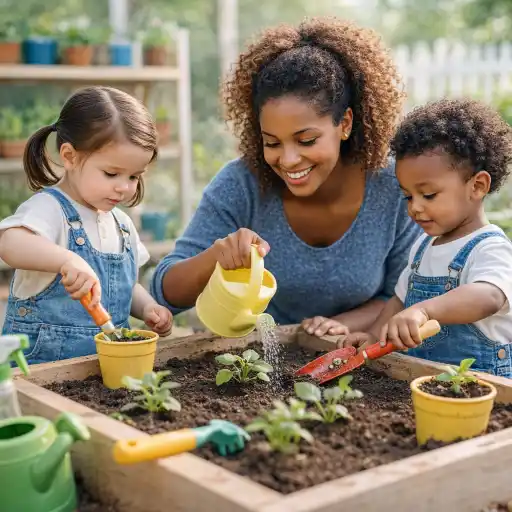
Safety and predictable routines are non-negotiable. Use this numbered checklist and learn the common pitfalls:
- 👀 Supervision & training: 1) Assign staff zones and do brief check-ins before outdoor sessions; 2) Train staff on plant ID, first aid, and Poison Control procedures (1-800-222-1222). ChildCareEd offers supervision and safety courses such as A Watchful Eye Buy Now $16.00.
- 🌿 Plant safety: 1) Identify and label all plants; 2) Remove unknowns; 3) Cross-check with non-poisonous plant lists.
- 🔒 Storage & chemicals: 1) Lock fertilizers, sprays, and sharp tools; 2) Favor organic, child-safe pest control methods.
- 📝 Permissions & health: 1) Obtain family permission for tasting and photos; 2) Check allergies and medication plans; 3) Post emergency numbers and incident reporting procedures. Remember: state requirements vary - check your state licensing agency.
Common mistakes and how to avoid them:
- ❌ Over-planting — Start with a small number of containers and scale up.
- ❌ No watering plan — Create a rotating chart that includes child helpers and staff back-ups.
- ❌ Ignoring unknown plants — Photograph and identify before allowing access.
For in-depth safety procedures and plant ID tools, see Non-Toxic Plants for Child Care Outdoor Spaces, and practice simple drills so staff act confidently in an incident.
How can I find funding, partners, and sustain the project year-to-year?
Scaling a garden depends on demonstrating small wins and building community support. Follow this numbered plan:
- 📸 Start small, document impact: 1) Begin with 1–3 containers; 2) Collect photos, quotes, and a simple growth graph to show learning.
- 💸 Seek small grants and local partners: 1) Search local grant aggregators like GrantWatch preschool grants; 2) Contact extension services, botanical gardens, or local nurseries for donations and training (ChildCareEd suggests Cornell Cooperative Extension and local botanical partners in regional guides).
- 🤝 Build community: 1) Invite families for planting days and harvest celebrations; 2) Recruit volunteers for seasonal maintenance; 3) Use partnerships for larger projects like compost systems (see compost and EPA resources referenced in ChildCareEd articles).
- 🧾 Budget & proposal basics: 1) List goals, materials, timelines, and evaluation methods; 2) Include letters of support and clear outcomes (photos + child work sample).
- 🔁 Plan for seasonality: 1) Shift to indoor seed-starting in winter or nature-table projects so learning continues year-round (resources in How can New York early childhood programs use garden-based learning?).
Small, well-documented projects win small grants more often than nebulous big plans. For example, we grant opportunities and practical starting steps, review regional funding and partnership ideas at ChildCareEd's small garden starter and national grant listings like GrantWatch.
FAQ
- Q: Do we need a lot of space? A: No—use containers, window boxes, or a single raised bed; see container options at AIHD Container Gardening.
- Q: How do we handle pests safely? A: Use observation, child-safe organic controls, and turn it into a science lesson.
- Q: Can infants be included? A: Sensory garden elements and supervised short experiences are fine—always follow licensing rules for infants.
- Q: What if a child ingests a plant? A: Call Poison Control at 1-800-222-1222 for guidance; call 911 for severe reactions. Document and notify families per licensing rules.
Conclusion
Planting a classroom #garden with preschoolers is an achievable, high-value investment in your program’s curriculum and community life. Start with a compact plan, prioritize child-safe plant choices and clear routines, and document every small win for families and funders. Use short, repeatable garden blocks tied to measurable learning goals (counting, measuring, observation journals) and lean on local partners or small grants to expand sustainably. For practical step-by-step guidance and training, ChildCareEd's articles and courses, such as How to Build a Classroom Garden and The Outdoor Classroom, offer ready-to-use content to help your team take the next step.
Grow intentionally, document thoughtfully, and celebrate each harvest—those moments matter for children, families, and your staff. Happy planting!
- CDA Home Visitor Subject Area 3 Part 3 Birth to 5
- From Tantrums to Triumphs: Equipping Preschoolers with Self-Regulation Skills
- CDA Bridge Bundle: Family Child Care without Portfolio Review
- CDA Bridge Bundle: Infant/Toddler without Portfolio Review
- CDA Bridge Bundle: Preschool without Portfolio Review
- Classroom Designers ONLINE
- Texas Director Credential
- CDA Infants/Toddlers: Brain Development and Gene Expression
- Staying Positive: Guidance for Preschoolers
- Environments That Inspire Independence and Exploration
- How to Build a Classroom Garden
- 15 Earth Day Activities for Kids That Teach Sustainability
- Earth Day Every Day: Simple Classroom Ideas to Inspire Young Environmentalists
- What Are Creative Ways to Use Nature as Your Classroom?
- 👶 ¿Cuáles son las proporciones y grupos requeridos en Dakota del Norte? 🏫
- List of Non-Poisonous Plants for Children: Safe Choices for Kids and Classrooms
- ¿Cuáles son las mejores actividades del Día de la Tierra para niños en casa o en el aula?
- Proporciones de Cuidado Infantil y Tamaños de Grupo por Edad en Maryland (Guía Rápida para Centros y Hogares)
- Proporciones de Cuidado Infantil y Tamaños de Grupo por Edad en Virginia (Guía Rápida para Centros y Hogares)
- How can we bring a farmers market and fresh fruit activities to preschoolers in California?
- How can we use prairie animals and nature activities with young children in Oklahoma?
- How can New York early childhood programs use garden-based learning?
- Growing and Learning: Classroom Gardens for Kids
- Celebrando la amistad en el cuidado infantil durante el Día de los Mejores Amigos
- Non-Toxic Plants for Child Care Outdoor Spaces
- How can I start a small garden project with New York preschoolers?
- How can I plant a classroom garden with preschoolers?
- How Can We Teach Young Children to Care for the Environment?
- How can gardening activities transform early childhood classrooms?
- Why Did They Cut the Plant? How Can We Explain Garden Maintenance to Young Children?
