Teach your little ones about the power of soap with this easy science activity. This simple demonstration supports early scientific thinking — prediction, observation, and cause-and-effect — and gives children concrete evidence that invisible forces (surface tension, hydrophobic interactions) produce observable results. Use this activity alongside Tomorrow's Einsteins: Infant and Toddler Science  Buy Now $16.00 and Brighter Futures: Social Emotional Development Buy Now $16.00 to plan learning objectives, scaffold language, and structure small-group reflections.
What materials and setup are needed for the soap and pepper activity?
- Pepper
- Water
- Liquid soap
- Bowl for water
- Bowl for soap
Directions:
- Fill a shallow bowl with water.
- Fill another small bowl with about 2 TBSP of liquid soap.
- Sprinkle a generous amount of pepper over the water.
- Have children dip their fingers in the soap.
- Have children touch the water’s surface with their fingers.
What safety, adaptations, and assessment should I consider?
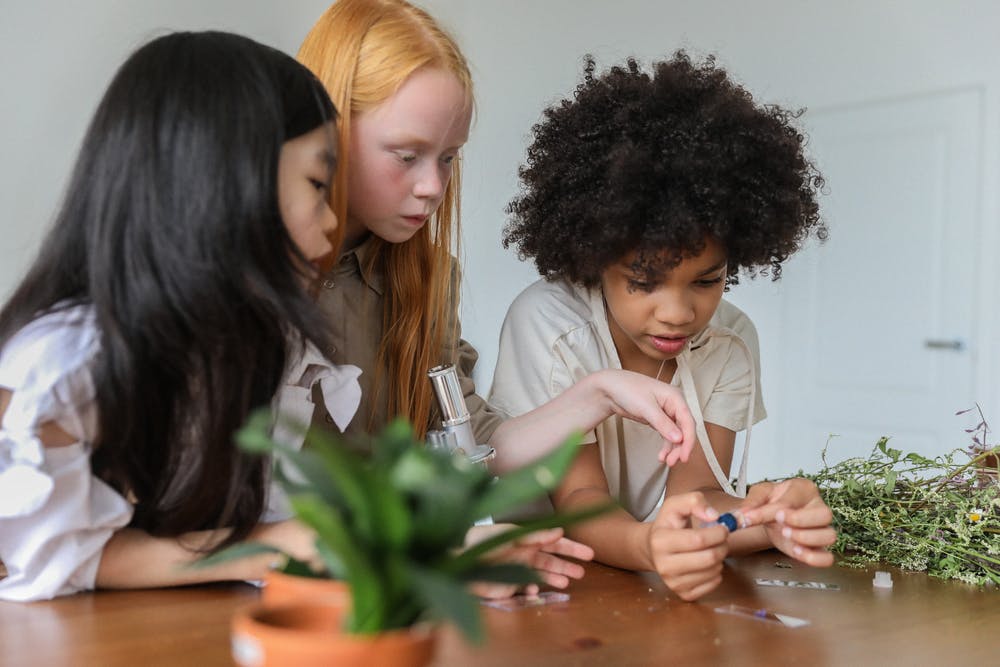 Observe safety and developmental appropriateness: never allow children to put pepper, soap, or water in their mouths. For infants or very young toddlers, the teacher should demonstrate while maintaining safe proximity; do not allow unsupervised finger dipping. Use minimal quantities of materials and place activities on trays to contain spills. (Teacher tip: model hand-washing after the activity.)
Age adaptations: For infants, focus on sensory exploration of smell and sight while the caregiver narrates the action. For toddlers and preschoolers, emphasize predictions, comparative trials, and language development. For mixed-age groups, provide shorter, adult-led demonstrations and then invite one or two older children to replicate under supervision.
Assessment suggestions: Use formative observations to capture whether children can make and test a prediction, use comparative language, or retell the results. Record one or two child quotes or a simple checklist aligned to your learning goal (e.g., "Made a prediction", "Described outcome", "Used new vocabulary"). This supports documentation for portfolios and planning.
How can I extend this activity to build longer-term learning?
Use the demonstration as a launchpad for scaffolded STEM exploration and cross-curricular connections. Try extension ideas below and consult related classroom activities for additional manipulatives and project ideas:
- Mix materials and compare outcomes — link to broader STEM unit: Easy Ways to Add STEM to Your Preschool Classroom.
- Pair with sensory and seasonal projects: sand, space, and science explorations to build observational routines.
- Use autumnal natural materials to design related investigations: Pumpkins, pinecones, and leaves.
- Encourage inquiry cycles and documentation by consulting: How can we encourage scientific thinking through hands-on exploration?
- Adapt activities for summer programming: Summer preschool activities that mix art, science, and sensory play.
- For more themed, kid-friendly STEM prompts: STEM-sational fun: spark preschoolers’ curiosity.
These internal article links provide concrete classroom sequences and additional activities you can pair with the soap-and-pepper demonstration to create multi-day investigations and to support program-level learning goals.
How can I use this activity to support ongoing learning and professional development?
Use this activity as a short, evidence-rich demonstration and then expand it into a planned learning sequence. For curriculum planning and teacher reflection, consult ChildCareEd for practical strategies and course-aligned lesson ideas. Visit ChildCareEd for the full catalog. Below are a few related courses that support planning and reflective practice; the list that follows includes short-course links you can add to staff professional development plans.
- Tomorrow's Einsteins: Infant and Toddler Science Buy Now $16.00
- Classroom Tools for Emergent Literacy Buy Now $16.00
- Brighter Futures: Social Emotional Development Buy Now $16.00
The soap-and-pepper demonstration is an ideal micro-experiment for introducing the cycle of scientific inquiry. Structure a brief, teacher-led investigation that explicitly names each step: ask a question, make a prediction, run a test, observe what happens, and reflect on the result. For young children, keep language concrete and use sentence stems such as, "What do we think will happen when...?," "I predict...," and "I saw...". Model the adult thinking aloud ("I predict the pepper will move away because the soap changes the surface of the water") to show how professionals describe hypotheses and evidence.
Teacher prompts and scaffolds:
- Ask an open-ended question to begin ("What will happen if I touch the water with soap on my finger?").
- Invite a child to predict and record that prediction with a short sentence or drawing.
- Perform the demonstration while naming actions and observations ("See how the pepper moves away from the soap? The soap changes how the water behaves.").
- Afterward, ask children to compare the result with their prediction and to explain similarities or differences.
How can I turn the soap-and-pepper idea into a controlled investigation for preschoolers?
Older preschoolers can handle simple variable testing. Create one clear independent variable per trial and keep other conditions constant (same bowl size, same amount of water, same number of pepper flakes). Suggested variables to compare include brand/type of liquid soap, amount of soap on the finger (a dab vs. a drop), or water temperature (room vs. slightly warm). Use a scaffolded data sheet or a classroom chart so children can mark outcomes with stickers or simple tallies.
- Choose one variable to test (for example: soap A vs soap B).
- Ask each child to predict which soap will move the pepper the farthest and why.
- Run each trial once with the same procedure; after each trial, measure the distance the pepper moved using an index card or a ruler and record results visually on a chart.
- Discuss patterns: Which soap moved the pepper the most? What do we notice about the soap that worked better?
These small experimental steps teach control of variables, measurement, replication, and how to read a simple results chart — foundational inquiry skills that align with preschool science standards.
How should I document learning and align this activity to curriculum goals?
Plan how you'll capture evidence for assessment and for family communication. Use a short checklist during the activity (one-line items) and an anecdotal note for each child who participates. Example checklist items include: "1) Made a prediction; 2) Used comparative language (more/less); 3) Referred to cause-and-effect; 4) Participated in reflection." Numbered lists should start at 1 for correct recordkeeping.
Sample documentation entry for a portfolio: "Child name: Sofia. Investigation: Soap & pepper. Prediction: 'It will make the pepper run away.' Observation: Sofia watched and said 'it jumps!' She used the words 'push' and 'away' when describing results. Next step: Invite Sofia to help design a follow-up test comparing two soaps."
To link this activity with curriculum goals, identify one or two measurable objectives (for example: 'Child will state a prediction before testing' or 'Child will use comparative language when describing outcomes') and collect one or two pieces of evidence (checklist mark and a quoted child phrase). For practical planning and further sequences, pair this investigation with suggested classroom resources such as "What are easy STEM activities I can do with preschoolers?" (/a/what-are-easy-stem-activities-i-can-do-with-preschoolers.html).
Summary: What are the key takeaways and next steps?
The soap-and-pepper activity is a short, safe demonstration that supports foundational scientific thinking: asking questions, predicting, testing, observing, and reflecting. Use explicit teacher narration and sentence stems to scaffold young children's language and thinking. For older preschoolers, structure simple controlled comparisons, record outcomes visually, and capture evidence with a short checklist plus an anecdotal quote for portfolios. Keep safety procedures (no ingestion, supervised dipping) explicit and model hand-washing after the activity.
Next steps for teachers: adapt the investigation to your group's developmental level, identify one curriculum objective to assess, and incorporate the activity into a multi-day STEM unit. For planning tools and course-aligned strategies, refer to ChildCareEd courses listed above and related classroom articles linked on this page.
#scienceactivities #stemforkids #preschoolscience #earlylearning101 #earlychildhoodlearning #childcareprovideres #preschoolfun #inhomedaycare #childcarecenter
- CDA Home Visitor Subject Area 3 Part 3 Birth to 5
- Tomorrow's Einsteins: Infant and Toddler Science
- Teach with Respect!
- Creating Environments that Nurture Growth and Community
- Texas Director Credential
- Building Early Science Foundations
- Access for All: Inclusion and the ADA
- Montessori Cultural Activities: Exploring the World Through Play and Learning
- Enhancing STEM Education for Infants and Toddlers
- Every Moment Matters: Schedules and Transitions
- Las Mejores Ideas de Excursiones para Guarderías en Dakota del Norte
- How can New York early childhood programs use garden-based learning?
- Summer Preschool Activities for Art, Science, and Sensory Play
- How can superhero-themed winter science activities energize your classroom?
- How can we explore sand, space, and science with young children in preschool settings?
- How can I plant a classroom garden with preschoolers?
- How Can Child Care Programs Build Effective Outdoor Classrooms and Nature-Based Childcare?
- How can simple science experiments transform my preschool classroom?
- How Can Childcare Programs Use Nature-Based Science Activities to Strengthen Learning?
- What’s Happening Outside? Fall Science Adventures for Preschoolers
- How to Become a Kindergarten Teacher in Texas: Which Certification Path Should You Choose?
- How Can Child Care Providers Design Learning Centers That Support Play and Development?
- How Can Child Care Providers Create Print-Rich Early Childhood Environments?
- How Do Classification Questions Build Marine Science Vocabulary?
- How Can Simple Sorting Activities Build Sustainable Habits in Early Childhood?
- How Can One Science Question Become a Preschool Investigation?
- What Learning Centers Should Every Preschool Classroom Have?
- How Can Toddler Sensory Play Become a Science Investigation?
- How Can You Turn a Preschool Science Video into Hands-On Learning?
