When children see an adult trim a plant, they may worry that something healthy has been harmed—or wonder why a plant needs cutting at all. You can turn that moment into an accessible lesson about growth, care, and change; for deeper strategies to nurture young children’s curiosity through hands-on inquiry, explore ChildCareEd’s Building Early Science Foundations  Buy Now $16.00 course. It offers practical ways to support exploration and discovery, helping you make garden conversations more meaningful and confident.
Why does a simple pruning moment matter to children?
For adults, trimming a stem may seem like an ordinary maintenance task. For a young child, the same action can look surprising or even upsetting: “Why did they cut the plant?” Their question is an invitation to slow down, acknowledge what they noticed, and explain that caring for living things sometimes involves removing a part that is damaged, dry, or growing in a way that makes it harder for the plant to thrive.
These conversations support more than gardening knowledge. Children practice observation, language, prediction, and cause-and-effect reasoning as they compare a plant before and after care. Garden experiences also bring natural opportunities for patience, shared responsibility, cooperation, and fine- and gross-motor development, as described in the University of Arizona Cooperative Extension’s guidance on gardening with children in early care and education.
Start with the child’s perspective rather than correcting it. Try, “You noticed I took off that brown leaf. What do you think might be happening?” Then offer a clear, reassuring explanation: “We’re taking away a part that is no longer healthy so the plant can use its energy to keep growing.” Avoid implying that every plant needs pruning or that cutting guarantees new growth; the right care depends on the plant and the situation.
- Recognize the question as curiosity, not misbehavior.
- Use specific words—stem, leaf, dry, healthy, growing—and point to what children can observe.
- Invite children to share ideas before you provide an explanation.
When adults respond thoughtfully, a small moment becomes a lesson in care and #science.
How can we explain pruning in words young children understand?
Use short, concrete explanations connected to visible evidence. “This leaf is brown and dry. We are removing it carefully,” is easier to understand than “The plant needs maintenance.” You can explain that people sometimes trim plants to remove dead or damaged parts, manage growth, or help a plant fit its space—but keep the reason accurate for the plant in front of you. Children do not need a detailed horticulture lecture; they benefit from honest language they can connect to what they see.
A helpful conversation follows a simple sequence: notice, name, explain, and invite. First, notice together: “What do you see on this stem?” Name the feature: “This leaf is yellow.” Explain your purpose: “I’m taking off this leaf because it is dry.” Then invite a thought or prediction: “What do you think the plant will look like tomorrow?” The answer may be uncertain, and that is useful. Return to the plant later and observe together rather than promising an outcome.
Use comparisons carefully. A “plant haircut” can make the idea playful, but explain that plants are living things with different needs; they do not all need the same kind of trim. Ask questions that keep the conversation child-led:
- “What changed after we took a closer look?”
- “Which parts look firm, and which look dry?”
- “How could we check whether the plant is changing?”
Young children learn through repeated hands-on experiences and revisiting questions, as Penn State Better Kid Care explains in its guidance on gardening with young children. Keep explanations open-ended, reassuring, and grounded in observation.
How can garden maintenance become an early science investigation?
Make the care task a small inquiry rather than a demonstration children simply watch. Before pruning, invite the group to observe the plant. Encourage them to notice leaf color, stem position, or whether a part feels dry (children should touch only when the plant is known to be safe and the activity is supervised). Ask what they wonder about and what they predict might happen after the adult completes the care task.
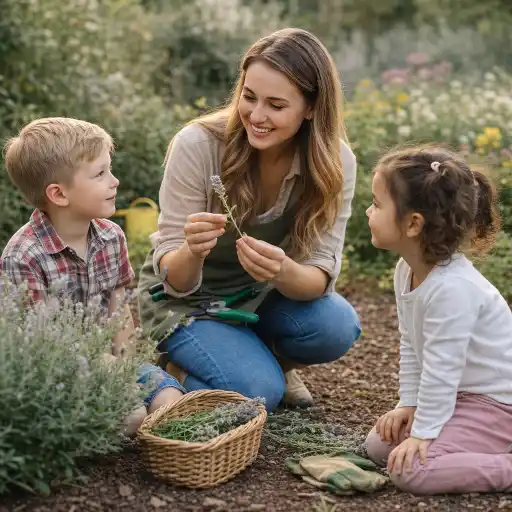
Afterward, document what children noticed. A drawing, photo, dictated sentence, or simple “before and after” chart helps them revisit the experience. On a later day, compare the plant’s appearance and discuss what changed—and what did not. This approach reinforces that scientific thinking involves looking closely, asking questions, making predictions, and checking evidence over time, not guessing the “right” answer immediately.
Try this quick routine:
- 🔎 Look: Invite children to describe the plant without touching it first.
- Wonder: Ask, “What do you think this dry leaf tells us?”
- Explain: Tell children why an adult plans to remove a particular part.
- Record: Draw or photograph the plant before and after care.
- Revisit: Look again later and compare observations without guaranteeing a particular result.
Gardens make rich learning settings because children can observe change over time, test ideas, count leaves, and use descriptive language. KidsGardening’s early childhood gardening lessons and activities offer additional ways to connect plant care with plant parts, soil, life cycles, and pollinators. These repeated experiences strengthen #curiosity and help children see that questions can lead to further investigation.
How can children participate while adults keep gardening safe?
Children can meaningfully contribute to garden care without handling sharp tools. Give them roles suited to their age, skills, and comfort: observing, describing, drawing, carrying a light empty basket, collecting approved fallen leaves, or helping water with a small container. Adults should manage cutting and keep pruning shears, sharp tools, fertilizers, and other potentially hazardous materials secured and out of children’s reach.
Before garden time, review a few consistent expectations: stay with the group, use only the materials an adult offers, do not taste plants, and wash hands after gardening. Check children’s allergies and family guidance, identify the plants in the space, and supervise closely. Choose accessible tasks and adaptations so children with varied mobility, sensory, communication, or motor needs can participate—for example, offering a seated observation role, picture choices, or a larger-handled watering tool.
For a safe, inclusive routine:
- Prepare the garden area and inspect for hazards before children arrive.
- Use child-size, non-sharp materials only for children’s assigned tasks.
- Keep unknown plants and all cutting tools inaccessible until an adult has identified and managed them.
- Offer participation through looking, listening, speaking, drawing, or helping with a supervised task.
- Wash hands after garden activities, and follow program health and safety procedures.
The University of Arizona Cooperative Extension advises close supervision, attention to allergies, closed-toe shoes, and keeping sharp or mechanical tools away from children. Practices and rules can differ by location; state requirements vary - check your state licensing agency. The goal is not to involve every child in every task, but to offer each child a safe, respectful way to engage in #care.
How can educators handle worries and avoid common communication pitfalls?
A child may say, “You hurt the plant,” or “Now it won’t grow.” Resist the urge to dismiss the concern or insist that the plant will be fine. Validate what the child saw: “You saw me cut a stem, and that looked worrying.” Then share what you know: “I’m removing this damaged part. We’ll keep watching the plant to see how it changes.” This response honors the child’s feelings while modeling that adults can explain their choices and remain open to evidence.
Common pitfalls include using vague phrases such as “It needed a haircut,” treating all brown leaves as a reason to cut, promising that pruning will make a plant grow faster, or allowing children to use sharp tools without appropriate safeguards. Avoid these by explaining the specific reason, checking reliable plant-care guidance when uncertain, and making observation—not certainty—the focus. If a plant is unfamiliar or its condition is unclear, pause the activity and consult a knowledgeable source rather than improvising a diagnosis.
Consider preparing a short conversation guide for staff:
- Notice: “What did you see me do?”
- Validate: “That looked surprising.”
- Explain: “I removed this dry part carefully because…”
- Invite: “What should we look for when we check the plant again?”
Consistent language helps children feel secure and helps educators respond calmly in the moment. For additional professional learning, ChildCareEd’s Basic Science in Early Childhood Buy Now $25.00 course focuses on intentional science experiences, investigation, questions, and experimentation. You can also explore Creating the Natural Outdoor Classroom Buy Now $16.00 for ideas on using outdoor spaces as opportunities for exploration and learning.
Conclusion: What should children take away when a plant is trimmed?
When a child asks, “Why did they cut the plant?” the most helpful answer is clear, gentle, and specific: an adult removed a particular part for a reason, and the group can observe what happens next. Explain what you know without promising a result, invite children to share their theories, and return to the plant over time. In this way, maintenance becomes a meaningful opportunity to explore plant needs and change.
Keep safety at the center: adults handle cutting tools, children receive developmentally appropriate roles, and the garden is checked for hazards and known plant risks. With intentional conversation, observation, and documentation, routine care can support early science, language, patience, and shared responsibility. To extend your learning, Enhancing STEM Education for Infants and Toddlers Buy Now $16.00 offers another course-based opportunity to consider how inquiry and exploration fit into young children’s learning. The plant may be trimmed in a minute; the questions it inspires can keep growing.
Explore related ChildCareEd courses
- 45 Hour Child Growth and Development
- 45 Hour Preschool Methods and Materials
- Birth to Five CDA Credential with Portfolio Review
- 45 Hour Infant and Toddler Methods and Materials
- 45 Hour School Age Methods and Materials
- CDA Bridge Bundle: Family Child Care without Portfolio Review
- Emergent Learning & Development
- Every Moment Matters: Schedules and Transitions
- CDA Certification en Español: Recursos y Consejos para Educadores Bilingües
- 🔍 ¿Qué ves cuando observas a un niño aprender?
- Good Friday in the Classroom: A Kind Approach for Early Learners
- ¿Cuáles son las mejores actividades del Día de la Tierra para niños en casa o en el aula?
- 10 Ejemplos de Cómo la Cultura Influye en el Desarrollo Infantil
- Reglas de Cuidado Infantil en Illinois
- Proporciones de Cuidado Infantil y Tamaños de Grupo por Edad en Nueva Jersey (Guía Rápida para Centros y Hogares)
- Proporciones de Cuidado Infantil y Tamaños de Grupo por Edad en Virginia (Guía Rápida para Centros y Hogares)
- Cómo Celebrar el Día Nacional del Kindergarten
- Lista para Guardería en Casa en California: Cómo Iniciar una Guardería en el Hogar
- Temas y Actividades para el Día Nacional del Kindergarten para Proveedores
- Consejos de Supervisión Activa para Salones de Preescolar y el Juego al Aire Libre
- How can New York early childhood programs use garden-based learning?
- How can New York childcare programs help children in the concrete jungle fall in love with nature?
- Canciones, juegos y preguntas de círculo para niños
- Cómo simplificar la capacitación para sus empleados de daycare
- How can I plant a classroom garden with preschoolers?
- How can gardening activities transform early childhood classrooms?
- How Can One Plant Help Children Notice Gradual Change Outdoors?
- Why Did They Cut the Plant? How Can We Explain Garden Maintenance to Young Children?
