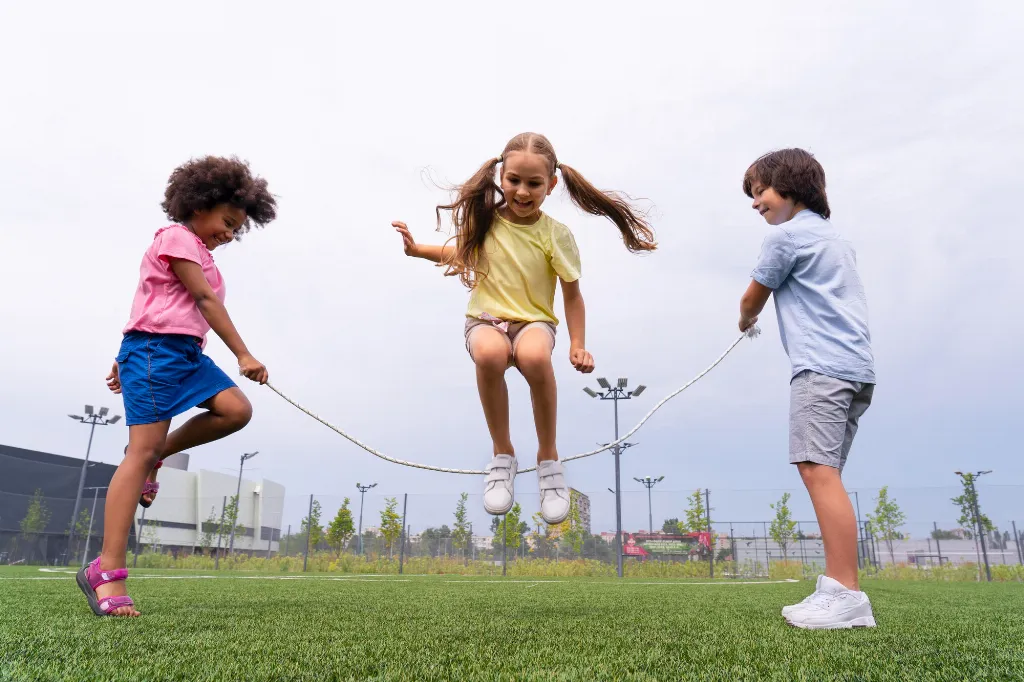
 As a caring colleague you want fun, simple plans for your #schoolage group. Good activities mix learning, movement, and friendship. Use both #indoor and #outdoor time each day to help kids grow their bodies, brains, and social skills. Short play bursts and hands-on projects work best for busy schedules.
This article gives clear ideas you can use tomorrow, tips to adapt for different needs, and safety reminders. You’ll also find links to ready resources from ChildCareEd and safety guidance from the CDC.
For quick lesson plans and printable activities, see Indoor and Outdoor Activities on ChildCareEd.
What indoor activities keep school-age children active, learning, and safe?
Indoor time can be active and learning-rich. Use large-muscle games, hands-on STEM, and quiet creative centers. Try short stations so many children participate without long waits. For tested ideas and step-by-step games, look at ChildCareEd’s Indoor and Outdoor Gross Motor Activities.
- 🏃♀️ Movement stations (5–10 minutes each)
- 🔸 Tape stepping stones for hopping and letter-sounds practice.
- 🔸 Balloon keep-up or soft-ball toss into baskets for coordination.
- 🧪 Hands-on STEM (20–30 minutes)
- 🔸 Build a bridge from recycled boxes and test with toy cars.
- 🔸 Simple maker projects: straw-and-connector towers (see Strawbees after-school STEM).
- 🎨 Quiet creative corners
- 🔸 Process art or sensory tubs for hands-on thinking.
- 🔸 Story stones or writing prompts to boost literacy.
- ✅ Safety tips indoors:
- 🔸 Clear hard edges and move small-group stations apart.
- 🔸 Demonstrate moves, use soft props, and rotate groups to reduce waiting.
For more indoor games and printable guides, check the ChildCareEd list of gross motor and movement resources like The Gross (Motor) Truth, which has many classroom-ready ideas.
What outdoor activities build skills, curiosity, and good health?
Outdoor time offers space, nature, and fresh air. It supports physical health and learning. Use the playground, garden, or open lawn for activities that teach balance, science, and teamwork. ChildCareEd’s Outdoor Spring Play has many nature-based ideas you can adapt year-round.
- 🌿 Nature exploration (30–40 minutes)
- 🔸 Scavenger hunt: items to find by shape, color, or smell. For detailed seasonal lists and printable clues you can use outdoors, see our Scavenger Hunt January guide.
- 🔸 Nature journaling: draw or write one discovery each child makes.
- ⚽ Active play and gross motor (15–30 minutes)
- 🔸 Obstacle course using cones, logs, or tape lines for balance.
- 🔸 Group games like relay races, target kick, or parachute play.
- 🌱 Garden and STEM projects (ongoing)
- 🔸 Plant a small herb bed; children water, measure growth, and record results.
- 🔸 Pond or bug hunt to learn life cycles and habitats.
- 🩺 Safety and health outdoors
- 🔸 Protect from sun and heat: hats, shade, water breaks. See CDC guidance: Outdoor Play and Safety.
- 🔸 Check play surfaces, helmet use for wheels, and insect precautions.
Plan varied surfaces (grass, mulch) to build balance. Rotate nature prompts each week so the environment stays fresh and children keep curiosity alive.
How can I adapt activities for mixed ages and children with different needs?
Every group is mixed. Simple adaptations keep children included and proud. ChildCareEd explains using two-level goals and visual supports in their gross motor and classroom materials resources like What classroom materials best foster learning and creativity?.
- 🔧 Offer 2 choices for each challenge
- 1) Easier option (e.g., step across the tape).
- 2) Harder option (e.g., hop on one foot across the tape).
- 🤝 Pairing and peer helpers
- 🔸 Buddy system: a peer coach models and praises attempts.
- 🔸 Rotate leaders so everyone gets a chance to guide.
- 🪑 Alternative positions and tools
- 🔸 Convert standing tasks to seated ones (arm throws, sponge passing).
- 🔸 Use adapted equipment: larger/light balls, grip aids, or visual cues.
- 📋 Visual supports and routines
- 🔸 Picture cards or taped paths show steps.
- 🔸 Use timers and short, repeatable routines—this helps children follow along and feel successful.
Observe and note progress with a simple checklist. If you suspect a developmental delay, follow your program’s referral policy. For ideas on centers and managing choices, see Week of the Young Child activities Buy Now $0.00 and play-center organization tips like those in the Research & Play guide on organizing centers.
How do I organize time, transitions, and avoid common mistakes?
Good planning makes activities run smoothly. Use short movement breaks, clear signals, and routines so kids know what comes next. Transition tools work well: timers, songs, or a visual schedule. For proven transition strategies, see tips like the ones in 6 Transition Strategies for Children.
- 🕒 Daily sample schedule
- 1) Morning arrival: 15–20 min play centers or choice time.
- 2) Mid-morning: 5–8 min movement break (tape stones or dance).
- 3) Outdoor block: 20–30 min free and guided play.
- 4) Afternoon: 15–25 min STEM or art project, then calm down time.
- 🚫 Common mistakes and fixes
- ❌ Too hard too fast — Start simple and add one challenge at a time.
- ❌ Long waits — Use stations and small groups to cut lines.
- ❌ Poor supervision — Position adults with clear sight lines; use one stop signal (clap or bell).
- ❌ Overloading shelves — Rotate materials and keep fewer choices to reduce overwhelm.
- 📌 Licensing and safety note
- 🔸 State rules matter: state requirements vary - check your state licensing agency.
- 🔸 Keep emergency plans, sun and water safety, and first aid current.
Short, repeated activities are easier to staff and more successful for children. Use clear roles for staff during outdoor time and keep families informed about what you do and why.
Conclusion
1) Mix short bursts of #movement and choice-based #play every day. 2) Use both #indoor and #outdoor spaces to teach skills and curiosity. 3) Adapt tasks with two-level choices, visual supports, and peer helpers so all children join in. For ready-made lesson ideas and printable resources, prioritize ChildCareEd guides like Indoor and Outdoor Activities and the gross motor resources linked above.
Quick FAQs
- Q: How long should outdoor play be for school-age kids? A: Aim for at least 20–30 minutes when possible; break into shorter times if needed.
- Q: What if weather limits outdoor time? A: Move to indoor active stations and use tape lines, balloons, or short obstacle courses.
- Q: How often rotate materials? A: Every 2–6 weeks or when interest drops.
- Q: When should I refer a child for extra support? A: If you see ongoing delays in balance or basic skills, document and follow your referral steps.
You are making a big difference. Keep plans simple, be flexible, and celebrate small wins. For more classroom tools, training, and articles, visit ChildCareEd’s resource library and the CDC outdoor safety page linked above.
- Today Is Earth Day!
- Bye Bye Winter: The Role of Outdoor Play in Early Childhood Development
- ❄️ ¿Qué actividades al aire libre funcionan bien para los niños de Illinois en cada estación? 🌷🍂
- Wildfire Smoke and Air Quality: When to Keep Kids Inside in California
- ¡Obtén Tu Certificación de Cuidado Infantil de 90 Horas En Línea!
- ¿Cuáles son las mejores actividades del Día de la Tierra para niños en casa o en el aula?
- How can child care programs boost physical activity for young children?
- How can New York early childhood programs use garden-based learning?
- How can we build a Minnesota summer program that keeps school-agers engaged?
- Get Moving: How Can Child Care Programs Build Physical Activity Into the Daily Routine?
- Indoor and Outdoor Activities for School-Age Programs
- Can traditional child care programs add forest preschool activities without starting a new program?
- After-School Activities for Kids: Calm, Creative, and Active Ideas for Every Energy Level
- Push, Pull, Carry, Move! Heavy Work Activities for School-Age Kids
- Common After School Activities Kids Get Bored With—and What to Try Instead
- Childcare License Texas: Which Permit Do You Need for the Program You Want to Open?
- After School Activities for Elementary Kids Who Finish Homework Early
- What School-Age Activities Create Engaging, Inclusive, and Well-Managed Programs?
- How Can Teachers Plan Indoor Activities Before Bad Weather Disrupts the Week?
- How Can Child Care Providers Explain Weather-Related Changes to Outdoor Play Plans?
