Leaves offer a low-cost, high-impact way to connect art, #STEM, sensory exploration, language development, and social learning. A short nature walk, collection basket, or simple sensory table can invite children to compare colors, shapes, sizes, textures, and patterns while practicing observation, prediction, sorting, counting, and descriptive vocabulary. Children can also use leaves for printing, rubbings, collages, measurement activities, scientific investigations, and collaborative artwork. This article provides child care directors and teachers with practical activity setups, inquiry-based teaching routines, classroom management tips, documentation strategies, and family engagement ideas that can be implemented immediately.
To strengthen nature-based learning, explore ChildCareEd’s self-paced online course Creating the Natural Outdoor Classroom  Buy Now $16.00. The course helps educators design outdoor environments where children can connect with nature through sensory exploration and purposeful learning experiences. Providers can also take Building Early Science Foundations Buy Now $16.00 to learn how hands-on investigation can foster children’s curiosity and early scientific thinking. For a ready-to-use classroom extension, ChildCareEd’s Leaf Sorting & Color Matching Activity Buy Now $0.00 encourages children to collect, examine, classify, and compare leaves by color, size, and shape.
What learning goals do leaf-themed activities support?
- Science inquiry skills: asking questions, making predictions, collecting evidence, and comparing outcomes — a core idea in Worth's early science framework.
- Math concepts: sorting, counting, measuring (circumference, area), and estimation; see practical math tie-ins in autumn STEM projects.
- Fine motor and creative expression: cutting, gluing, rubbing, and collage deepen hand strength and planning; try the leaf craft ideas in Developing Skills Through Fall Crafts.
- Language & social-emotional learning: descriptive vocabulary (vein, stem, decayed), storytelling with leaf-people, and cooperative investigations.
Which practical leaf art and STEM activities can I set up easily?
- 🍂 Leaf rubbings + observation journal: Tape a leaf under paper, use crayons to reveal veins; have children draw and write one sentence about what they notice. Reference: Autumn Leaf Investigation Table.
- 🎨 Contact-paper falling leaf collage (process art): Sticky-side contact paper on the floor or window invites arranging and discussing composition; see a step-by-step at Falling Leaf Art and Science.
- 🔬 Leaf chromatography: Extract pigments with rubbing alcohol and coffee filters to reveal hidden colors—perfect for older preschoolers and kindergarteners; inspired by ChildCareEd STEM ideas.
- 🧪 Salt crystal leaves or baking-soda-painted leaves: combine art and chemistry—grow crystals on leaves or watch fizzing color changes to discuss reactions and crystallization (see Living Life & Learning lists and Leaf STEM Activities).
- 🌳 Loose-parts leaf sorting and patterning station: invite children to sort by color, symmetry, or vein pattern; use the free Leaf Sort Activity Buy Now $0.00 for printable mats.
Differentiate by age: toddlers get sensory bins and simple matching; preschoolers add measurement and recording; older children extend to hypothesis-driven experiments.
How do I structure inquiry and documentation so science learning is clear?
Turn play into documented inquiry with a simple routine: Question → Predict → Test → Observe → Represent. This mirrors recommended early science practice in research. For practical strategies to invite and scaffold children’s questions in everyday activities, see Why ‘Why’ is the Magic Word: How Early Education Turns Questions into Quests.
- Start with a provocation: a leaf mystery ("Why do some leaves have spots?") or a sensory tray that prompts questions. ChildCareEd’s outdoor sensory guidance and leaf theme pieces provide strong provocations (Nature’s Classroom).
- Use simple tools: clipboards, magnifiers, a balance scale, and transparent trays. Collect photos and samples for a class 'leaf museum.'
- Record: Have children dictate observations for staff to scribe, or use audio clips and photos. A quick chart (prediction vs. result) captures process without high-stakes assessment.
- Share and represent: drawings, labeled leaf cards, comparative charts, or a short circle-time report-out. These representations build science communication and literacy.
Tip: include environmental awareness—discuss decomposition, habitat, and stewardship—making science meaningful and service-oriented.
How do I manage safety, inclusion, and everyday logistics?
Practical planning keeps leaf activities joyful and safe. Key considerations:
- 👀 Supervision & group size: Use small-group rotations (10–15 minutes per station) so staff can observe and scaffold learning. ChildCareEd recommends short rotations for toddlers and preschoolers in fall setups (Easy Autumn Activities).
- 🩺 Allergies & choking: Check family notes before using food items (pumpkin guts, seeds). Avoid small parts for infants/toddlers and label materials. State requirements vary - check your state licensing agency.
- 🧼 Hygiene and clean-up: Plan handwashing after sensory bins, provide wipes, and rotate washable materials. Keep a supply bin of extra clothes for messy outdoor sessions.
- ♿ Inclusion: Adapt tasks—larger tweezers for fine-motor differences, verbal labeling for emergent language learners, multisensory options for children with sensory processing differences.
- ❌ Common mistakes & fixes:
- Too many open choices → narrow to 2–3 invitations.
- No documentation → assign a quick photo-and-quote routine at the end of each block.
- Weather backups missing → always have an indoor leaf sensory or contact-paper station ready.
How can I involve families and extend leaf learning beyond the classroom?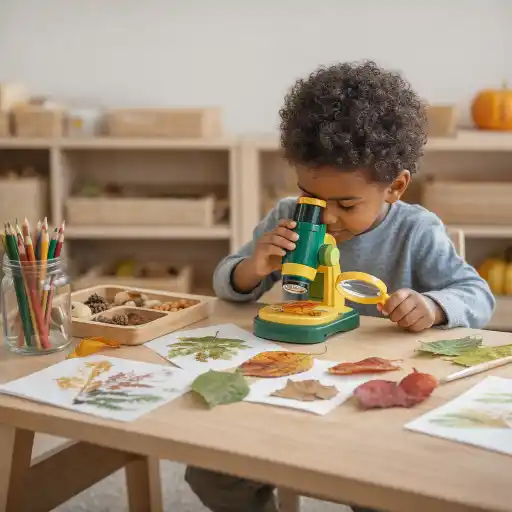
Family partnerships amplify learning and keep children exploring at home. Practical strategies:
- 📣 Share simple home invitations: a one-page scavenger hunt (collect 3 different leaves), a mini chromatography kit, or a leaf suncatcher to finish at home. Use free ChildCareEd printables and lesson ideas as take-home inspiration (free resources).
- 📸 Weekly photo share: post a classroom gallery and invite families to add pictures of leaves from their neighborhood—great for showing regional diversity in deciduous life (Center Ideas Buy Now $0.00).
- 🤝 Bring in expertise: invite a local arborist or gardener, or plan a neighborhood leaf walk. Field trips expand observation opportunities and community ties.
- 🧾 Family tips: give short how-to notes (safety, collecting guidelines, and extension questions) so families know how to scaffold talk and observation together.
Conclusion — What are the quick takeaways and FAQs?
Summary:
- Leaf-based activities are versatile across domains: #leaves support #STEM, #art, #sensory, language and social skills.
- Keep setups simple: 2–3 focused invitations, short rotations, and clear documentation (photo + child quote) make learning visible.
- Plan for safety and inclusion; check state licensing rules and family allergy notes.
FAQ (quick):
- Q: How long should activities run? A: 10–30 minutes per station depending on age; repeat across the day for practice.
- Q: Can I use fake leaves? A: Yes—real leaves add sensory richness, but faux leaves work for continuity, especially in warm climates (Fantastic Fun & Learning).
- Q: How do I document science outcomes? A: Use a one-page chart: question, prediction, result, and a photo. Dictated child language counts as evidence.
- Q: Where to find ready-made materials? A: ChildCareEd has free printable activities and lesson packs for leaf themes and center ideas (ChildCareEd resources).
Leaf themes are low-cost, high-return. Start small, document what children notice, and use those observations to plan the next question. When children follow their curiosity with materials and intentional staff prompts, learning becomes memorable and transferable.
- CDA Home Visitor Subject Area 3 Part 3 Birth to 5
- Many Colors, One Canvas: MD ECE Conference
- CDA Home Visitor Subject Area 2 Part 3 Birth to 5
- Power of Art: Bldg Self-Esteem & Positive Behavior for ALL Abilities
- Art from the Heart for Preschoolers: Open Ended Art Projects that Build Self-Esteem
- Texas Director Credential
- CDA Infants/Toddlers: Brain Development and Gene Expression
- CDA Infants/Toddlers: Stages of Development
- Montessori Cultural Activities: Exploring the World Through Play and Learning
- Enhancing STEM Education for Infants and Toddlers
- Pumpkins, Pinecones, and Leaves: Autumn-themed STEM Projects
- 👶 ¿Cuáles son las proporciones y grupos requeridos en Dakota del Norte? 🏫
- Recursos en Español sobre el Sueño Seguro del Bebé
- Proporciones de Cuidado Infantil y Tamaños de Grupo por Edad en Maryland (Guía Rápida para Centros y Hogares)
- Proporciones de Cuidado Infantil y Tamaños de Grupo por Edad en Virginia (Guía Rápida para Centros y Hogares)
- Actividades de Otoño Fáciles para Preescolares esta Temporada
- Cómo Trabajar en el Cuidado Infantil en California: Requisitos y Pasos
- Las Mejores Ideas de Excursiones para Guarderías en Dakota del Norte
- Cute Fall Picture Ideas Teachers Can Try in the Classroom
- Capacitación CDA gratuita en Illinois
- Autumn Activities for Toddlers and Preschoolers
- Calabazas, hojas y manzanas: actividades de otoño para preescolares
- Celebrando la amistad en el cuidado infantil durante el Día de los Mejores Amigos
- Canciones, juegos y preguntas de círculo para niños
- Cómo simplificar la capacitación para sus empleados de daycare
- How can seasonal activities (spring, summer, fall, winter) combine fun with clear educational goals?
- How can leaf-themed art and science activities deepen learning in my child care program?
- Free Weekly Lesson Plan for Preschool Classrooms
- Can You Build a Leaf Bridge? Fall STEM Challenges for Pre-K
- How Can Themed Activity Bundles Simplify Weekly Planning?
