Never too old or too young for a good scavenger hunt. Scavenger hunts are an efficient, developmentally appropriate strategy to assess and practice color recognition, observation, classification, expressive vocabulary, and emergent literacy in early childhood classrooms. Below are adaptable designs, materials lists, assessment prompts, and safety considerations you can use immediately. Two targeted professional development courses that support these strategies are Classroom Tools for Emergent Literacy Buy Now $25.00 and Math Foundations in Early Childhood  Buy Now $16.00, both useful for planning purposeful hunts that advance curriculum goals.
How do I plan a scavenger hunt for preschoolers that builds specific skills?
Begin by defining one or two measurable objectives (for example: "child will identify all basic colors in a set of 6 objects" or "child will name two items that begin with the /m/ phoneme"). Choose a confined play area and limit choices to reduce cognitive load. Use picture cues, simple checklists with icons, and adult-supported small groups (2–4 children) so each child has opportunity to point, label, and practice turn-taking. Scaffold with the adult modelling search language: "I notice something round and red—what could it be?" Collect quick observational notes (two sentences per child) after the activity to document progress toward the objective.
What materials and modifications work for kindergarteners and early elementary children?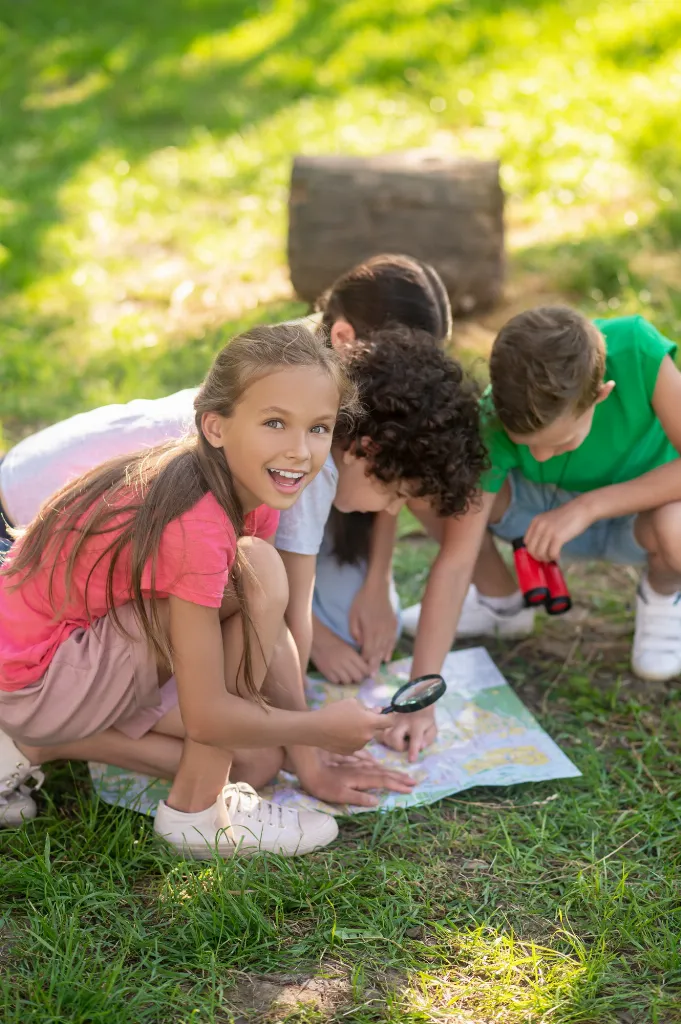
For kindergarten and first grade, increase complexity by adding written clues, directional language (left/right, next to), and simple two-step tasks ("find a leaf, then find something that is smaller than the leaf"). Use written checklists that pair words and pictures to support emergent readers. For children with fine-motor or sensory differences, provide tactile markers (felt, foam) and allow verbal or picture responses instead of writing. For dual language learners, include both home language and English labels and invite family members to contribute culturally familiar items; this supports the dual-language development emphasized in courses like Building Bridges for Dual Language Learners Buy Now $16.00.
How can I use scavenger hunts to assess literacy, math, and observational learning?
Turn play into formative assessment by embedding short, observable tasks: ask children to sort found items by color or size (math concepts) or to name initial sounds (literacy). Use a simple rubric (0=needs support, 1=attempts, 2=independent) for each objective and record results between rotations. Example prompt sets: (1) Literacy: "Find something that starts with /s/ and tell me its name." (2) Math: "Find three items and put them from smallest to largest." Capture a brief audio clip of a child's verbal response when possible—these become artifacts for assessment and family communication. To learn classroom routines that reduce transition time and increase engagement, see Moving About the Classroom: Effective Transitions Buy Now $35.00.
When planning an outdoor nature hunt, align the experience with curricular themes: seasons, habitats, or sensory exploration. Prepare staff with roles (safety lead, materials lead, small-group facilitator) and a simple risk assessment checklist.
How do I run an outdoor scavenger hunt safely and inclusively?
Complete a site risk assessment before leaving the classroom: identify boundaries, check for hazards (exposed roots, sharp objects), and establish an adult-to-child ratio appropriate to the age and location. Use high-visibility vests for staff and a buddy system for children. Tailor the hunt to include multi-sensory prompts ("find something rough") and non-collecting options (photograph in a classroom tablet) to respect ecological sites and children with sensory aversions. For additional outdoor learning ideas and safety guidance, link this activity to the approaches in Why Does Outdoor Learning for Toddlers and Preschoolers Matter? and Nature’s Classroom: Why Fall Is the Best Season for Sensory Learning Outdoors.
What are quick printable and transition-friendly scavenger hunt formats I can use tomorrow?
Keep three ready-made formats in your planning folder: (1) Color hunt—six color swatches to match; (2) Item checklist—pair images with words for emergent readers; (3) Photo hunt—children photograph items on a classroom tablet and narrate findings. Use short rotations (8–12 minutes) interspersed with transition songs to maintain engagement. If you need more seasonal and sensory ideas, consult Fall Sensory Activities for Toddlers and Preschoolers and Pumpkin, Leaves, and Apples: Fall Activities for Preschoolers for ready adaptations.
For providers who want a course that supports active play planning and balances movement with curricular objectives, consider Balancing Physically Active Play in Child Care Buy Now $25.00. To integrate scavenger hunts into weekly lesson planning without increasing prep time, read How Can Child Care Providers Stay Organized Without Spending Hours Planning?.
How do I adapt scavenger hunts for mixed-age groups (preschool through first grade)?
Mixed-age groups are common in early childhood settings; design hunts so younger children succeed while older children are challenged. Use tiered objectives on a single checklist: mark items A (preschool target: identify color/shape), B (kindergarten target: name initial sound), and C (first grade target: read a short word or sequence two items by size). Group children by ability for the rotation but keep groups small (2–4) so adults can scaffold. Provide duplicate materials at multiple levels: picture-only cards for emergent learners, picture+word cards for emergent readers, and written clues or simple maps for older children. Use heterogeneous adult roles—one facilitator focuses on language prompts, another on spatial/math prompts—so each child receives targeted interaction during the same 8–12 minute rotation.
For assessment, use the same rubric across ages but scored to each tier (0=needs support, 1=attempts, 2=independent) and note which tier the child attempted. Classroom management tips: stagger start times slightly so groups do not crowd collection points, and reuse the same item sets across the week while varying prompts to reduce prep. When extending outdoor hunts to older children or mixed groups, consult related practices on outdoor safety and age-appropriate challenge in child-care settings: How can school-age daycare use outdoor activities to teach, play, and stay safe?
Summary: What should I take away and try next week?
Design scavenger hunts with clear, measurable objectives; use visuals and small groups for preschoolers; increase complexity thoughtfully for kindergarten and first grade; and document observable behaviors for assessment. Keep materials minimal, rotate formats (color, photo, checklist), and always complete a quick site risk check for outdoor activities. These hunts support #scavengerhunt goals across domains—#preschool, #literacy, #observation, #outdoorlearning, and #play—and can be linked directly to coursework and internal resources to strengthen practice and documentation.
-
Easy Scavenger Hunt Ideas for Kids and Free Printables (www.parents.com)
-
35 Creative Scavenger Hunt Ideas for Kids (www.goodhousekeeping.com)
*Archived from H&H's CC Newsletter [1.19.2023]
- Emergent Learning & Development
- 45 Hour Child Growth and Development
- Developmental Screening in Early Childhood
- 45 Hour Preschool Methods and Materials
- Recognize, Respond, Respect: Supporting Diverse Learners
- Emergent Learning & Development
- Assessment of Language and Literacy Skills
- Classroom Tools for Emergent Literacy
- Supporting Families and Caregivers in Language and Literacy
- Nature’s Classroom: Why Fall Is the Best Season for Sensory Learning Outdoors
- Pumpkins, Pinecones, and Leaves: Autumn-themed STEM Projects
- Kickstart a Healthy Routine for Kids That Actually Sticks Past January
- Pascua En El Aula: Actividades Sencillas Para Aprender y Celebrar Con Seguridad
- ¿Cuáles son las mejores actividades del Día de la Tierra para niños en casa o en el aula?
- Best Daycare Field Trip Ideas in Wisconsin
- Best Daycare Field Trip Ideas in North Carolina
- Labor Day Activities for Kids at Home or in the Classroom
- How can childcare teams lead safe, fun nature walks in Georgia parks and gardens?
- How can Texas childcare providers use wildlife and outdoor discovery to teach young children?
- Which Georgia Parks and Nature Centers Are Best for Preschool Field Trip Adventures?
- How can Washington forest and nature center field trips work well on a rainy day?
- How can Oklahoma nature walks and outdoor trips teach young children?
- How can we safely take toddlers on nature walks in Minnesota?
- Summer Field Trips for Daycares in Wisconsin
- How Can Child Care Providers Stay Organized Without Spending Hours Planning?
- Get to Know You Activities for Preschool: 12 Easy First-Week Ideas
- Go on a Fall Hunt! Outdoor Learning Challenges for Preschoolers
- What Screen-Free After-School Choices Engage Children Who Prefer Devices?
- How Can Screen-Free After-School Choices Engage Children Who Prefer Devices?
