Food safety training helps your team stop germs, prevent allergic reactions, and act fast in an emergency. This short guide gives clear, numbered steps you can use today. Keep your #food #safety #training #staff #allergies notes handy and share them with everyone. Remember: state requirements vary - check your state licensing agency.
Why it matters
1) Young children get sick more easily from foodborne germs. Training lowers illness and keeps families trusting your program.
2) Good training helps staff prevent choking and #allergies and respond quickly if someone needs medicine or 911. Use simple rules so staff can act without guessing.
What should food safety training cover?
Keep training short and focused. Use numbered topics so staff remember what to do.
- 🍽️ Safe food handling: cleaning, separating raw and cooked foods, using thermometers, and chilling food quickly. See CDC steps (Clean, Separate, Cook, Chill) for practical tips: CDC Food Safety.
- 🧼 Cleaning and disinfecting: how and when to clean eating areas, toys, and food prep surfaces. Follow CDC guidance for early care settings: CDC Early Care & Education.
- 🥣 Infant feeding and bottles: preparing, labeling, storing, and sanitizing bottles safely. Child care providers can use clear steps from ChildCareEd's food safety guide.
- ⚕️ Allergies and medication: how to read action plans, store epinephrine, and when to give it. See ChildCareEd's allergy guidance: How can early childhood programs prevent and respond to allergies?.
- 🆘 Emergency response: CPR, choking response, using an auto-injector, and when to call 911. Offer hands-on practice and official CPR/AED courses like the American Red Cross trainings. Include AED practice so staff can learn device placement and hands-on use under instructor guidance; see our article on why knowing how to use an AED can save a life.
Tip: Use national standards like the CCDF fact sheet and ChildCareEd's CCDF Health & Safety fact sheet Buy Now $0.00 to shape your topics.
How do we make training practical, documented, and compliant?
Make training usable, short, and easy to track. Numbered steps help teams follow the plan.
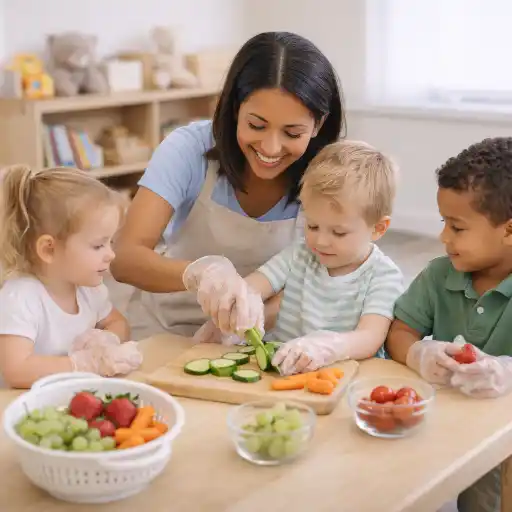
- 👩🏫 Plan short modules: create 20–60 minute sessions for topics like handling, allergies, and cleaning. Use online and hands-on practice from ChildCareEd courses: Health & Safety Training Resources Buy Now $0.00.
- 📋 Keep records: log who trained, the date, the topic, and attach certificates. Keep these records for licensing inspections. See the ChildCareEd course on Health & Safety Requirements
 Buy Now $79.00.
 - 🔁 Refresh often: schedule annual refreshers and short quarterly drills. Make a weekly checklist for kitchen and fridge checks.
- 🧪 Test skills: do hands-on checks for handwashing, temperature testing, and epinephrine practice devices. Use practice manikins or partner with local trainers.
- 📌 Follow state rules: require local food handler or manager training when needed. For example, Illinois requires food handler training details: Illinois Food Handler Training. State requirements vary - check your state licensing agency.
Extra help: consider ServSafe or state-accredited food handler courses for staff who prepare meals: ServSafe info.
How can staff reduce allergy and choking risks during meals?
Make a plan that families sign and staff can follow. Use simple, numbered routines so everyone knows what to do.
- 📝 Collect allergy info at enrollment and keep a one-page action plan from the child’s provider. Use the ChildCareEd allergy guide for template ideas: Allergy guide.
- 🧼 Clean between children: wash hands and sanitize tables and food areas after each meal using CDC cleaning steps: CDC Preventing Food Poisoning.
- 🚫 No food sharing: label allergy-safe foods, serve children with allergies first, and use clean utensils. Post clear signs and teach kids the rule.
- 🔪 Prepare food to reduce choking: slice grapes, mash hot dogs, soften raw vegetables. Follow choking-prevention advice from public health sources and ChildCareEd materials.
- ⚕️ Be ready for anaphylaxis: store epinephrine per policy, train staff to use auto-injectors, and call 911 after use. Some states allow stocked epinephrine — check rules like the Texas guidance on plans: Food Allergy Emergency Plans (Texas).
Common mistakes and how to avoid them
- 🚫 Mistake: Not checking labels every time. Fix: assign a staff member to check labels for each snack and use written checks.
- 🚫 Mistake: Allowing food while children move. Fix: make mealtimes seated and calm with active supervision.
- 🚫 Mistake: Storing meds without clear checks. Fix: label, log, and inspect emergency meds weekly.
How can we turn training into daily habits that protect children?
Training only works when staff use it every day. Turn learning into habits with clear daily steps.
- 🔍 Daily checks: each morning, staff check fridge temperatures, food labels, and allergy lists. Use a visible form and have someone sign off.
- 👀 Active supervision: place trained staff where meals happen and keep proper ratios. Use ChildCareEd’s safety courses for ideas: Safe and Sound Buy Now $55.00.
- 📣 Family communication: share menus, ask about new allergies, and send short safety tips home. Look into CACFP if your program qualifies for meal reimbursements and menu standards: Does your program qualify for CACFP?.
- 📊 Watch trends: track illnesses and report concerns. Use public health data to spot risks early and change menus if needed.
- 🔄 Review and improve: after drills or incidents, meet briefly to update plans. Keep updates simple and numbered so staff can act fast.
Why this matters for your program:
1) Fewer sick days for children and staff.
2) Families feel safe and trust your program.
3) Good training keeps you ready for licensing visits and emergencies.
Quick checklist for directors
- 📝 Train on food handling, allergies, cleaning, and emergencies using ChildCareEd and CDC resources: ChildCareEd food safety and CDC prevention.
- 📋 Keep training records and test skills; consider state food handler rules like Illinois.
- 🍽️ Prevent allergies and choking with routines, no sharing, and posted action plans.
- 🔁 Refresh training and drill regularly; update plans after practice or incidents.
- 📞 Communicate with families and check state rules—state requirements vary - check your state licensing agency.
FAQ
- Q: Do online trainings count for licensing? A: Many states accept approved online modules, but some items (CPR) need hands-on. Check your state agency and approved providers like ChildCareEd.
- Q: How often should staff refresh training? A: At hire, yearly, and after incidents. Short quarterly drills help skills stick.
- Q: Can my program keep spare epinephrine? A: Laws vary. Some states allow stocked epinephrine for authorized programs. Check local rules and follow storage and training steps in ChildCareEd allergy resources.
- Q: What if a child brings homemade food? A: Avoid homemade treats when allergies are unknown. Require ingredient lists and family approval.
You do important work. Small, steady steps in #food #safety and #training by your #staff will protect children and families every day. Use short modules, clear records, and daily checks to make safety a habit.
- Basic Health & Safety and Breastfeeding Awareness
- Medication Administration and the Prevention of and Response to Food and Other Allergies in the Child Care Environment
- Health and Safety Orientation
- Nutrition Essentials for Child Care Providers
- Pediatric RSV First Aid & CPR/AED
- Texas Teacher 24 hours Annual Renewal 2nd Year
- Medication Administration and the Prevention of and Response to Food and Other Allergies in the Child Care Environment
- Prevention of and Response to Allergic Reactions
- Preventative Health and Safety
- Recursos en Español sobre el Sueño Seguro del Bebé
- Capacitación en Salud y Seguridad Preventiva en Línea para Proveedores de Cuidado Infantil
- Regulaciones de Cuidado Infantil en Maryland para Centros y Hogares de Cuidado Infantil Familiar
- Reglas de Cuidado Infantil en Illinois
- Proporciones de Cuidado Infantil y Tamaños de Grupo por Edad en Maryland (Guía Rápida para Centros y Hogares)
- Proporciones de Cuidado Infantil y Tamaños de Grupo por Edad en Virginia (Guía Rápida para Centros y Hogares)
- Lista para Guardería en Casa en Illinois: Cómo Iniciar una Guardería en el Hogar
- Lista para Guardería en Casa en Texas: Cómo Iniciar una Guardería en el Hogar
- Cómo Trabajar en el Cuidado Infantil en Wisconsin: Requisitos y Pasos
- Capacitación Previa al Servicio para Proveedores de Cuidado Infantil en Nevada
- New Child Care Regulations in Georgia for 2026
- Celebrando la amistad en el cuidado infantil durante el Día de los Mejores Amigos
- How Can Florida Child Care Providers Prepare for Licensing Visits?
- Canciones, juegos y preguntas de círculo para niños
- La mejor manera de hacer seguimiento a la capacitación de su equipo de daycare How to Organize Staff Training for Your Child Care Center Cómo organizar la capacitación del personal para su centro de cuidado infantil
- How can food safety training protect children in my child care program?
- Cómo simplificar la capacitación para sus empleados de daycare
- How can food safety training protect children in my child care program?
- How can food safety training keep children safe in my child care program?
- How can food safety training protect children in my child care program?
