Seasonal changes bring joy — and risks. This practical guide helps directors and child care providers build clear routines so outdoor time stays active, creative, and safe for every #children in your care. Below you’ll find evidence-informed steps, quick checklists, and communication tips for heat, cold, allergies, holiday hazards, and general outdoor-play precautions. State requirements vary - check your state licensing agency.
Why this matters:
1) Outdoor play supports physical and cognitive development but can expose kids to weather-related illness and injury (CDC Outdoor Play & Safety). 2) Small, repeatable routines dramatically reduce risk — and increase staff confidence and family trust. See ChildCareEd resources for seasonal planning like Weather Safety in Child Care and the Summer Safety Tips.
How can we prevent heat-related illness and keep kids safe during hot weather?
- 📋 Check conditions before each outdoor block: temperature, heat index, and local HeatRisk/AQI (CDC HeatRisk Dashboard and CDC guidance). See the ChildCareEd weather guidance: Weather Safety.
- 💧 Provide water proactively and often (offer water every 10–15 minutes during active play); keep water easily accessible.
- 🕐 Schedule: prefer mornings/late afternoons, shorten or move sessions indoors at peak heat, and rotate quiet/low-exertion activities (Summer Safety Tips).
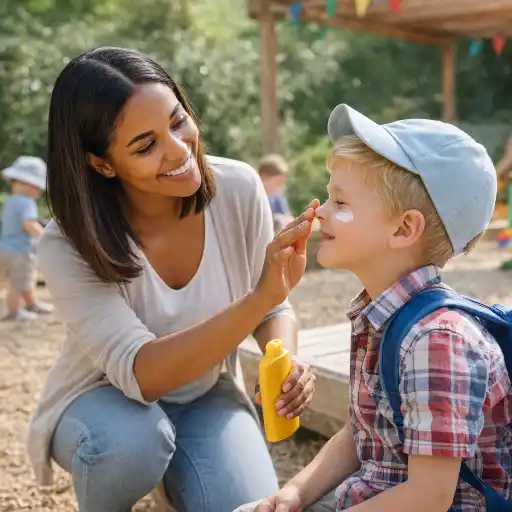
- 🧢 Shade & clothing: hats, light clothing, and shade structures. Apply sunscreen with parent permission and document per center policy.
- 🚑 Know signs and response: if you see dizziness, heavy fatigue, vomiting, or confusion, cool the child, give fluids if alert, and call 911 for suspected heatstroke. See practical first-aid steps at Nemours and Red Cross heat guidance (Red Cross Extreme Heat).
Quick training actions: rehearse a heat-response drill, post heat-index cutoffs, and assign someone to check conditions before each outside transition.
How should programs manage cold-weather risks and keep winter play safe?
- 🧥 Layering & supplies: ensure children wear layers, warm hats, mittens, and water-resistant boots; keep spare dry clothing accessible (Cold Weather Safety resource).
- 👀 Inspect the yard: look for icy surfaces, frozen equipment, and cold metal that can stick to skin; close or tag unsafe equipment.
- 🔥 Warm-up routine: schedule frequent warm-up breaks indoors and limit length of outdoor sessions when temperatures or wind chill are extreme.
- 📌 Decision rules: post simple numeric thresholds (e.g., wind chill cutoffs) and follow your weather chart routine—see How to Use a Child Care Weather Chart.
- 🩹 Incident steps: for frostnip/frostbite or hypothermia signs, move child indoors, warm affected areas slowly, call 911 if severe, and notify family.
Practice dressing checks during transitions and keep a culture of asking: “Are mittens/hats on?” This reduces delays and prevents cold-related illness.
Also review winter weather and indoor air quality tips to ensure proper ventilation, heating, and humidity control in your center during cold months; see winter weather and indoor air quality tips for practical recommendations.
What protocols keep children safe from food and environmental allergies?
- 📝 Enrollment & documentation: collect a doctor-signed Allergy Action Plan, list of allergens, medication consent, and emergency contacts at intake. ChildCareEd recommends one-page plans and clear storage directions (How can my child care program keep children safe from food allergies?).
- 🍽️ Daily prevention: no food sharing, label allergy-safe meals, use separate utensils/serving tools, and clean surfaces between meals to avoid cross-contact.
- 🚨 Emergency response: epinephrine is the first-line treatment for anaphylaxis. Train designated staff to administer
 epinephrine, call 911, and contact families. Follow CDC & state guidance and keep med location clearly posted (CDC Food Allergies in Schools).
 - 👥 Staff training & drills: initial training at hire, yearly refreshers, and brief quarterly drills. Practice finding meds and following action plans under time pressure.
- 🔒 Communication & privacy: post room-level allergy lists visible only to staff, inform families before menu changes, and maintain confidentiality.
State rules vary about medication and stock epinephrine—state requirements vary - check your state licensing agency—and many ChildCareEd resources provide templates and training materials to support your plan.
How can we reduce holiday hazards, toy risks, and seasonal decoration dangers?
Holidays raise unique hazards: small decor, lights, candles, plants, and new toys. Follow a short prevention checklist before and during celebrations:
- 🎄 Decor placement & materials: hang fragile or small ornaments out of reach; use battery-operated lights and LED candles; secure trees and remove them promptly when dry (Holiday Hazards 101).
- 🧸 Toy selection & inspection: choose age-appropriate toys, check labels, avoid items with small detachable parts for under-3s, and inspect toys frequently for wear (Health Canada play-safety guidance).
- 🚫 Food & choking: keep small candies, nuts, and popcorn away from young children; supervise food-related activities closely.
- 🌿 Toxic plants & chemicals: keep mistletoe/holly/poinsettias and spray aerosols out of reach; store cleaning/scent products securely.
- 📣 Family communication: send clear notes about what’s safe for the classroom (no candies, nut-free treats, recommended toy types) and ask families to avoid surprise gifts.
Use the holiday season as a training opportunity: run a quick hazard-scan drill and involve staff in deciding safe alternatives for displays and crafts.
How do we keep outdoor play safe across seasons—playground checks, ticks, water, and air quality?
Safe outdoor play means predictable routines and a short checklist used every time you go outside:
- 📋 Weather & air checks: before each outdoor block check temperature, heat index, lightning radar, and AQI. Post a weather chart by the door to make decisions quick (ChildCareEd Weather Chart).
- 🛠️ Playground inspection: do a twice-daily walk-through for broken equipment, surfacing depth, hot metal, glass, or animal waste; initial and afternoon checks reduce risk (Playground Safety Checklist).
- 🦟 Tick & insect precautions: avoid tall grass, use EPA-approved repellents per label, check children and pets after outdoor time, and follow CDC tick guidance (Preventing Tick Bites).
- 💦 Water safety: constant active supervision near any water, fenced pools, trained staff with CPR, and strict bathroom/diaper routines to reduce germ risk (CDC water guidance).
Assign supervision zones, use headcounts during transitions, and rehearse fast move-ins for thunder, smoke, or sudden storms. Record checks and near-misses to spot patterns and fix hazards before they cause injury.
Conclusion: What quick steps can directors take this week?
- 📌 Post a one-page weather decision chart by every exit and train staff to use it each transition.
- 💧 Create standard heat and cold routines (water schedule, warm-up breaks, sun/coat checks) and post numeric thresholds.
- 📝 Standardize allergy intake forms and keep epinephrine and action plans accessible to trained staff.
- 🎯 Run short drills: heat/cold responses, allergic reaction drill, and fast move-ins for thunder/smoke.
- 🔁 Log daily checks and near-misses; review monthly at staff meetings and update routines.
Common mistakes and how to avoid them:
- ❌ Skipping the weather/AQI check — ✅ Fix: make it a required step before every outdoor transition.
- ❌ Inconsistent allergy storage or missing action plans — ✅ Fix: centralize meds with labeled access and train substitutes.
- ❌ Letting decorative hazards remain during holidays — ✅ Fix: appoint a safety lead to approve decorations.
FAQ
- Q: When is it too hot to go outside? A: Use your weather chart and HeatRisk/AQI tools—shorten or cancel play when heat index or AQI enters danger ranges (see ChildCareEd and CDC tools).
- Q: Who may give epinephrine at my program? A: It depends on state law—train designated staff and follow written orders and local rules (ChildCareEd allergy guidance).
- Q: How often should playgrounds be inspected? A: Twice daily—morning and before afternoon play—and after storms (Playground Checklist).
- Q: How to handle sudden smoke or poor air quality? A: Move indoors, shorten or avoid heavy activity, follow AQI thresholds on your chart, and notify families.
Resources (quick links): ChildCareEd weather & safety articles (Weather Safety | Weather Chart | Food Allergies | Holiday Hazards | Playground Checklist).
Thank you for the everyday choices you make to protect kids and support families. Small, practiced routines make outdoor time safer, calmer, and more joyful. Keep this guide handy on your staff board and in substitute folders — and remember to check local rules: state requirements vary - check your state licensing agency.
Key focus words: #children #outdoor #safety #heat #allergies
Cold weather supports healthy play but needs clear boundaries. Use a numbered checklist staff follow before every outdoor block:Allergy prevention blends prevention, documentation, training, and fast emergency response. Numbered essentials:Heat is fast and unforgiving with young bodies especially vulnerable. Use a short, numbered routine so staff act consistently:- Legal & Ethical Essentials in Child Care
- 1,2,3, Eyes on Me: Classroom Safety
- Family Child Care Health Essentials
- Creating Safe & Healthy Child Care Environments
- Texas Director Credential
- Safeguarding Young Lives: A Comprehensive Guide to Child Care Safety
- Family Child Care: Building, Premises, and Outdoor Safety
- Mindful Supervision: Balancing Safety & Independence in Montessori
- Winter Weather and Indoor Air Quality Tips
- CDA Certification en Español: Recursos y Consejos para Educadores Bilingües
- ❄️ ¿Qué actividades al aire libre funcionan bien para los niños de Illinois en cada estación? 🌷🍂
- Recursos en Español sobre el Sueño Seguro del Bebé
- ¿Cuáles son las mejores actividades del Día de la Tierra para niños en casa o en el aula?
- 10 Ejemplos de Cómo la Cultura Influye en el Desarrollo Infantil
- Capacitación en Salud y Seguridad Preventiva en Línea para Proveedores de Cuidado Infantil
- Normas de Licenciamiento de Cuidado Infantil en Virginia para Centros Diurnos Infantiles y Hogares Diurnos Familiares
- Proporciones de Cuidado Infantil y Tamaños de Grupo por Edad en Maryland (Guía Rápida para Centros y Hogares)
- Proporciones de Cuidado Infantil y Tamaños de Grupo por Edad en Virginia (Guía Rápida para Centros y Hogares)
- Actividades de Otoño Fáciles para Preescolares esta Temporada
- Por Qué la Supervisión Activa Es Clave para la Seguridad en el Cuidado Infantil
- Consejos de Supervisión Activa para Salones de Preescolar y el Juego al Aire Libre
- Cómo Trabajar en el Cuidado Infantil en California: Requisitos y Pasos
- Capacitación Previa al Servicio para Proveedores de Cuidado Infantil en California
- Capacitación Previa al Servicio para Proveedores de Cuidado Infantil en Texas
- Canciones, juegos y preguntas de círculo para niños
- Cómo simplificar la capacitación para sus empleados de daycare
- How can child care programs prevent seasonal safety hazards like heat, cold, allergies, holiday risks, and outdoor play dangers?
- Cómo Planificar Actividades al Aire Libre Seguras Durante el Calor y la Mala Calidad del Aire
