You run a home-based child care in the desert. A storm, wildfire smoke, extreme #heat, or a power outage can make life hard for 72 hours. This guide helps you prepare fast, protect the children in your care, and meet rules for providers in Nevada. Use simpl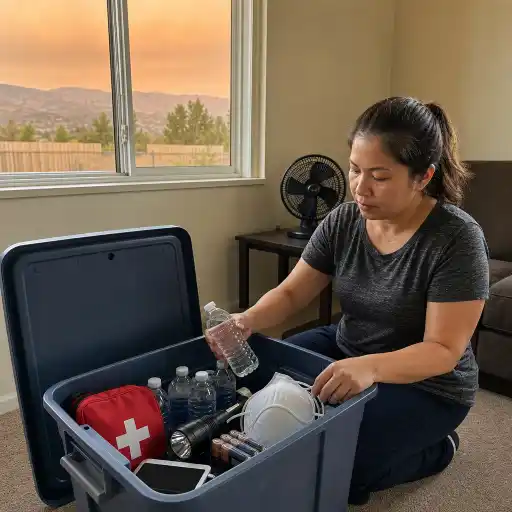 e steps, organized kits, and practice so everyone stays safe. Remember: state requirements vary - check your state licensing agency.
Why this matters
1) Young children are more affected by smoke and heat than adults. Protecting small lungs and bodies is urgent — see CDC guidance on kids and wildfire smoke here. 2) Power or water loss can make feeding, hygiene, and medicine care unsafe — learn CDC food-safety tips for after power outages here. Being ready gives you time and calm to care for kids well.
What should be in a 72-hour kit for a Nevada home-based child care?
- 📦 Essentials (use numbered sub-steps):
- 3 days of water: 1 gallon per person per day.
- 3 days of ready-to-eat food for children and staff. Follow CDC food-safety tips here.
- Flashlight, batteries, battery radio, and extra phone chargers.
- 🩹 Health and meds:
- First-aid kit and a list of children’s medical needs.
- 7–10 day supply of prescription medicines stored waterproof — CDC suggests this for wildfire and evacuation events.
- 🧾 Records and communication:
- Printed emergency contact list for each child and staff.
- Copies of licenses and child health forms — use the ChildCareEd free Emergency Preparedness Plan to organize documents.
- 🛠️ Comforts and safety:
- Diapers, wipes, formula, and items to soothe children.
- Spare blankets, sun hats, and cooling towels for heat events — see ChildCareEd tips on preparing for extreme heat here.
- 🔁 Maintenance:
- Check the kit every 6 months. Replace expired food, batteries, and medicines.
#emergency #Nevada #wildfires #heat #children
How can I reduce smoke and heat risks inside my home?
- Choose a clean room and seal it:
- Pick a small interior room and close the windows and doors.
- Run HVAC on recirculate and use the best filter your system allows (see EPA and CDC tips on clean rooms and indoor air, EPA clean room guide, and CDC smoke safety).
- Use portable air cleaners:
- If you have a HEPA portable filter, place it in the clean room. If not, a DIY box-fan filter can help (monitor while running).
- Protect kids from heat:
- Keep children hydrated; schedule water breaks and shade play. Read ChildCareEd heat prep tips here and CDC child heat guidance here.
- Have a plan for power loss: cool places in the community like libraries or cooling centers (call 2-1-1 for local options) or move children to an air-conditioned location.
- Respirators and masks for older children:
- Children 2+ may wear respirators, but fit and comfort matter. See CDC guidance on masks for children during smoke here.
Keep signage and a simple checklist, so staff know when to move to the clean room and when to limit outdoor time. Practice this plan in a drill so transitions are smooth and calm.
What should I do about flooding, power outages, and food safety for 72 hours?
- Water and sanitation:
- Store 1 gallon of water per person per day for 3 days.
- If flooding occurs, do not use tap water until authorities say it is safe. Use bottled water for drinking and formula. CDC has flood food and water safety tips here.
- Food safety during power loss:
- Keep refrigerator and freezer doors closed as much as possible. A refrigerator will keep food safe up to 4 hours without power; a full freezer keeps food safe up to 48 hours (CDC guidance).
- After outages, throw out perishable foods that were above 40°F for over 4 hours.
- Safe diapering and cleanup:
- Avoid using floodwater for washing. Sanitize surfaces with a bleach solution as the CDC suggests after floods (food safety).
- Plan for evacuation and transport:
- Know neighborhood evacuation routes and which sites accept children and pets. Keep car fuel up when fires or storms are forecast.
How do I communicate with families and follow Nevada rules during an emergency?
Clear communication and following licensing rules keep you compliant and build trust with families.
- Notify families quickly:
- 1) Use a phone tree and text group. 2) Post updates on your sign-in door and in your emergency contact packet. 3) Keep printed parent contact lists in your kit. ChildCareEd offers a free Emergency Plan template to organize this here.
- Follow Nevada licensing rules:
- Complete required emergency training for Nevada providers — see the Nevada training post on ChildCareEd here and check NRS/NAC rules. For a concise refresher on core health-and-safety practices—such as infection control, safe medication administration, and safe sleep routines—that align with CDA expectations, see the Health and Safety Essentials guide Health and Safety Essentials: What Every CDA Candidate Should Know.
- Keep documentation of drills and training on file for inspections.
- Tell parents how you will decide to close or evacuate:
- List criteria (air quality index, local evacuation orders, power loss >4 hours, unsafe water). State your plan in writing and share it — this helps families plan for backup care.
- Use community resources:
- Find local cooling centers, shelters, or cleaner air spaces; the Red Cross and local health departments list public resources.
Common mistakes — and how to avoid them
- 🛑 Forgetting to update parent contacts: Keep printed and digital copies, update every 3 months.
- ⚠️ Relying only on phone alerts: Have a paper plan and labeled kits so staff can act without internet.
- 🔄 Not practicing drills: Run short drills for smoke/heat/power outage so transitions are smooth.
FAQ
- Q: How long should I keep emergency kit supplies?
A: Check every 6 months, replace expired food, batteries, and medicines. Follow ChildCareEd supply lists here Buy Now $0.00. - Q: Can small children wear N95s during smoke?
A: Children 2+ may wear respirators if they fit well. Many NIOSH respirators are adult-sized; consider a clean room instead for younger kids, CDC. - Q: What if my home loses power for more than 4 hours?
A: Move food to coolers with ice, relocate children to an air-conditioned community site, and notify parents early. - Q: Do I need special training in Nevada?
A: Yes. Nevada requires emergency preparedness training for providers — see ChildCareEd Nevada requirements here. State requirements vary - check your state licensing agency.
Conclusion
Prepare a clear 72-hour plan with a labeled kit, a clean room, food and water, and family communication steps. Practice drills and complete Nevada training. Use the ChildCareEd Emergency Plan and supply list to build your kit and paperwork (Emergency Preparedness Plan, Supply List Buy Now $0.00). Stay calm, stay ready, and protect the kids in your #Nevada home.
Put one kit where staff can grab it in a minute. Use the ChildCareEd Emergency Supply List Buy Now $0.00 as your base. Wildfire smoke and desert heat are common in Nevada. A planned clean room and simple cooling steps protect kids.Flooding and service interruptions affect water, food, and sanitation. Follow clear steps to keep children safe and prevent illness.
- 45 Hour Child Growth and Development
- CDA Preschool Credential with Portfolio Review
- CDA Family Child Care Credential with Portfolio Review
- Texas Primary Caregiver Qualification
- CDA Bridge Bundle: Preschool
- CDA Infant/Toddler Credential with Portfolio Review
- 45 Hour School Age Methods and Materials
- CDA Bridge Bundle: Family Child Care
- Texas Director Credential
- CDA Certification en Español: Recursos y Consejos para Educadores Bilingües
- 🩺 Cumplimiento de Salud e Inmunización en Cuidado Infantil de Nevada ✔️
- 🚨 Reporte Obligatorio en Nevada
- Cómo Abrir Una Quardería En Casa Sin Dinero?
- Recursos en Español sobre el Sueño Seguro del Bebé
- Regulaciones de Licenciamiento de Cuidado Infantil en California para Centros y Hogares de Cuidado Infantil Familiar
- Proporciones de Cuidado Infantil y Tamaños de Grupo por Edad en Maryland (Guía Rápida para Centros y Hogares)
- Proporciones de Cuidado Infantil y Tamaños de Grupo por Edad en Virginia (Guía Rápida para Centros y Hogares)
- Lista para Guardería en Casa en Illinois: Cómo Iniciar una Guardería en el Hogar
- Lista para Guardería en Casa en Texas: Cómo Iniciar una Guardería en el Hogar
- Cómo Trabajar en el Cuidado Infantil en Wisconsin: Requisitos y Pasos
- Cómo Trabajar en el Cuidado Infantil en Virginia: Requisitos y Pasos
- Capacitación Previa al Servicio para Proveedores de Cuidado Infantil en Dakota del Norte
- Capacitación Previa al Servicio para Proveedores de Cuidado Infantil en Georgia
- Capacitación Previa al Servicio para Proveedores de Cuidado Infantil en Nevada
- Capacitación Previa al Servicio para Proveedores de Cuidado Infantil en Virginia
- Capacitación CDA gratuita en Illinois
- How can Nevada home-based providers survive 72 hours of wildfire smoke, flooding, heat, and service interruptions?
